


Hi, I’m Scott Paul, a licensed exterior restoration contractor with over 30 years of experience and 10,000+ deck restorations. My recommendations are based on my own field experience staining decks, porches, and ceilings, and hands-on product testing. See my full credentials and testing stats here.
What Is the Best Deck Stain for a Porch Ceiling?
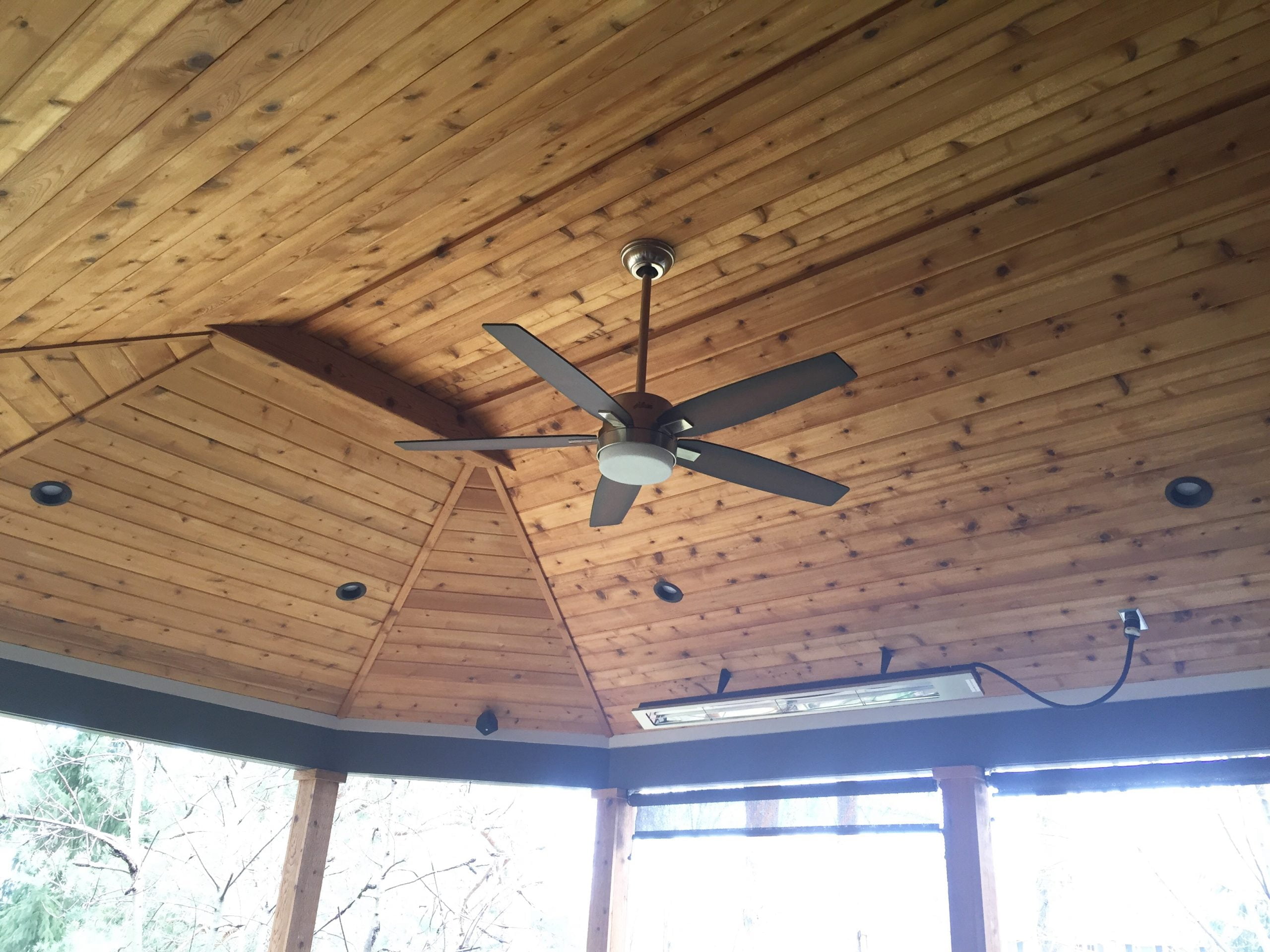
Porch ceiling stained with Armstrong Clark Natural Tone
My favorite stain for a porch ceiling is the same penetrating semi-transparent deck stain you use on the rest of the wood on your covered porch. Semi-transparent stains soak into the wood, protect it from moisture and mildew, and let the natural grain show through. Using the same product everywhere also makes it easy to match the color across the floor, posts, railings, and ceiling.
My top picks for porch ceilings are the semi-transparent stains from TWP, Restore-A-Deck, and Armstrong Clark.
If you have a question about your own porch, post it in the comments below with a photo and I will give you my recommendation.
- A penetrating semi-transparent deck stain is the best choice for porch ceilings, offering mildew resistance and easy recoating.
- Top recommended brands include TWP, Restore-A-Deck, and Armstrong Clark for reliable porch ceiling protection.
- Always clean, brighten, and dry the wood for at least 2 to 3 days before staining a porch ceiling.
- Porch ceilings need far less frequent recoating than deck floors due to protection from direct sun, rain, and foot traffic.
Do I Need to Stain a Porch Ceiling?
It is not required, but I recommend it. A porch ceiling does not take direct sun or rain the way a deck floor does, but it still deals with:
- Humidity and moisture: Covered porches trap moist air, and condensation can form on the ceiling boards, especially in humid climates.
- Mold and mildew: Shaded, damp ceilings are prime spots for mildew and black staining.
- Indirect UV: Light reflecting off the floor and surrounding surfaces will slowly fade and gray unprotected wood, especially near the open edges of the porch.
- Wind-driven rain: The outer edges of the ceiling often get wet during storms.
A penetrating stain protects against all of these, and staining the ceiling at the same time as the rest of the porch gives you a consistent color throughout.
Choosing a Stain for a Porch Ceiling
- Penetrating semi-transparent stain: My first choice. It soaks in, shows the grain, will not peel, and is easy to recoat years down the road.
- Tinted vs clear: A light tinted color, such as a natural or cedar tone, protects better than a clear and helps hide minor color differences between boards.
- Mildew resistance: If you live in a humid area, choose a stain formulated to resist mold and mildew.
- Match the porch: Use the same product and color as the porch floor and trim when possible. Ceilings usually look slightly lighter than floors because they are shaded and smoother.
What about paint or varnish? Paint, including the traditional painted porch ceiling look, is a valid choice if you want a solid color. Film-forming finishes such as varnish hold up better on a protected ceiling than on a deck floor, but they will eventually crack and peel and must be stripped or sanded to refinish. A penetrating stain is far easier to maintain.
How to Prep a Porch Ceiling
- Protect the area. Cover the porch floor, furniture, lights, and fans. Turn off and tape over ceiling fixtures and outlets.
- Check for an existing finish. If the ceiling has varnish, polyurethane, or paint, a penetrating stain will not absorb over it. Strip the finish first with a deck stain stripper.
- Clean the wood. Apply a deck cleaner with a pump sprayer, work it in with a soft brush on a pole, and rinse gently. Use low pressure or a garden hose overhead to avoid forcing water into tongue-and-groove joints and light fixtures.
- Brighten. Apply a wood brightener to neutralize the cleaner and even out the color, then rinse.
- Let it dry. Ceilings dry slowly because they are shaded. Allow at least 2 to 3 days of good weather, longer in humid conditions.
New, unfinished ceiling boards still benefit from a light cleaning and brightening to remove mill glaze and dirt so the stain absorbs evenly.
How to Stain a Porch Ceiling
- Wear eye protection. Working overhead means drips. Safety glasses, a hat, and long sleeves are a must.
- Apply thin coats. Use a pump sprayer, pad, or brush. Thin coats reduce drips and runs.
- Work board by board. Stain 2 to 3 boards at a time along their full length to keep a wet edge and avoid lap marks.
- Back-brush. Work the stain into the grooves of tongue-and-groove boards and even out the color.
- Wipe excess and drips. Check for runs on the ceiling and drips on the floor coverings as you go.
- Follow the coat directions. Smooth ceiling boards often absorb less stain than a weathered deck floor. If the wood will not take a second coat, stop at one and wipe any excess.
Stain the ceiling first, then the walls or posts, and the floor last, so drips never land on finished surfaces. For more, see my guide on how to stain a covered wood porch.
Porch Ceiling Maintenance
Because they are protected from direct sun, rain, and foot traffic, porch ceilings typically need recoating far less often than deck floors, often lasting several years longer.
- Dust or rinse the ceiling once a year to remove cobwebs, pollen, and dirt.
- Treat any mildew spots early with a mildew cleaner made for stained wood.
- Recoat when the color fades noticeably or the edges near the open sides start to gray.
Porch Ceiling Stain FAQs
What is the best stain for a porch ceiling?
A penetrating semi-transparent deck stain is the best choice for most porch ceilings. My top picks are TWP, Restore-A-Deck, and Armstrong Clark. Use the same product and color as the rest of your porch so everything matches.
Do I need to stain a porch ceiling?
It is not required, but it is recommended. Porch ceilings are exposed to humidity, mildew, wind-driven rain, and indirect UV that can fade and gray bare wood. A penetrating stain protects the wood and gives the porch a consistent, finished look.
Can I use deck stain on a porch ceiling?
Yes. A penetrating semi-transparent deck stain works very well on porch ceilings, and using the same stain as your porch floor makes color matching easy. The ceiling will usually look slightly lighter than the floor because it is shaded and the boards are smoother.
Should I paint or stain my porch ceiling?
Stain if you want to show the natural wood grain and keep maintenance simple. Paint if you want a solid color. Paint and other film-forming finishes hold up reasonably well on a protected ceiling but will eventually peel and must be stripped or sanded before refinishing.
Can I stain over a varnished or painted porch ceiling?
No. A penetrating stain cannot soak through varnish, polyurethane, or paint. Strip the existing finish, clean and brighten the wood, and let it dry before staining.
How do I clean a porch ceiling before staining?
Spray a deck cleaner onto the ceiling with a pump sprayer, work it in with a soft brush on a pole, and rinse gently with a garden hose or low pressure. Follow with a wood brightener and rinse again. Avoid high pressure overhead, which can force water into board joints and fixtures.
How do I avoid drips when staining a ceiling?
Apply thin coats, work 2 to 3 boards at a time, back-brush as you go, and wipe runs immediately. Cover the floor and anything below the ceiling, and wear safety glasses since overhead work always produces some drips.
How many coats of stain does a porch ceiling need?
Follow the stain manufacturer’s directions, but expect smooth ceiling boards to absorb less than a weathered deck floor. Many ceilings only need one coat. If the wood will not absorb a second coat, stop and wipe off any excess so it does not turn sticky.
How long should a porch ceiling dry before staining?
Allow at least 2 to 3 days of good weather after cleaning and brightening. Porch ceilings are shaded and dry more slowly than open decks, so wait longer in humid or cool conditions.
How often should a porch ceiling be restained?
Much less often than a deck floor. Porch ceilings are protected from direct sun, rain, and foot traffic, so they often last several years longer between coats. Recoat when the color fades noticeably or the edges near the open sides begin to gray.
How do I prevent mildew on a porch ceiling?
Use a stain formulated to resist mold and mildew, keep the porch ventilated, and rinse the ceiling once a year to remove pollen and dirt that feed mildew. Treat any mildew spots early with a mildew cleaner made for stained wood.
More Information About Staining Covered Porches
- How to Stain a Covered Wood Porch
- Why Penetrating Deck Stains Are Best
- Best Semi-Transparent Deck Stain Reviews
- Best Deck Stain Reviews and Ratings



I did not specify that I am inquiring about the porch ceiling.
I am very confused after reading on so many different sites. My husband is installing spruce tongue and groove panels on our outdoor patio. New addition to the home. Not staining prior to installation. That would be quite a challenge for us space-wise. Your porch ceiling looks amazing. Reading your recommendations I first looked at the Restore-A-Deck, but wish they had more of a color selection. Then saw that you used the Armstrong Clark. We’ve stained before, but nothing of this magnitude. Not sure how the spruce is going to take the stain or what to use for pre-conditioning. Planning on applying the stain with a sprayer. Any advice or suggestions that you can give regarding products, procedure, and what to expect with the spruce?
You will need to treat this as if it were new wood. See this for tips:
https://www.deckstainhelp.com/how-long-should-you-wait-to-stain-a-new-deck/
What color stain was used on the ceiling in that picture?
That is Armstrong Clark Stain in Natural color. My own personal deck and ceiling. Still looks great 8 years in!
https://www.armstrongclarkstain.com/armstrong-clark-stain-1-gallon
What wood species? I have yellow pine t&g on my ceiling and I doubt it would look as nice as this!
Cedar wood. Pine would still look nice but might have a larger variance in color. Nothing you can do about that.
Was this a transparent or semi transparent stain ?
Armstrong Clark in Transparent Natural Tone.