


✅ What Is the Best Deck Stain 2026?
The best deck stain overall is a penetrating semi-transparent stain like TWP 100 Series (1500 if in LOW-VOC State) or Restore-A-Deck Wood Stain, as they offer superior durability, easier maintenance, do not peel like film-forming stains, and are easiest to maintain long-term.
🏆 Top Deck Stain Picks Summary
- Best Overall: TWP 100 or 1500 Series
- Best for Old Decks: Armstrong Clark
- Best Budget Option: Restore-A-Deck
- Best Penetrating Oil: CUTEK Extreme
Expert Tip: The best deck stain is not just about durability—it’s about how easy it is to maintain over time.
🏆 Best Deck Stain Comparison Table
| Product | Type | Durability | Ease of Maintenance | Key Strength | Best For |
|---|---|---|---|---|---|
| TWP 100 | Semi-Transparent (Oil) | 2–3 Years | Easy | Proven performance, deep penetration | Most decks |
| TWP 1500 | Semi-Transparent (Oil, Low VOC) | 2–3 Years | Easy | Better VOC compliance, similar performance to TWP 100 | VOC-restricted states |
| Armstrong Clark Wood Stain | Semi-Transparent (Oil) | 2–3 Years | Easy | Excellent oil penetration + conditioning oils | Dry, aging wood |
| Restore-A-Deck Wood Stain | Semi-Transparent (Water-Based) | 2–3 Years | Very Easy | Simple prep system + easy recoat | DIY homeowners |
| CUTEK Extreme | Penetrating Oil | 2 Years | Very Easy | Deepest penetration, no film buildup | All Wood types |
| Defy Extreme | Semi-Transparent (Water-Based) | 1–3 Years | Moderate | Strong UV resistance with zinc nano-particles | Sunny/high UV areas |
Scott’s Expert Guide to Choosing Deck Stains
Why Trust My Deck Stain Reviews
I have over 30 years of hands-on experience restoring and staining wood decks since 1993. I’ve tested hundreds of deck stains on real-world projects, evaluating durability, UV resistance, ease of application, and long-term maintenance. See here for more info about me.
When it comes to choosing a deck stain, my favorites have always been penetrating semi-transparent and semi-solid stains. These stains allow the natural beauty of the wood grain to shine through. Plus, when these stains truly soak into the wood, reapplication down the road is much easier.
However, in the last 5-10 years, we’ve noticed a shift in the industry. Not all semi-transparent stains are as penetrating as they used to be. Many manufacturers have moved away from creating truly penetrating stains due to changes in VOC laws and a focus on profitability. The result? Some stains sit on top of the wood and dry, rather than soaking in, which can cause peeling and premature failure. They end up looking more like paint than a stain, which, in my experience, doesn’t hold up as well.
Believe it or not, deck stains actually performed better 10-20 years ago when it came to wear and peeling. But here’s the silver lining: in the past 5-10 years, we’ve seen major advancements in UV protection. Nanoparticles of zinc oxide and improved trans-oxides have taken UV resistance to a whole new level, keeping your deck looking better for longer.
The good news is that, despite the changes, you can still find some fantastic deck stains in 2026. Look for ones that provide strong UV protection, penetrate deep into the wood grain, and allow the wood’s natural beauty to shine through. Plus, these stains will make reapplication a simple, no-hassle process.
My Recommended Top Deck Stains and Sealers (Quick Summary)
Click any product below to jump to the full review:
- Best Overall Deck Stain: TWP 100 Pro Series — A deep-penetrating, oil-based semi-transparent stain that offers excellent durability, easy maintenance, and consistent performance for up to 3 years.
- Best Semi-Transparent (Water-Based): Restore-A-Deck Semi-Transparent Wood Stain — A user-friendly, UV-resistant stain that can be applied to damp wood, allowing prep and staining in one day.
- Best Oil-Based Alternative: Armstrong Clark Wood Stain — A penetrating oil formula that conditions aging wood while providing long-lasting protection and easy reapplication.
- Best for VOC-Restricted States: TWP 1500 Series — An EPA-registered preservative with strong UV and mildew resistance, ideal where traditional oil-based stains are limited.
- Best for UV & Mildew Resistance: Defy Extreme Wood Stain — A water-based formula enhanced with zinc nano-particles for superior UV protection and mildew resistance.
- Best Semi-Solid Stain: TWP Pro Series Semi-Solid — Offers richer color, excellent UV blocking, and better coverage while still allowing some wood grain visibility.
- Best Solid Color Stain: Restore-A-Deck Solid Color Stain — A durable, breathable coating that resists peeling and works well for older or heavily weathered decks.
- Best Deck Resurfacer: Gulf Synthetics Deck Revive — A thick resurfacing coating designed to restore heavily worn or damaged wood surfaces.
What is the longest lasting deck stain?
Penetrating stains last the longest because they soak into the wood instead of forming a film that can peel.
Top-Rated Deck Stain Reviews for 2026
See below for more in-depth reviews of my top-rated deck stains in 2026.
Top Oil- Based Stain | Top Water-Based Stain | Top Solid Color Stain | Easiest to Apply Stain |

| 
| 
| 
|
From: $58.99 | From: $51.99* | From: $69.99* | From: $74.95* |
| ; | ; | ; | ; |
*Free Shipping Included
My Top 8 Deck Stain Reviews & Ratings
Each deck stain review I do shows two rating types: my DeckStainHelp.com review, which is based on my experience with the deck stain, and the Consumer Star Ratings, which are based on customers’ experiences using the same stain. As you will see, my reviews and ratings correspond and are very similar to actual consumers’ ratings.
✅ How I Rate Deck Stains
- Durability in real-world conditions
- Ease of application and maintenance
- Resistance to peeling and wear
- Overall long-term performance
My Deck Stain Star Ratings are based on these criteria:
- Ease of application
- Appearance after application
- Preventing UV graying at 2-year mark
- Wear and tear after 2 years
- Color shifting/darkening in color (5 Star = No Darkening)
- Preventing mold/mildew/algae at 2-year mark
Listed below, I will summarize my Best Deck Stain Ratings for the 2026 deck season, based on the criteria stated above. I have also broken them down into the top oil-based and water-based versions.
✅ Oil-Based vs Water-Based Deck Stains
- Oil-Based:
- Deep penetration
- Easier maintenance
- Water-Based:
- Better UV color retention
- Faster drying
Pro Tip: Learn more about oil vs water-based deck stains
Top 5 Oil-Based Deck Stain Ratings
1. TWP 100 Series
2. Armstrong Clark Wood Stain
3. TWP 1500 Series
4. TWP Pro-Series Semi-Solid
5. NEW Product Alert – Honorable Mention -Deep Penetrating Oil Finish
CUTEK® Extreme Penetrating Wood Oil Review
Top 3 Water-Based Deck Stain Ratings
1. Restore-A-Deck Wood Stain
2. TWP Natural Effect Impregnating Stain
3. Defy Extreme Stain
The 8 Best Deck Stains and Sealers: Ratings & Reviews
1. TWP 100 Pro Series Stain Review
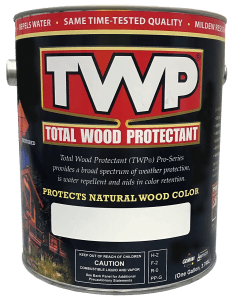 Type: Oil-Based Semi-Transparent
- Durability: 2–3 Years
- Maintenance: Easy recoat, no stripping needed
- Best For: Most decks (pressure-treated, cedar)
- Why It Stands Out: Deep penetration and consistent long-term performance without peeling
Scott’s Pro Tip: My most used deck stain in the past 30 years! We have used the TWP 100 Series on many 1000s of decks.
TWP 100 Series penetrates well into the wood, fades lightly in color, and holds up to wear and tear. I like that when it is time to redo the wood in 2-3 years, the TWP can be cleaned and re-coated or easily removed. This makes the reapplication process much easier. TWP 100 Series is only allowed in 35 States and cannot be used in Canada.
My Test Deck Stats
Deck Wood Type: Western Red Cedar
Deck Square Footage: 2100
UV Exposure: Full Sun Deck and Pool Area, Skirting and Railings
How Many Years Tested: 2 Years
Stain Color Used: TWP Cedartone Natural 101
Stain Type: Penetrating Semi-Transparent Oil-Based. Full Curing Wood Stain.
Consumer Star Ratings:
My DeckStainHelp.com Review (On a scale of 1-10): 8.69
See My Review Article Here: TWP 100 Series Review
Purchase Direct for Less at TWPStain.com: TWP 100 Series Stain


2. Restore-A-Deck Semi-Transparent Wood Stain Review

- Type: Water-Based Semi-Transparent
- Durability: 2–3 Years
- Maintenance: Very easy, simple prep system
- Best For: DIY homeowners and quick projects
- Why It Stands Out: Can be applied to damp wood, allowing prep and stain in one day
Scott’s Pro Tip: My favorite deck stain to save time and money. We prep and stain on the same day.
I like that Restore-A-Deck Wood Stain can be applied to dry or damp wood. Applying it to damp wood allows me to prep and stain on the same day, saving us a tremendous amount of time. Restore-A-Deck Wood Stain is an advanced, water-based, semi-transparent stain formulation designed to penetrate deep into wood pores for maximum protection and longevity. It protects the wood from harmful UV rays and damage caused by water penetration.
My Test Deck Stats
Deck Wood Type: Pressure Treated Pine
Deck Square Footage: 150 Square feet
UV Exposure: 50% Full Sun
How Many Years Tested: 2 Years
Stain Color Used: Light Walnut
Stain Type: Penetrating Semi-Transparent Water-Based. Full Curing Damp Application Stain.
Consumer Star Ratings:
My DeckStainHelp.com Review (On a scale of 1-10): 8.625
See My Review Article Here: Restore-A-Deck Wood Stain Review
Purchase on Amazon Here: Restore-A-Deck Wood Stain
Purchase Direct for Less at Restore-A-Deck.com: Purchase Here


Restore-A-Deck Consumer Video Review

3. Armstrong Clark Wood Stain Review
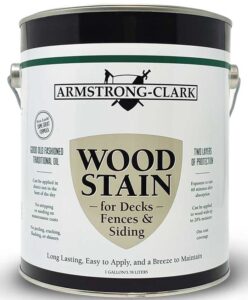
- Type: Oil-Based Semi-Transparent
- Durability: 2–3 Years
- Maintenance: Easy reapplication
- Best For: Older, dry, or weathered wood
- Why It Stands Out: Contains conditioning oils that help restore dried-out wood
Scott’s Pro Tip: Regarding ease of application and performance, the Armstrong Clark stain is one of my top stains. We love their semi-solid colors and performance.
The Armstrong Clark Wood stain has been a solid performer for my team since we started reviewing and using it about 10 years ago. I really like how it penetrates deep into the wood grain and applies easily. Reapplication is simple after prepping with a good deck cleaner. One callout is to make sure you do not overapply. You want the stain to soak thoroughly into the wood. Compliant for all US states and Canada.
My Test Deck Stats
Deck Wood Type: Pressure Treated Pine
Deck Square Footage: 600
UV Exposure: Full Sun
How Many Years Tested: 2 Years
Stain Color Used: Semi-Transparent Cedar
Stain Type: Penetrating Transparent, Semi-Transparent, Semi-Solid Oil-Based. Paraffin and Curing Oil Blend. Full Curing Stain.
Consumer Star Ratings:
My DeckStainHelp.com Review (On a scale of 1-10): 8.5
See My Review Article Here: Armstrong Clark Stain Review
Purchase Direct Less At ArmstrongClarkStain.com: Purchase Here
Purchase on Amazon Here: Armstrong Clark Wood Stain
Other Purchase Options: The Sealer Store


4. TWP Pro-Series Semi-Solid Wood Stain Review

- Type: Semi-Solid (Oil-Based)
- Durability: 3 Years
- Maintenance: Moderate
- Best For: More color coverage with strong UV protection
- Why It Stands Out: Rich color options while still allowing some wood grain to show
Scott’s Pro Tip: My favorite penetrating semi-solid wood and deck stain soaks into the wood and provides excellent UV protection.
What I like best about the TWP Semi-Solid Stain is that it is simple to apply, prep, and reapply when the time comes and holds color very well despite UV exposure. I have been using the TWP Semi-Solid colors for the last 4 years and have had nothing but positive results. Maximum UV protection and a much larger color palette are the top reasons we will offer the TWP Semi-Solid to all of my customers. The Low-VOC version is allowed in all US States and Canada.
My Test Deck Stats
When Tested: August 2023
Deck Wood Type: Pressure Treated Pine
Deck Square Footage: 800
UV Exposure: Deck in full sun
How Many Years Tested: Initial test – Brand New Product
Stain Color Used: TWP Semi-Solid Cedar Mulch
Stain Type: Penetrating Semi-Solid Oil-Based. Full Curing Stain.
Consumer Star Ratings:
My DeckStainHelp.com Review (On a scale of 1-10): 8.50
See My Review Article Here: TWP Semi-Solid Series Review
Purchase Direct for Less at TWPStain.com Purchase Here
Other Purchase Options: The Sealer Store


5. TWP 1500 Series Stain Review

- Type: Oil-Based Semi-Transparent (Low VOC)
- Durability: 2–3 Years
- Maintenance: Easy
- Best For: VOC-restricted states
- Why It Stands Out: EPA-registered preservative with strong UV and mildew resistance
Scott’s Pro Tip: My favorite current penetrating semi-transparent oil-based stain is the TWP 1500 Series. Michigan switched to low-VOC, so I now use it on the majority of decks that I restore.
The TWP 1500 Series is one of the best wood and decking stains and is one of my top choices. As a contractor, I really like stains that penetrate deep into the wood and can be reapplied without sanding. TWP 1500 fits this and more by adding excellent UV and mold protection. Maintaining TWP every 2-3 years is easy. TWP 1500 is compliant for all US states but not Canada.
My Test Deck Stats
Deck Wood Type: Cedar
Deck Square Footage: 400
UV Exposure: Full Sun
How Many Years Tested: 2 Years
Stain Color Used: 1501 Cedartone
Stain Type: Penetrating Semi-Transparent Oil-Based. Full Curing EPA Registered Stain.
Consumer Star Ratings:
My DeckStainHelp.com Review (On a scale of 1-10): 8.5
See My Review Article Here: TWP 1500 Series Review
Purchase Direct for Less at TWPStain.com: Purchase Here
Other Purchase Options: The Sealer Store


6. TWP Natural Effect Impregnating Stain Review

- Type: Water-Based Transparent
- Durability: 1.5–2.5 Years
- Maintenance: Easy
- Best For: Maintaining a natural, “bare wood” appearance
- Why It Stands Out: Unique formula designed to preserve the natural color of new wood while still offering UV protection
Scott’s Pro Tip: My new favorite IPE and Hardwood Deck stain is the first stain I have ever seen last more than one year on exotic hardwoods.
TWP Natural Effect Impregnators are tinted with iron oxide pigments, contain UV absorbers, and are extremely resistant to solar radiation. Their function is to preserve the wood from degradation due to UV light, microorganisms, and more. They prevent changes in wood color and promote adhesion of the Natural Effect Finish. TWP Natural Effect is compliant for all US states and Canada. This is a new product for my team, but I have tested it since 2021. So far, so good with my test deck.
My Test Deck Stats
Deck Wood Type: Pressure Treated Pine
Deck Square Footage: 800 Sq Feet
UV Exposure: 80% Shade 20% Sun
How Many Years Tested: 3 Years
Stain Color Used: Chesnut
Stain Type: Penetrating Semi-Transparent Impregnating Water-Based Stain.
Consumer Star Ratings:
My DeckStainHelp.com Review (On a scale of 1-10): 8.5
See My Review Article Here: TWP Natural Effect Review
Purchase Direct for Less at TWPStain.com: Purchase Here


7. Defy Extreme Wood Stain Review
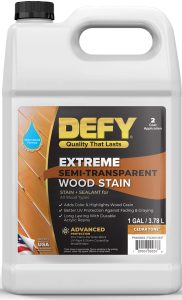
- Type: Water-Based Semi-Transparent
- Durability: 2 Years
- Maintenance: Moderate
- Best For: High UV and mildew-prone areas
- Why It Stands Out: Zinc nano-particles provide superior UV protection and mold resistance
Scott’s Pro Tip: The Defy Extremes is one of my top choices when using a water-based semi-transparent wood stain.
I have found the Defy Extreme Wood Stain to be one of the best-performing water-based deck stains on the market. The zinc oxide Nano-particles do double duty in preventing UV fading and preventing mold or mildew growth. Defy Extreme penetrates into the wood grain extremely well for a water-based stain, resulting in a non-filming coating that is not prone to peeling or wear from traffic. I use the Defy Extreme on about 30-50 deck restorations every year in the Midwest, and it’s one of my go-to brands. It is compliant for all US states and Canada.
My Test Deck Stats
Deck Wood Type: Pressure Treated Pine
Deck Square Footage: 750 Square feet
UV Exposure: 90% Full Sun, 10% Shade. South facing.
How Many Years Tested: 2 Years
Stain Color Used: Cedartone
Stain Type: Penetrating Semi-Transparent Water-Based. Full Curing Stain with Nano-particles of Zinc Oxide.
Consumer Star Ratings:
My DeckStainHelp.com Review (On a scale of 1-10): 8.47
See My Review Article Here: Defy Extreme Stain Review
Purchase on Amazon Here: Defy Extreme Wood Stain
Purchase Direct for Less Here: Purchase Here
Other Purchase Options: The Sealer Store


8. Ready Seal Wood Stain Review

- Type: Oil-Based Semi-Transparent
- Durability: 1-2 Years
- Maintenance: Easy reapplication
- Best For: DIY users and quick, forgiving applications
- Why It Stands Out: Extremely easy to apply with no back-brushing needed, but shorter lifespan than higher-end penetrating stains
Scott’s Pro Tip: Ready Seal Stain is not my favorite since it requires annual recoating, but I do like that it applies easily. Ready Seal does not cure fully and can rub off the wood on clothing.
Ready Seal Wood Stain contains the non-drying oil paraffin, which dives into the wood fibers and does not cure on the surface. There are many positives to paraffin stains, such as a user-friendly application and an even finish. The negatives can be poorer UV resistance and coverage rates with an oily finish that can stay on top of the surface. Ready Seal Wood and Deck Stain is a great choice for an easy-to-apply, even finish. However, I have found it necessary to reapply every 12-18 months due to color loss.
My Test Deck Stats
Deck Wood Type: Cedar
Deck Square Footage: 600
UV Exposure: Full Sun
How Many Years Tested: 2 Years
Stain Color Used: Natural Cedar
Stain Type: Penetrating Transparent Paraffin Oil-Based. Non-Curing.
Consumer Star Ratings:
My DeckStainHelp.com Review (On a scale of 1-10): 7.75
See My Review Article Here: Ready Seal Stain Review
Purchase on Amazon Here: Purchase Here
NEW Product Alert – Honorable Mention -Deep Penetrating Oil Finish
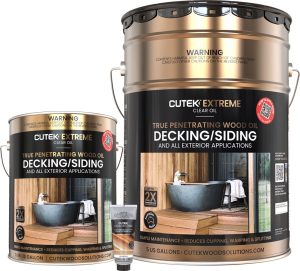
CUTEK® Extreme Penetrating Wood Oil Review
- Type: Penetrating Oil
- Durability: 1.5–2.5 Years
- Maintenance: Very easy (clean and reapply)
- Best For: Exotic hardwoods (Ipe, teak) all wood types
- Why It Stands Out: Extreme penetration with no film buildup, making long-term maintenance simple
Scott’s Pro Tips: Although CUTEK® Extreme is more expensive than many penetrating oils, the performance was very solid. There was no peeling or significant wear, and the coating should be easy to maintain, as it fades naturally and can be refreshed without stripping.
Note on our CUTEK® Extreme Review:
We have not yet been able to fully evaluate long-term UV resistance over our standard two-year testing period, as this application was completed in 2025. However, based on our experience so far, we have strong confidence in the product. It checks many of the key criteria we look for in a quality deck stain—deep penetration with added UV protection, along with the ability to reapply easily as it weathers.
My Test Deck Stats
Deck Wood Type: Pressure Treated Pine
Deck Square Footage: 1000
UV Exposure: Full Sun
How Many Years Tested: 1 Year
Stain Color Used: Walnut
Stain Type: Penetrating Mineral Oil-Based. Non-Curing. 18 Colortones
Consumer Star Ratings:
My DeckStainHelp.com Rating (On a Scale of 1-10): 8.50
See My Review Article Here: CUTEK® Extreme Penetrating Wood Oil Review
| Image | Title | Price | Add to cart | Rating |
|---|---|---|---|---|
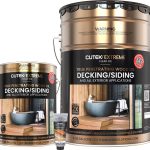 | Price range: $114.99 through $669.89 | |||
 | $10.00 |
My Best Deck Stains by Stain Type
Semi-Transparent Deck Stain Review
I like that Restore-A-Deck Wood Stain can be applied to dry or damp wood. Applying to damp wood allows you to prep and stain on the same day, saving you a tremendous amount of time. In 2018, my first full year of using the Restore A Deck stain, I had zero issues with performance and saved a tremendous amount of time with the ability to prep and stain on the same day. I will continue to offer the Restore A Deck Wood Stain as one of my go-to decking stains for the 2026 restoration season. The Restore A Deck Stains come in both Semi-Transparent and Solid Colors.
For more, see my article on the Best Semi-Transparent Deck Stains.
Semi-Solid Deck Stain Review
Best New Semi-Solid Stain for 2026: Available in 30 Custom Colors, the TWP® Semi-Solid Pro-Series is my favorite semi-solid stain. It will keep your wood beautiful, fresh, and looking new longer! The ease of application and maintenance will allow you to enjoy your investment for years to come. TWP®Semi-Solid Pro-Series provides a broad spectrum of weather protection, is water repellent, and aids in color retention. TWP® Semi-Solid Pro-Series resists water absorption that causes warping, cracking, splitting, and prevents freeze damage in colder climates.
Deck Stain Oil-Based: TWP 100 Pro Series Semi-Transparent
TWP 100 Pro Series semi-transparent stain penetrates well into the wood, fades lightly in color, and holds up to wear and tear. I like that when it’s time to redo the wood in 2-3 years, the TWP outdoor stain can be cleaned and re-applied or removed with ease. This makes the reapplication process much easier. TWP 100 Pro Series patio stain is only allowed in 35 states and cannot be used in Canada.
- Stain Type: Penetrating semi-transparent, oil-based, full-curing exterior wood stain
- Consumer Star Ratings:
- My DeckStainHelp.com Rating: 8.69/10
- Website Link: TWP 100 Series
- Wood and Deck Stain Photos: TWP 100 Series Photo Album
Deck Stain Water-Based: Restore-A-Deck Semi-Transparent Deck Stain
Restore-A-Deck semi-transparent deck stain can be applied to dry or damp wood. Applying this stain to damp wood allows us to prep and stain on the same day, saving you a tremendous amount of time. This Restore-A-Deck wood stain is an advanced, water-based, semi-transparent stain formulation designed to penetrate deep into wood pores for maximum protection and longevity. It’s compliant with regulations in all U.S. states and Canada.
- Stain Type: Penetrating semi-transparent exterior wood stain, water-based, full-curing, damp or dry wood application
- Consumer Star Ratings:
- My DeckStainHelp.com Rating: 8.625/10
- Website Link: Restore-A-Deck Semi-Transparent Stain
- Wood and Deck Stain Photos: Restore-A-Deck Semi-Transparent Stain Photo Album
Solid Color Deck Stain: Restore-A-Deck Solid Color Wood & Deck Stain
 Restore-A-Deck solid-color stain is my go-to solid-color/opaque deck stain for 2026 because of its ease of use, five pre-mixed solid colors (the only solid stain on the market that comes pre-mixed), and the ability to allow us to prep and stain on the same day, which adds extra convenience. It uses the latest advances in wood stain technology to seal and protect the wood by penetrating deep into the grain, shielding your deck from UV and water damage which is responsible for the growth of mold and mildew. It’s also compliant with regulations in all U.S. states and Canada.
Pro Tip: Restore-A-Deck offers Eco-Friendly Deck Stain Choices for Sustainable Living.
- Stain Type: Solid-color (opaque) exterior wood stain, water-based
- Consumer Star Ratings:
- My DeckStainHelp.com Rating: 8.68/10
- Website Link: Restore-A-Deck Solid Stain
- Wood and Deck Stain Photos: Restore-A-Deck Solid Stain Photo Album
For more info, see my dedicated article on the Best Solid Color Deck Stains.
Best-Applying Deck Stain: Armstrong-Clark Wood Stain
 Armstrong-Clark Wood Stain has consistently been a well-performing deck stain product. I really like how it penetrates deep into the wood grain and applies easily. Reapplication is simple for us, with a good deck cleaner for the prep. It’s compliant with regulations in all U.S. states and Canada.
- Stain Type: Penetrating transparent, semi-transparent, semi-solid oil-based, paraffin and curing oil blend, full-curing exterior wood stain
- Consumer Star Ratings:
- My DeckStainHelp.com Rating: 8.5/10
- Website Link: Armstrong Clark Stains
- Wood and Deck Stain Photos: Armstrong Clark Stain Photo Album
Pro Deck Restoration Contractor Quote on Armstrong Clark Stains
Jason Spurney, a professional wood restoration expert from J&S Deck Care, says,
“As a contractor, I highly recommend using Armstrong Clark for a natural look that achieves greater longevity than any other oil-based product I have used. I can confidently recommend this product to my customers, knowing that they will achieve the greatest return on their investment possible and enjoy their outdoor living space to the full.”
Semi-Solid Wood Deck Stain: TWP Pro Series Semi-Solid Stain
The TWP brand of stains is one of our most commonly used wood stain brands, as I have applied it to more than 10,000 decks over the past 30+ years as wood restoration contractors. What I like best about the TWP semi-solid stain is that it’s easy to apply, it’s easy to prep and reapply when the time comes, and it holds color very well, even under UV light. TWP semi-solid stain is only allowed in 35 states and cannot be used in Canada.
- Stain Type: Penetrating semi-solid, oil-based, full-curing exterior wood stain
- Consumer Star Ratings:
- My DeckStainHelp.com Rating: 8.50/10
- Website Link: TWP Pro Series Semi-Solid
- Wood and Deck Stain Photos: TWP Semi-Solid Photo Album
Make sure to check out my full article on the Best Semi-Solid Wood Deck Stains.
Wood Preservative Deck Stain: TWP 1500 Series Semi-Transparent Stain
TWP 1500 Series exterior deck stain is one of my top choices for the best outdoor wood stain because it protects the wood from rot and severe weather. TWP 1500 Series stain is the only deck stain on the market that is registered as a “wood preservative” with the EPA. As a contractor, we really like stains that penetrate deep into the wood and can be reapplied without sanding. TWP 1500 Series patio stain fits this and more by adding excellent UV and mold protection. Maintaining TWP stain every 2-3 years is easy. TWP 1500 Series stain is compliant for all U.S. states but not Canada.
- Stain Type: Penetrating semi-transparent, oil-based, full-curing, EPA-registered exterior wood stain
- Consumer Star Ratings:
- My DeckStainHelp.com Rating: 8.5/10
- Website Link: TWP 1500 Series
- Wood and Deck Stain Photos: TWP 1500 Series Photo Album
Deck Stain for Mildew: Defy Extreme Semi-Transparent Wood Stain
Defy Extreme Semi-Transparent Wood Stain penetrates into the wood grain extremely well for a water-based stain, resulting in a non-filming coating that is not prone to peeling or wear from traffic. I use the Defy Extreme on about 30-50 deck restorations every year in the Midwest, and it is one of the best outdoor wood stain options on the market for preventing mildew. Compliant for all US states and Canada.
- Stain Type: Penetrating semi-transparent, water-based exterior wood stain
- Consumer Star Ratings:
- My DeckStainHelp.com Rating: 8.47/10
- Website Link: Defy Extreme Wood Stain
Deck-Resurface Coating: Gulf Synthetics Deck Revive
 Homeowners are always looking for an alternative to a deck replacement. When wood is neglected, it can be expensive to have it restored or replaced. If you’re looking for a deck resurfacing Stain, remember that most users have had an unpleasant experience with Home Depot and Lowe’s products. Reviews and user experiences with most of these products have been overwhelmingly negative. However, comments about Gulf Synthetics Deck Revive have been favorable.
- Stain Type: Solid Color Deck Resurfacer, water-based exterior wood stain
- Consumer Star Ratings:
- Website Link: Gulf Synthetics Deck Revive
- Wood and Deck Stain Photos: Gulf Synthetics Photo Album
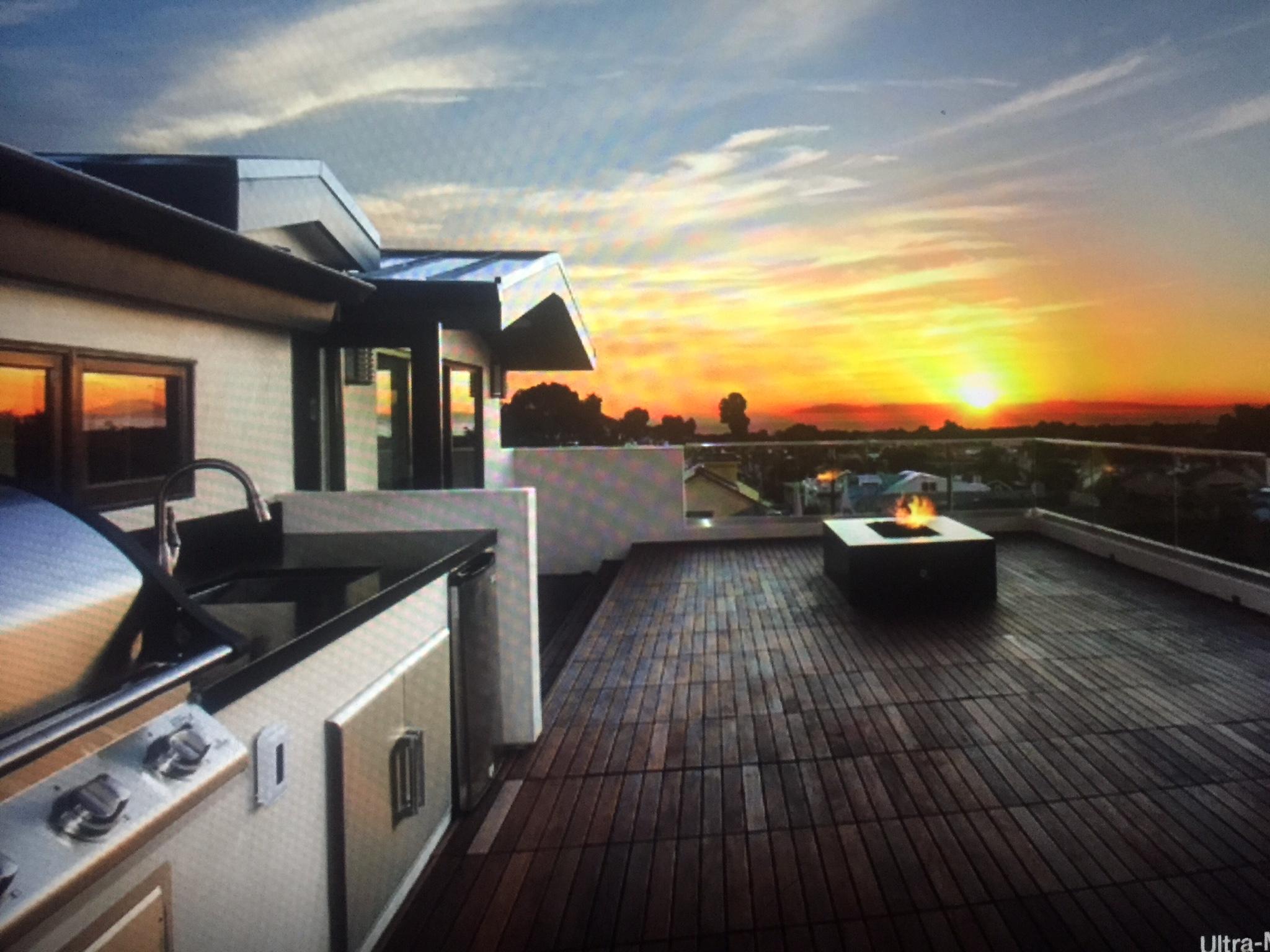
Choosing the right deck stain depends heavily on your wood type. Below are my recommendations based on real-world use cases and wood conditions.
Best Deck Stain for Old Wood
Older decks require a stain that can penetrate deeply into dry, porous wood and restore some life back into the surface. Film-forming stains or cheap acrylics tend to sit on top and will peel quickly on aged wood.
For most older decks, I recommend a penetrating oil-based or hybrid stain like Armstrong Clark Wood Stain or TWP 100 Series. These products soak into the wood fibers instead of forming a surface film, which allows them to wear naturally and be reapplied without heavy stripping.
If the wood is extremely worn or splintering, a solid stain or resurfacing product may be a better option, but for decks that are still structurally sound, a semi-transparent penetrating stain will give the best balance of appearance and longevity.
Pro Tip: Proper prep is critical on older wood. Make sure to thoroughly clean and brighten the surface so the stain can absorb evenly.
Best Deck Stain for Pressure-Treated Wood
Pressure-treated wood is one of the most common decking materials, but it can be tricky because it often contains mill glaze when new and can be dense depending on age.
The best option is a penetrating semi-transparent stain that allows the wood to breathe and prevents peeling. Top choices include Restore-A-Deck Wood Stain and TWP 1500 Series, both of which perform well on pressure-treated lumber.
- For new pressure-treated wood, wait until the wood has weathered and is able to absorb stain (typically a few months), then prep and stain.
- For older pressure-treated decks, proper cleaning and brightening will restore the wood and allow for better stain penetration.
Avoid: Film-forming coatings and paints unless the wood is severely worn, as they tend to peel on pressure-treated surfaces.
Best Deck Stain for Cedar Decks
Cedar is a softer wood that naturally resists decay, but it is highly susceptible to UV graying and color fading if not protected properly.
The best stains for cedar are penetrating, UV-resistant semi-transparent stains that enhance the natural grain while protecting the wood. My top recommendations are TWP 1500 Series, Restore-A-Deck, and CUTEK Extreme.
- If you want to maintain cedar’s natural look, use a lighter or natural-tone stain.
- If you want longer UV protection, choose a slightly darker tint, as it will hold color longer.
Cedar benefits from regular maintenance, and using a penetrating stain will make future reapplications simple without the need for stripping.
✅ How to Choose the Right Deck Stain
Before choosing a brand, determine:
- Wood Condition: New, weathered, or heavily worn
- Desired Look: Natural grain showing vs solid color
- Maintenance Preference: Easy recoat vs long coverage
- Climate: Sun exposure, moisture, temperature swings
Pro Insight: Penetrating stains outperform film-forming coatings in most real-world deck applications.
Steps to Picking the Top Deck Stain for Your Needs
Is There a #1 Rated Deck Stain or Sealer?
What is the Best Deck Stain? This is the most common question I get here on DeckStainHelp.com, and the short answer is, there is no universal #1 best exterior wood stain for decks that works perfectly every time. The right choice depends on the specific conditions of your deck and its environment. For example, a wood stain that performs well in humid South Carolina may not be as effective in the cold, snowy Midwest. Plus, different regions have varying VOC (volatile organic compound) regulations, which may limit the stains available in your area.
My top-rated wood and deck stain, TWP 100 Pro Series, can’t be used in 17 states and Canada due to its higher VOC content. It’s essential to take these factors into account. Additionally, think about the look you want. Do you prefer a stain that enhances the wood grain or one that hides the grain for a more opaque, paint-like finish?
Understanding your deck’s specific needs and environment will guide you to the best stain for the job.
Understanding Deck Stain Types: Transparent, Semi-Transparent, and Solid
Before reading my deck stain reviews, learn more about the three main types of deck stains you may encounter: transparent, semi-transparent, and solid stains.
✅ Deck Stain Types Explained
- Transparent/Clear Sealers: Natural look, less protection
- Semi-Transparent Stains: Best balance (most recommended)
- Semi-Solid Stains: More color, moderate maintenance
- Solid Color Stains: Maximum coverage, higher maintenance
Pro Tip: See my Deck Stain Types for more in-depth differences on deck stains.
Transparent Stains
As the name suggests, transparent stains are clear or very lightly tinted stains that help seal and protect wooden decks while still allowing the wood grain to show through. See below for Pros/Cons for the best transparent deck stain options for stunning results.
- Pros of transparent deck stains: Transparent deck stains can have several benefits. Penetrating transparent stains soak into the wood, eliminating slippery residue and sealing the wood from water damage. The stains also allow the unique beauty of your wooden boards to show through rather than hiding them below a thick coat of paint.
- Cons of transparent deck stains: Some disadvantages of transparent deck stains include potentially more maintenance and reapplication requirements, fewer color options, less UV protection, and no opportunity to hide flaws in your deck.
- When to choose a transparent stain: You may prefer a transparent stain if you want to seal your new deck boards while still allowing the wood grain to shine through.

Transparent Deck Stain
Semi-Transparent Stains
Like transparent stains, semi-transparent stains seal and protect your wooden deck from damage. However, these stains typically feature slightly richer colors that can provide more coverage than a transparent stain. You’ll still see the wood grain of your deck boards, but a semi-transparent stain cannot hide some flawed or damaged boards.
- Pros of semi-transparent deck stains: Semi-transparent stains are less likely to chip and peel, and some can even be applied directly to damp wood, meaning you can start staining before your deck dries completely. Semi-transparent stains may also be more durable than transparent stains while providing enhanced UV protection.
- Cons of semi-transparent deck stains: These stains are typically better suited to well-maintained decks under ten years old. They’re also not the best choice for painted surfaces, as they won’t cover imperfections.
- When to choose a semi-transparent stain: Consider a semi-transparent stain if your deck is newer and in good shape but may have some minor discoloration.

Semi-Transparent Deck Stain
Solid (opaque) Stains
I have found that solid deck stains are similar to paint in that they form a coat of solid color on top of your deck boards. Unlike paint, however, solid stains also soak into the wood and seal it against moisture, mold, and mildew damage.
- Pros of solid deck stains: Solid stains provide the most coverage for your deck boards. They offer unmatched UV defense and enhanced durability compared to transparent and semi-transparent stains.
- Cons of solid deck stains: Solid stains often hide your deck’s natural grain completely and create a smooth, even finish on top of the boards.
- When to choose a solid stain: You may choose a solid stain if your deck is discolored or made of softer woods like cedar and pine, as these materials may require the additional protection offered by a solid stain.

Solid Color Deck Stains
| ; | ; | ; |
Which Deck Stain or Sealer is Best for Me?
When comparing deck stain products and types, consider the following factors:
1. Color and Transparency Preferences
Depending on your taste and how much natural wood grain you want to see, you may choose a transparent, semi-transparent, or solid stain.
- Transparent stains are lightly tinted products that protect the wood from sun and moisture damage but allow the natural wood grain to show through.
- Semi-transparent stains lend more color to the wood than transparent colors, allowing you to match your deck boards to your home or trim and providing better UV protection.
- Solid stains bridge the gap between a stain and paint, forming a solid coating on top of your wooden deck and creating an even color that conceals wood grain and variations in the wood grain.
2. Long-Term Durability
I believe penetrating, semi-transparent stains provide the perfect balance of customizable color, ease of reapplication, and long-term durability. Transparent stains typically require more frequent applications, while solid stains may last up to 2-3 years on a deck and 4-6 years on vertical wood such as railings with appropriate care.
3. Deck Condition
You can generally use any stain on a newer deck that’s still in good condition. However, you may consider a semi-transparent or solid stain for an older, weathered deck.
4. Climate Concerns
Finally, consider your climate. A hot, dry area may require stains with enhanced UV protection, while you may prefer a product with strong mold, mildew, and moisture protection in areas that receive heavy rainfall.
✅ What to Avoid When Choosing a Deck Stain
- Film-forming coatings on older decks
- Over-applying stain
- Choosing based on color alone
- Skipping prep
Even if you choose the best deck stain on the market, these common mistakes can impact long-term durability and appeal:
- Not preparing your deck: Failing to clean your deck or remove old, flaking, or peeling stain from your boards can prevent a fresh coat of stain from adhering properly. See my Deck Cleaning Guide for best results!
- Not checking the weather: Rain, extreme temperatures, or high humidity can impact stain application. Check the forecast for two or three dry days with temperatures ranging from 60 to 80 degrees Fahrenheit. In addition, try to apply stain earlier in the morning or in the afternoon to avoid direct sunlight.
- Over-applying stain: You may think more stain equals more protection from moisture, mildew, and sun damage, but that’s not always the case. Too much stain can prevent the product from penetrating your deck boards. As a result, it may form a film on top of the wood that peels or flakes off over time. See my How to Stain a Deck tips for the best results.
- Not maintaining your deck: Even after your stain dries, it may require ongoing maintenance. Keep your deck dry and swept to eliminate grime and reduce the risk of mold or mildew. Finally, touch up spots showing signs of fading, chipping, or UV or moisture damage.
Getting the Most Protection from Your Deck Stain and Sealer
No one wants to apply fresh deck stain only to find it needs a reapplication a few months later. With that in mind, consider the following tips to get the most out of your deck stain:
- Take the time to prep your deck before applying stain to ensure maximum durability. Start by sweeping off dust, dirt, and grime, then use a scrub brush with a hose or a pressure washer on a low setting. Always use the appropriate deck cleaner or stain stripper. Not sure how to prep your deck? See our article on Deck Prepping, and we will gladly help and offer advice: Strip, Clean, or Sand Your Deck?
- Apply your stain on a dry, partly sunny day with mild weather. Want to stain your deck the same day as prep? If using the Restore-A-Deck stains, you can apply them to damp wood after prepping!
- Apply stain using a roller, stain pad, or stain brush.
- Always follow all manufacturer directions regarding the number of coats to apply and whether a second coat should be applied wet on wet or wet on dry.
Be sure to read my article on how to stain a deck.

Deck Staining: Frequently Sought Answers
When helping people choose the best deck stain and sealer, I often hear many of the same questions. Here are some tips and words of advice about exterior wood stain that can help answer these questions:
- No exterior deck stain will last five or more years. A good-quality stain will last two or maybe three years on a deck floor (horizontal) and typically twice as long on railings and vertical surfaces.
- Penetrating stains will have less chance of peeling, as they soak into the wood grain rather than settling as a film on top of the wood grain when fully cured.
- Penetrating deck stains are easier to maintain by cleaning the deck and reapplying the stain after two to three years.
- Filming deck stains that dry on top of the wood can be harder to remove and/or reapply, as they are more prone to peeling, wear, flaking, etc.
- I have found that not all deck stains are penetrating. Some brands may claim that they are, but it may not be the case when you apply it to your exterior space. Always do extra research to ensure that the stain you purchase is penetrating.
- Semi-transparent, transparent, and semi-solid stains will show the grain of the wood to some extent. Solid stains, deck resurfacing coatings, and paints will not.
- Clear sealers without any pigment/color will not prevent UV graying. Lighter-pigmented stains that are transparent, semi-transparent, or semi-solid will have less UV protection than darker-pigmented stains in the same transparency. More color/tint means better UV protection.
- Deck stain types include oil-based or water-based, filming or penetrating, and either transparent, semi-transparent, semi-solid, or solid (opaque). Deck resurfacing products are also an option.
- Oil-based stains can still be used in all states and Canada as long as they comply with local VOC regulations.
- When switching brands of deck stain, I have found it’s always best to remove the old coating first. Do this by using a deck stain stripper and/or sanding.
- Always apply a wood brightener after prepping with a stain stripper or wood deck cleaner to neutralize the pH.
- New decks that have been installed less than a year before treatment have different needs than a deck that is more than a year old. New decks need to be prepped and usually cannot be stained right away.
- Always prep your deck for the outdoor stain you use to ensure a long-lasting finish.
✅ Best Deck Stain FAQs
Quick Tip:
If you want the easiest long-term maintenance, stick with penetrating semi-transparent stains. They consistently perform best across most deck types.
🔍 Choosing the Right Deck Stain
What type of deck stain is best for most decks?
Semi-transparent penetrating stains offer the best balance.
What deck stain is best for older wood?
Penetrating semi-solid stains such as TWP Semi-Solid and Armstrong Clark Semi-Solid are best for older wood and decks that are dried out.
Is oil-based or water-based deck stain better?
Both can perform well. Oil-based stains penetrate deeper and are easier to maintain, while water-based stains offer better UV color retention and easier cleanup.
Are expensive deck stains worth it?
Higher-quality stains usually last longer and require less maintenance.
Best deck stain brands for decks in full sun?
TWP, Restore-A-Deck, and Armstrong Clark are top choices. Darker tints tend to perform better in full sun.
🧱 Deck Stain Types & Performance
What is a deck stain?
Deck stain is a protective finish for wood that enhances appearance and protects against moisture and UV damage. It comes in transparent, semi-transparent, and solid options.
What deck stains perform the best?
Penetrating semi-transparent and semi-solid stains perform best for most decks due to durability and ease of maintenance.
What deck stains will protect from UV graying?
Stains must contain pigment to protect against UV. Semi-transparent stains provide good protection while still showing wood grain.
What deck stain types can be cleaned and recoated easily?
Penetrating stains can be cleaned and recoated without heavy prep, unlike film-forming stains that may peel.
⏳ Durability & Maintenance
What is the longest-lasting deck stain?
Solid stains such as the Restore-A-Deck Solid Stain last longer in terms of color retention, but penetrating stains are easier to maintain over time.
What is the easiest deck stain to maintain?
Penetrating semi-transparent stains are the easiest to maintain since they do not peel.
How often should you re-stain a deck?
Typically every 2–3 years depending on exposure and product used.
🎨 Appearance & Color
What are the most popular deck stain colors?
Popular colors include cedar, brown, honey, and redwood tones.
🛠 Application & Usage
What’s the best way to apply a deck stain?
Stain pads and brushes provide the most even application. Sprayers can be used but should always be back-brushed.
Can I use a deck stain on wood siding?
Yes. Deck stains work well on siding, fences, and log homes and often last longer on vertical surfaces.
🆕 New Deck Questions
How long should you wait to stain a new deck?
- Smooth wood: Wait ~3 months
- Rough wood: Can stain once clean and dry
- Kiln-dried wood: Wait 1–2 months
⚖️ Deck Stain vs Other Products
What’s the difference between deck stain and deck paint?
Deck stain penetrates the wood and looks more natural, while deck paint sits on the surface and creates an opaque film.
Want My Help Finding a Top-Rated Deck Stain?
I am here to help you narrow down all the deck stain options and offer advice on what would work best for you and your wood deck. To understand which wood stain to choose, start by considering why your last coat of coating (if applicable) may have failed:
- UV rays from the sun will damage wood, resulting in the degradation of the wood’s cellular structure. This will break down the stain while causing the wood to oxidize (turn gray).
- Water, snow, and ice will damage the wood by breaking down the exposed cell structure.
- Freezing and thawing tend to expand and contract the wood, weakening the stain’s bond with the wood cells.
- Mold, mildew, and algae will leave the wood unsightly/dirty and can cause rotting.
- High-traffic areas will wear faster.
- The previous stain used may have been of inferior quality or applied poorly.
- The wood may not have been prepped properly prior to application. Bad prep is the number one reason stains prematurely fail!
Once we determine the primary reasons for failure, we can look at what stains would be better for your deck or exterior wood. Here are the questions that will guide your choice:
- In which state is your deck located?
- How much sun/shade does your deck get?
- What type of wood is your deck made of?
- Do you have mold or mildew issues?
- Why/how did the previous stain fail?
- What type of stain did you use last time?
Let’s look at my example deck:
- Deck Location: Michigan
- Sun/Shade: Full sun in the morning, shade in the afternoon
- Wood Type: Cedar
- Mold/Mildew?No
- How Did the Last Stain Fail? Dried blotchy and peeled after the first winter
- Which Stain Was It? Behr Premium Semi-Transparent
Michigan currently has a VOC limit of 550 (250 VOC as of 2023), so not all exterior deck stains are available. You may have different options if you live in Canada, on the East Coast, or in California. I would suggest a penetrating semi-transparent or semi-solid stain that does well with UV protection and fades evenly over time, making future reapplication easier. Based on these questions and answers, we would suggest one of these stains:
Let Me Help You Find the Best Wood Stain for You
How to choose the best deck stain for your home? I am here to help you find the best wood deck stain for your situation! Just post a comment below with answers to these questions.
- In which state is your deck located?
- How much sun/shade does your deck get?
- What type of wood is your deck made of?
- Do you have mold or mildew issues?
- Why/how did the previous stain fail?
- What type and brand (if known) of stain did you use last time?
If you can, please add a picture or two of your deck’s current condition. I’ll do my best to suggest the best wood deck sealer and stain for your needs.
NOTE. Make sure to Post Comments Below for Personalized Help!
Choosing the Best Wood Deck Stain: A Video Guide

Deck Stain Ratings & Review Photos
Top 8 Deck Stain Rating Results in 2026



















My home is on the California coast, wind, rain, full sun. Cedar shingles, mildew and mold in places. Used Superdeck semi transparent oil for 30 years. I noticed fading and blotching. What product would you recommend?
Strip and brighten for the prep and try TWP 1500 Series or Restore-A-Deck Wood stains.
What’s the Best Stain for My Deck?:
Deck location: northern CA – not coastal- (inland where summer temps are 100 degrees, winters are wet)
Exposure – full sun
Wood type – redwood. Brand new. Never been treated/stained with anything
Mold/mildew issues – minimal if any
Reasons for previous stain failure – none. Never been treated before. Just built
Previous stain brand – none
See this about new wood: https://www.deckstainhelp.com/staining-a-new-deck/
What type of solid stain is the best to use on our deck? Half of the deck is new pressure treated pine wood and the other half is also pressure treated with a solid stain which we are keeping since they are still quite good?
Deck Location State: Ottawa Ontario Canada
Full Sun, Partial Shade, Full Shade: Partial Sun
Wood Type: Pressure Treated Pine
Mold or Mildew Issues: none
Reason for Previous Stain Failure: peeling
Previous Stain Brand and Type of stain: Solid stain.
Try the Flood Solid Stains.
My question is what product would you recommend for use on a Mahogany deck with full sun exposure in NH. and to strip the prior years Cabot ATO? Thanks, Bob
Use the Armstrong Clark In Mahogany color. You are corect the Cabot changed their formulas. As for stripping, try the Restore A Deck Stripper kit but you may need to sand as well.
Hi would I also need to use a deck brightener after stripping?
Yes.
Thanks for your advice. As for the rails, they’ve never had any thing on them and only a couple months of exposure. What prep would I need for them?
Deck Cleaner and then a Wood Brightener.
Deck location: NH it gets full sun, wood type is mahogany(3 yrs old). The railings I take off each Fall for easier snow removal. Last year I used Cabot ATO and it’s not the same product I used 15 years ago. Uneven coat noticed after 2 months and poor water protection.
What are the best stain options for my deck?
1.Deck Location State: Illinois, Chicago suburbs
2.Full Sun, Partial Shade, Full Shade: Full Sun most of the day
3.Wood Type: Cedar
4.Mold or Mildew Issues: No
5.The reason for Previous Stain Failure: New deck installed 7 months ago, no previous stain.
6.Previous Coating? If so brand name and type of stain (Transparent, Semi-transparent, Semi-solid, Solid Stain): None
Would like a semi-trans so we can still see the grain.
Thanks much for your help.
Pat
One of these brands: https://www.deckstainhelp.com/the-5-best-deck-stain-reviews-and-ratings/
Deck Location State: Connecticut
Full Sun, Partial Shade, Full Shade: Full Sun for at least several hours a day, mostly at noon, but part of the deck gets full shade since it wraps around the house.
Wood Type: Pressure Treated Pine, probably.
Mold or Mildew Issues: Yes in spots. Especially when the shrubs grow in too close.
Reason for Previous Stain Failure: Peeling.
Previous Stain Brand and Type of stain. Not sure but something solid. The previous owners painted and 2 years later it’s all coming off.
We’re planning to have a professional power wash, sand and paint our deck this summer. He recommended Behr Deckover but after reading all of the reviews, including on this site, I’m not so sure it’ll work. Our goal is to have something that’ll ensure high traffic from our dogs. Pretty soon they’ll both be at 150lbs.
Try the Gulf Deck Revive: https://www.deckstainhelp.com/gulf-synthetics-deck-revive-review-2015/
Deck Location State: Central Alberta, Canada
Full Sun, Partial Shade, Full Shade: We have several levels and areas of the deck located to the north and east of the house
Wood Type: Pressurized wood but unknown, see image attached with extra wood stored below the deck.
Mold or Mildew Issues: No
The reason for Previous Stain Failure: Peeled after first Winter.
Previous Coating? If so brand name and type of stain (Transparent, Semi-transparent, Semi-solid, Solid Stain): Olympic Maximum Stain + Sealant for the floors; SICO Exterior Latex Semi-Gloss Primer + Paint for the railing and verticals .
Images show the paint condition after 3 years but started already already after first winter, see images. Deck is estimated 10 to 15 years old, had solid paint on before we painted it. The old paint was mostly removed.
Thank you for your help!
You will need to paint again with a solid color stain unless you want to sand it all off?
can you give me both options and also the recommended products for each? Thank you.
If you use a solid color stain, try the Flood Solid Stain. If you sand it off, use a penetrating semi-transaparent like Armstrong Clark.
Hi. I am looking for a high-rated pigmented deck stain product. I have used Sherwin Williams. Am not happy with it.
Help appreciated.
Any of these top 6 would work as they are all penetrating semi-transparent wood stains. Make sure to fully remove the SW first.
thank you for your quick response! i wasn’t sure if all those brands did not offer color stains. i know Behr does.
I have rental property and the deck needs some TLC.
Located: Georgia
East facing/full sun
Pressure treated wood
Previous stain unknown
What is the best option with lowest maintenance?
Prep with Restore A Deck Cleaner/Brightener kits and stain with TWP 100 Series or Armstrong Clark.
thank you
I am building a small barn central California lots of sun. I have 2×6 TnG kiln dried pine walls and lots of them. Considering outlast q8 timer oil or Thompson’s teak timber oil but heard reviews that this turns too dark. I want longevity not that peeling topcoat. Help recommendations? Thanks
TWP 1500 Series or Armstrong Clark.
Deck Location State: Utah
Full Sun, Partial Shade, Full Shade: Partial shade (north side of house)
Wood Type: Cedar
Mold or Mildew Issues: No
The reason for Previous Stain Failure: Dried Blotchy and Peeled after first Winter.
Previous Coating: Thompson Water Seal Semi-Transparent
Prep by removing the Thompsons. Strip and sand. Brighten all after. Stain with Armstrong Clark or TWP 100 Series.
Deck location: West Michigan
Upper level deck with staircase and railing. North side of house, full sun, full shade under eaves, no mold issues but some algae under overhang, several trees
Built in 1990 – pressure treated wood that was treated every 2-3 years with CW-F UV clear finish until 2010 then nothing with exception of a few power washings. I have found a locally-owned company who comes highly recommended to restore it. They hand-brush everything using Sherwin Williams semi-transparent oil-based Superdeck. I would prefer a natural finish but they are recommending a stain for longer lasting results. Although this product doesn’t rate as high as others, what are your thoughts on using it and whether I should go clear or use a stain? If I go with a stain, how much effort would it take to go back to natural in a year or two or change product?
Clear has no UV protection. You need a stain for this. We do not like Super Deck. Turns black or dark brown in color. Easy to remove though if ever needed. Just strip and brighten.
What product would you recommend for this deck?
TWP 100 Series. Your contractors will like it better as well.
Hi..
New Deck installed aug 2017..love the idea of bringing indoor floor color outdoors.
We have selected color and purchased qt of Cabot® Sunlit Walnut Gold Exterior Finish Oil-Based Stain to sample color. this to compliment hardie english tudor style siding artic white/chestnut brown timber :hmm: :hmm: :hmm:
Deck Location State: Chicago, Illinois (few 3mi west of lakefront)
Full Sun, Partial Shade, Full Shade: Full Sun
Wood Type: Pressure Treated Pine Ac2 copper infused
Mold or Mildew Issues: none
Reason for Previous Stain Failure: none
Previous Stain Brand and Type of stain: new deck
We would like to use Cabot® Sunlit Walnut Gold Exterior Finish Oil-Based Stain but am I correct in thinking that this will not wear properly on new deck.
As this appears to be a new formulation, i can not find any reviews on application on new deck, but it seems that bare new (in my case PT (Weathershield brand) wood from Home Depot) is the best surface to start with.
My dream to have easy care, not use solid or chalky semi trans. willing to clean and brighten.
My reality if this is not easily doable to get this look, what are suggestions to get us in the ballpark…
Many thanks,
Mrstoni
The Cabot Gold is a filming product that dries and leaves a shine on top of the wood. This is not a good idea. It will be prone to peeling and uneven wearing. See this for tips on new wood: https://www.deckstainhelp.com/staining-a-new-deck/
Thank you so much. now gotta find a rich color match in a stain. the top 3 recommended oddly enough not available at home depot or menards nevertheless thanks and best to my fellow deck mates
None of the top brands will ever be found in a big box store nor will a big box store ever sell a top product. There is a reason behind this and it is called “cheapening” the products at the big box stores. They do it all the time and for many different brands of products, not just deck stains.
https://www.deckstainhelp.com/deck-stain-quality-at-lowes-or-home-depot/
pardon delay … aren’t you just awesome!!! We will order online and wait.
:smile: :grin:
Looking for best stain recommendation!
Minnesota
Full afternoon sun (and snowy winters obviously!)
It is a newly built deck, pressure treated pine.
Not sure if it matters, but part of the deck is higher and part is a wood deck patio, so near the ground. Thanks!
See this for tips on new wood: https://www.deckstainhelp.com/staining-a-new-deck/
1. Central Pennsylvania
2. Partial shade all day due to trees
3. Treated pine
4. Mold and mildew
5. It’s been years since we have done anything to the deck other than power wash
6. Almost 10 years ago: Calbot transparent oil
It needs it! Clean and brighten for the prep to retore the wood. Stain with Armstrong Clark or Restore-A-Deck Wood Stains.
I have a very large older redwood deck(prob 15 plus years)the wood is in surprisingly good shape and in the past I’ve been able to retore it with goood results. However the stain ive used in the last few years hasnt help up well at all. (Olympic brand) Its been power washed by the previous owner and has some deeper grooves. I have previously stained it with a semi-trasparent stain and it has faded, peeled, and turned dark/grey after about a year. I have been staining it every other year and I went a bit heavy on the stain in the past and some old stain is still present. Today used a cleaner to clean and to lighten the grey/mildew areas. I will sand in a few days to get as much of the remaining stain off and then hope to use the most durable product available to re-stain. The deck looks great with a semi-transparent stain and i like the color in the photo on this page. I live in Nevada near Cali border. , The deck gets full sun, sees hot temps, and is fully exposed to the elements.
That is TWP 101 Cedartone in the above picture. You can use this in NV.
What is the best stain for NW corner of WA state with full morning sun, early afternoon? Just pressure washed & replacing old boards with treated ones.
Tyr the TWP 100 Series or Armstrong Clark.
Deck Location State: Ohio
Full Sun, Partial Shade, Full Shade: Full Sun
Wood Type: Unknown (previous owner installed)
Mold or Mildew Issues: Yes
Reason for Previous Stain Failure: Began to peel in heavy traffic areas / heavy sun areas.
Previous Stain Brand and Type of stain (Solid, Semi-transparent, Transparent, etc): Pittsburgh Ultra Advanced Semi-Transparent
Strip and sand for the prep. Brighten all after. Stain with TWP 1500 or Armstrong Clark.
Any recommendations on sanding? I have a hand held “sheet” / “palm” sander that I could use, but this is unfortunately going to be around 1200sqft of horizontal deck boards / stairs. A awful lot of on your knees work. If no other option exists however it’ll be done!
Strip first. If it all comes off, no need to sand. Do you know if the Pittsburgh was oil or water-based?
It states on the front neutral base however the stain canister also says latex and acrylic, which I believe is normally water based ?
Yes, correct. That also means it will be hard to strip. You may need to rent a drum sander. See how much comes off first with the stipping before deciding on what to sand with.
What’s the best stain for southern NH, a deck with full morning sun and partial afternoon sun. Just bought the house over the winter, deck looks like it was pressure washed.
Prep this wood first by using a deck cleaner and then a wood brightener. Stain with TWP 1500 Series or Defy Extreme Stain.
We used Behr deck restore and it bubbled and peeled and they said we must not have prepared the surface correctly. Well we did and we used the cleaner and it is a mess. We now have to power wash and clean and sand the deck. If we cannot get all of the paint off what product do you recommend to paint it that will cover the cleared area and the not entirely clear area
You will need to sand it all off as nothing can be applied on top of it to fix the issues with peeling.
State: Georgia
Mostly Shade
Pressure Treated Pine
Some mold
Deck has not been stained in 10 years
Not sure what type of stain was used before
The pictures were taken after a week of rain and the deck is still a bit wet.
Hello, prep with the Restore A Deck Products and stain with TWP 100 Series or Restore A Deck Wood stains.
We have a 3 year old cedar dock on an inland lake in Upper Michigan. Full sun in the summer, under snow banks in the winter. Mildew and moisture are a concern. We stained it when it was brand new, but now it looks weathered and greyish in color. We have power washed it already and are ready to treat it with something that gives it the fresh cedar look.
Try the TWP 100 Series.
state: colorado
full sun
no mold
we just purchased the house so im thinking it is some sort of redwood or cedar deck boards. The deck has not been stained in probably 3-4 years. I do not know what it was previously stained with.
Strip and or sand for the prep. Brighten after when done removing the coatings. Looks like multiple layers so may be hard to remove, but it has to come off. Stain with Armstrong Clark or TWP 100 Series.
Deck Location State: Illinois
Roof top deck, full sun
Wood Type: pressure treated pine
Mold or Mildew Issues: No
New deck floor, installed 18 months ago, no stain
Old railing, has some left overs of BEHR Premium DeckOver. The product started to peel 6 months after the application
For the floor, clean and brighten for the prep. Stain with Armstrong Clark or TWP 1500 Series. For the railings, you will need a solid color stain to cover the Behr. Try Flood Solid Stains.
What Flood stain do you recommend?
I see Flood FLD822-01 Pro Series Solid Color Stain
Flood FLD825-01
Flood FLD390 1G SWF-SOLID
The prices are rather different
Flood SWF-SOLID or Pro Series Solid Color Stain
We have just power washed and stripped our 30-year old deck. We are almost ready to stain – if this rain ever stops. We are in NE Pennsylvania. The deck gets 80% sun in summer and 20% sun in winter. We do not want a painted look. What stain would you recommend? Thanks.
Armstrong Clark or TWP 1500 Series.
I will look into these. Thank you!
Hello. I have used the Ready Seal in the past. I am considering a switch in brands. What would be the benefits if any if I switched? How to prep?
Ready Seal is a decent stain but does have a tendency to fade quicker than some other brands. The reason is that Ready seal is a paraffin based stain and does not actually cure. Switching brands may give you an extra 6-12 months over the Ready seal when it comes to UV protection. To switch, use a stain stripper and pressure washing to remove any remnants of the RS. Brighten when done. Ready Seal is very easy to strip off so no issues there.
Pennsylvania
Full afternoon sun (and snow)
Unsure of wood type and age
Wood is starting to crack some
some green stuff (algae? it’s been a WET spring)
unknown stain, hate the color of it
What type of stain is it? Please post a picture.
I am having a new porch built as I write this. How long should I wait before I apply a water sealing stain? I live in south Louisiana
Hi Jane, see this about new wood: https://www.deckstainhelp.com/staining-a-new-deck/
What stain would you recommend for a summer cabin, either clear or semi transparent for protection. Also I would like something I do not have to apply every year.
location: Washington state on the the salt water
full sun for 75% of the day
wood type: new pressure treated hem fir, unless you have a recommendation
mold or mildew: yes
I would replace the existing deck with the new lumber
Thanks!
Is there a current coating on the cabin? If so, it will need to be stripped or removed first. Once prepped, try the TWP 1500 Series.
For the new deck, see this for tips on new wood: https://www.deckstainhelp.com/staining-a-new-deck/
Washington state
Full sun
Not sure what type of wood
Yes
Peeled quickly
Thompson’s waterseal
You will need to sand and strip to remove the Thompsons. Once removed, try the TWP stains.
The whole deck stain industry BS. After having 1000sqft+ of redwood decks for the last 20 years I’ve come to the conclusion that most of the websites and “experts” are tools for the manufacturing companies. In the end… I’m back to $20/gallon Thompson’s as my reliance upon the experts as well as customer reviews has not turned up a product that warrants paying more. They all fade, they all fail. Nano particles, paraffin, penofin, this oil, that oil it’s all BS. One brand that gets touted on one website gets trashed on another, or at least users tell the truth… They all fail in the first year. So, why bother spending big bucks and countless hours searching and then spend hundreds more dollars on say Cabot, or SuperDeck or Defy or on and on and on. Put a basic, inexpensive brand on that has been around for decades and call it a day. Because even if you decide to use one the “experts” choices there is very high probabability that unless you are in say, Michigan that you cannot buy it without having to either order it online or drive out of your local neighborhood. And, before the creators of this advertising website take my post down, please at least have the balls to fess up to the fact that in some manner, no matter how convoluted the money trail may be… you are making money off touting RestoreADeck products and / or the others. Or, show us the science and testing behind the scenes, all of it.
Really? :roll:
This site is geared to help people and offer advice to use if they want to or not. Your comments and assumptions are to put nicely, “uneducated”. Normally we would not bother to respond but this is fairly easy.
-The industry is not BS. A quality deck stain will easily last 2-3 years if prepped and applied correctly. Our expertise comes from 25 years restoring decks and offering advice.
-Thompsons is useless. Have fun doing it every 6-12 months.
-Of course, all stains fail eventually. We do not lie to consumers and make ridiculous claims like some stain brands do. We do the opposite and give realistic ideas as to how long it will last using a quality brand. 2-3 years is at the most on a quality deck. We also suggest brands that are “easy” to redo as needed as nothing lasts forever.
-They do not all fail in the first year. Do you really think the 10s of thousands of people who have asked questions on this site and the millions who read it annually would agree with you and that our advice in invalid?
-The products we suggest can be found in local stores. Some on a national scale and some regional.
As for “Who We Are?” we have never, ever shied away from where our advice and expertise comes from. In fact, this is found in the very first article on the homepage. We have always been fully transparent with this site, why we do it, and our history in the business.
If you would have ever asked us a question as to “What is the Best Deck Stain” for me, we would have helped and offered our advice on how to prep and what would be a good option for your environment but instead you felt the need to resort to inaccurate comments and slander this website.
Anyways, hope you enjoy doing your deck every 6-12 months with the Thompsons!
Deck Location State: Missouri
Full Sun, Partial Shade, Full Shade: Full morning and early afternoon sun
Wood Type: Cedar
Mold or Mildew Issues: No
Reason for Previous Stain Failure: Large hail storm within weeks of being done that caused circle spots and peeling.
Previous Stain Brand and Type of stain (Solid, Semi-transparent, Transparent, etc): Thompson’s water seal semi-transparent
Remove the Thompsons first by stripping and sanding. Brighthen the wood when done. Stain with TWP 100 Series or the Armstrong Clark.
1. Deck Location State: North Florida (rain, heat and humidity – though not year round)
2. South facing – protected area with limited morning sun and primarily afternoon shade
3. Wood Type: Pressure treated Pine
4. Mold or Mildew Issues: Not yet! — new construction (still in the building phase)
I need some advice as to which brand, water base vs. oil etc. Deck builder has some concerns about using product that is unavailable locally – i.e. warranty issues if there is a problem. I am leery of what is available locally, especially after reading reviews on this site as well as others. Also, the builder would like to stain deck in 3 months or so of completion — is this okay?
See this about new wood: https://www.deckstainhelp.com/staining-a-new-deck/
After the wait and prep, try one of these brands: https://www.deckstainhelp.com/the-5-best-deck-stain-reviews-and-ratings/
South Central Kansas
Deck on east side of house – full sun/shade in evening
Pine
No
No idea on previous products – if any
Deck is 10+. Just cleaned with outdoor bleach
Try the Restore-A-Deck Wood Stains or the TWP 100 Series.
Ohio
Full sun
Untreated Yellawood (sorry, unsure of spelling!)
No mold, but wood is very gray from elements (swingset is about 2 years old)
No stain, sealant ever applied
Thx for your help in choosing a stain plus sealant
Prep with Restore A Deck Cleaner and Brightener Kits. Stain with Armstrong Clark in a semi-solid stain.
1.New York, Upstate (winter a lot of snow and ice)
2.Shaded in morning full sun in afternoon 12-6 in afternoon
3. Pressure treated pine
4. No
5. We used a terrible product called Deck Over. Lasted one year and peeled. We removed this mess last year and now the deck is ready to be stained. The deck is very gray. I have ordered Deck and Wood Cleaner/Brightener 1 & 2 to prep the deck first.
6. Deck Over which is basically a thick paint (awful stuff)
Try TWP 1500 Series or Armstrong Clark wood stains.
Illinois
Full sun
cedar
no Mold
Behr stain
This is an older pool deck. Very faded
What would the Best stain be??
Also need it to not be hot on feet!!
THANKS
You will need to strip and sand to remove the Behr. Brighten all when done. Stain with Armstrong Clark or TWP 1500 Series.
1. Shenandoah Valley Virginia
2. Full sun a.m., shade afternoon
3. pressure treated pine
4.. some algae, some cracks
5. don’t know brand; semi-transparent stain
Prep correctly first. Sain with TWP or Defy Extreme stains.
1 Central Illinois
2 full sun in a.m., shade in afternoon
3. Cedar
4. Looks dirty. Cleaning removes stain with the dirt.
5. Not sure of the brand but think it was semi-transparent stain
Prep with the Restore A Deck Stripper/Brightener kit so all dirt and old stain is removed. Stain with TWP 1500 or Restore-A-Deck Wood Stains.
1} Michigan
2) full sun to shade in PM
3) treated pine, 25 yrs old
4) moss & algea
5 & 6) Sikkens SRD 5 – 6 yrs old
After sb
Scrub and hard power wash.
What’s better, preferred than Skikkens.
Thanks
You will need to remove the Sikkens for the prep as you cannot apply another brand on top. Use the Restore-A-Deck Stripper and Brightener Kit. Once removed, try TWP 100 Series or Restore-A-Deck Wood Stains.
Deck in eastern PA
Eastern exposure-Fullsun AM and till mid afternoon
Cedar
No mold mildew
Peeled and blotchy from previous application of Zar Clear Wood Sealer last year
Will sand it off and apply ?????? Help!
After removal, try the Armstrong Clark or TWP 1500 Series.
Deck Location State: Northern Illinois
Full Sun, Partial Shade, Full Shade: Full Sun in Am, Shade in Afternoon
Wood Type: treated
Mold or Mildew Issues: No
The reason for Previous Stain Failure: Wore off in first year
Previous Coating? If so brand name and type of stain (Transparent, Semi-transparent, Semi-solid, Solid Stain): Thompson Semi-Solid
Strip and or sand to remove the rest of the Thompsons. Brighten all wood when done. Stain with TWP 1500 Series or the Armstrong Clark.
Southwest Ohio
deck is probably 25 or so year old pressure treated lumber.
On west side of house receiving no morning sun. Does receive afternoon sun.
Some mildew in shaded areas.
Does not appear to have ever been stained but I found a folder when I moved in indicating some type of treatment was applied in 2015 by a company called “Seal Smart”.
Never heard of “Seal Smart”. Prep by cleaning and brightening the wood. Stain with TWP 1500 or the Armstrong Clark.
Thanks for your help!!
Hi, we have built a new deck attached to an old deck. The old deck is about 10 years old and we don’t think it has ever been stained.
1. Close to New York state.
2. South facing. Full sun
3. Pressure treated pine
4. No issues
5. &6. Has never been stained
See here about the new deck: https://www.deckstainhelp.com/staining-a-new-deck/
It will have to weather first. Prep all after the weathering and stain with TWP 1500 or Armstrong Clark.
Thanks. I forgot to mention that the new deck was 1 year old so we are good to go. Do you think I can use a spray applicator or should I stick to a paint brush?
Stain pad or brush.
Thanks. I have another question: I’m actually in Canada and could get the twp 200 instead of doing the journey to the states. (I find the shipping fees for Armstrong really expensive).
Would it be ok? It mentioned it is for older shingles, would it be fine on my one year old deck?
Thanks again
Sure. Just takes longer to cure and dry on a deck.
Southern Ohio
Shade in morning/ full sun noon – 7:00
PT lumber 3 years old
No mold or mildew, minor algae around furniture
No previous stain failure, 2 years since last staining, want a high quality semi-transparent or semi-solid
Sikkens Cetol SRD
Strip and brighten to remove the Sikkens. Stain with TWP 1500 or Armstrong Clark wood stains.
Brand new cedar pergola in western Washington state. Gets full sun. I’m hearing adding extra penetrol and linseed oil could be a good thing, to the semi-transparent stain (Cabot) that I bought. Plan to apply with wide brush. Thoughts?
See here about new wood: https://www.deckstainhelp.com/staining-a-new-deck/
Let it weather and properly prep before applying the new coating. Do not add “additives” to a deck stain. It will not help.
Thanks!👍
What is the best deck stain/sealant for a tigerwood deck, full sun (Texas sun, yikes!) on 2/3rds, roof over remaining, good condition, previously treated with Penofin penetrating oil finish. Didn’t fail, per se, just but has been several years and this Texas sun is unrelenting. Thank you so much!!
Strip and brighten to remove the Penofin. Stain with Armstrong Clark in a hardwood color or the Defy Hardwood stains.
Our deck was built in 2002 and first stained in 2009. It’s time to be re-done.
1. Location state: NW Lower Michigan
2. North facing. 80% sun in the summer. Much less during winter months.
3. Wolmamized pine.
4. Algae, especially in shade dominated areas.
5. The previous stain reached the end of its life span.
6. Previous stain … Cabot oil-based semi- transparent (not sure about the semi-transparent part)
Looks like a semi-solid and not sure if it can be stripped. Too thick in areas, almost like a solid stain. Try stripping and pressure washing to remove as much as possble. Sand if needed to remove the rest. Brighten all after. Stain with TWP 100 Series or Armstrong Clark.
We have decks that need to be redone:
1. Location State: Memphis, TN
2. Mostly shade, a few areas get sun from 11am-2pm
3. Wood Type: Cedar (I think, looks like standard deck wood)
4. yes, mold and mildew issues
5. skipped using the wood brightener and could tell by the end of summer mold was coming back through. Color faded and can barely see it now, no flaking or wear patterns
6. Used Behr water based semi-transparent stain 2-3 years ago,
Strip, pressure wash, sand if needed, and brighten for the prep. Stain with Restore-A-Deck Wood Stain or Defy Extreme.
Thank you so much! I am struggling with whether to use another water based or go with oil based this time, I have read so much on this site that I am feeling a bit overwhelmed and thinking I should do touch ups every other year so they don’t get so bad again. Is one preferable (oil vs water) for easy touch ups in the future?
What a job this has become! I have so much to do I hired a company to do the initial makeover. I don’t think it has been as easy as they thought. They have cleaned the decks and are now trying to strip it and power wash it but it isn’t going as well as expected.
Though they were pro defy products before we started, they are now suggesting to go back with a behr product (which is the original product we used) and want me to do a solid stain. From all that I have read i do not want to begin that nightmare, and I feel that they just don’t want to put any more labor into it.
So my question is, can I get decent results if I go back with a behr semi transparent stain if they cant remove all the old one, and if so, can I apply a darker shade?
Here are pictures after cleaning, stripping and power washing.
Don’t use Behr again. It will repeat the issues. If you cannot get it all off, a solid will cover the rest. We like the Flood Solid Stains when we use them.
Bless you, I didn’t want to use behr and the solid stains worry me. I am going to try and push for sanding before we give up but If we have to go that route I will look into the Flood stains.
Thank you!
We are on our 3rd coat of stripper and pressure washing, here are some pictures after the 2nd stripper and at the beginning of the 3rd. The deck is definitely aged and will need some light sanding from all the frays power-washing left behind. I have my flood solid stain picked out for the railings but am still having to be persistent with the contractors not to use it on the horizontal surfaces.
My question is this, I believe we finally have it clean enough (after the 3rd round is completed and sanded) to put a semi-transparent stain on it, but is it clean enough to go with oil based this time or should we stick with latex? Flood makes both so I can stay with the same product. I am hoping next time I post to this site it is with pictures. :)
Good to go with oil-based.
uuggg………The PPG store manager is suggesting flood semi-opaque for the horizontal surfaces since the wood is so old and there are many color variations in it, he thinks it will give a more even coverage but I am worried it is similar to the solids (though it is still oil based unlike their solids). He assures me they arent but hey, I have been through a lot to get to this point. Still going with the Flood solids for the rails.
Thoughts?
Almost there!
Don’t use the Flood Semi-solid.
Ok, the color I picked can be matched in the semi-transparent, but does that just mean they add more pigments which then makes it a semi-solid? If so, I will just find a more suitable color in the semi-transparent and go with it.