


Solid vs. Semi-Solid vs. Semi-Transparent Deck Stain: Which Is Better?
Hi, I’m Scott Paul, a licensed exterior restoration contractor with over 30 years of experience and 10,000+ deck restorations. This comparison of solid, semi-solid, and semi-transparent deck stain is based on my own hands-on field testing, not manufacturer claims. See my full credentials and testing stats here.
At DeckStainHelp, we know staining is a critical maintenance task for the long-term preservation, protection, and appearance of wood decks. Deck stains can highlight the natural appearance of the wood, hide minor imperfections, and create a protective barrier against the potentially damaging effects of sunlight, water, dirt, mold, and mildew.
But how do you decide which product you need? Deck stains are categorized according to their opacity: transparent (clear), semi-transparent, semi-solid, or solid. Further, deck stains are either water-based (acrylic) or oil-based. To help you understand the differences, I’ll compare solid, semi-solid, and semi-transparent stains for decks and explain the factors to consider when choosing between them.
- Opacity determines stain type: Solid, semi-solid, and semi-transparent stains differ mainly in pigment concentration, affecting wood grain visibility and hiding power.
- For semi-solid stains, stick to oil-based formulas like TWP Semi-Solid Pro-Series and Armstrong Clark Semi-Solid; water-based semi-solids from Behr, Cabot, and Olympic are prone to peeling.
- Match stain type to deck condition: use solid for heavily worn or previously coated decks, semi-solid for older wood with blemishes, and semi-transparent for newer wood.
- Reapplication timelines vary by type: semi-transparent lasts 1 to 3 years on horizontal surfaces, while semi-solid and solid stains last 2 to 5 years.
Table of Contents
- What Is Solid Deck Stain?
- What Is Semi-Solid Deck Stain?
- What Is Semi-Transparent Deck Stain?
- Key Differences: Solid vs. Semi-Solid vs. Semi-Transparent
- TWP vs. Armstrong Clark Semi-Solid
- When to Use Each Stain Type
- Should I Use Oil or Water-Based?
- Application Tips for All Three Types
- When to Apply Fresh Stain
- FAQ
- Which Should You Choose?
What Is Solid Deck Stain?
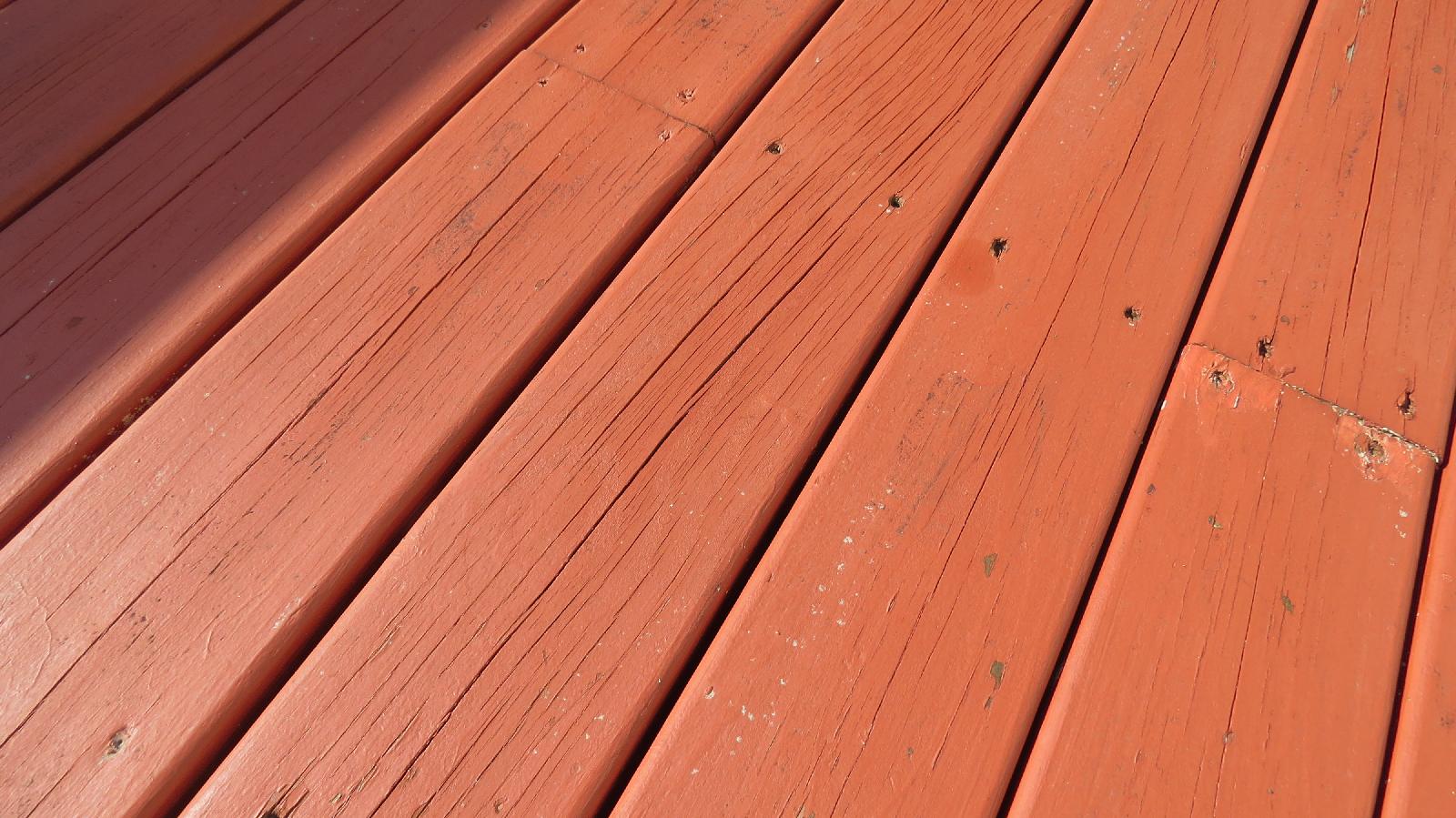
Before diving into the comparison, let’s discuss the basics. Deck stains contain a mix of pigments and dyes that influence their color and transparency. Stains with a high concentration of dye generally appear clear or translucent, while stains with more pigment appear solid. Solid or opaque deck stains have a thick, paint-like appearance that creates a film-like coating to mask the wood grain and provide protection against ultraviolet (UV) rays, water, and other challenges.
Benefits of Solid Deck Stain
Although I typically prefer more transparent stains, there are reasons to choose a solid stain. Unlike semi-transparent stains, solid stains may be used on previously applied solid deck stain surfaces. The thicker texture of solid stains allows for hiding minor flaws on the wooden surface. Solid stains are available in many colors to coordinate with others on your home’s exterior. They often make the surface easier to clean and effectively protect against moisture and the sun’s rays.
See my recommended solid deck stains here.
What Is Semi-Solid Deck Stain?
Semi-solid deck stain sits between solid and semi-transparent — it provides more color coverage and better hiding of imperfections than a semi-transparent stain, while still allowing a hint of the wood grain to show through, unlike a fully opaque solid stain. It’s a good middle-ground choice for older wood that has some blemishes or uneven coloring you want to soften without fully masking the wood’s natural character.
Benefits of Semi-Solid Deck Stain
From my experience restoring decks since 1993, semi-solid stains are best suited for older wood that has imperfections or uneven coloring you want to hide while still maintaining some natural look. Compared to fully opaque solid stains, semi-solid formulas allow for better penetration and typically easier maintenance over time.
My Pro Tip: Avoid semi-solid water-based stains, which are prone to peeling and are much harder to apply. This includes semi-solids from Behr, Cabot, Olympic, Pittsburgh Paints, and Valspar. My top semi-solid picks are both oil-based, penetrating formulas: TWP Semi-Solid Pro-Series and Armstrong Clark Semi-Solid.
See my recommended semi-solid deck stains here.
TWP Semi-Solid Pro-Series
TWP Semi-Solid Pro-Series is available in 30 custom colors and scored 8.5/10 in our testing. It’s an oil-based, penetrating semi-solid stain that provides broad-spectrum weather protection, resists water absorption, and holds color well from UV exposure. It’s best for older pressure-treated pine, cedar, and redwood that need more color coverage — not ideal for brand-new wood under 4 months old.
[woo_product_slider id=”30706″]
Armstrong Clark Semi-Solid
Armstrong Clark Semi-Solid is available in 5 colors — Mountain Cedar, Woodland Brown, Oxford Brown, Sequoia, and Espresso — and also scored 8.5/10 in our testing. It uses the same drying and non-drying oil blend as Armstrong Clark’s semi-transparent formula, with added pigmentation for better hiding of imperfections. In our testing, it had one of the best spread rates of any stain we’ve reviewed, and showed no peeling at the 2-year mark.
[woo_product_slider id=”30704″]
What Is a Semi-Transparent Deck Stain?
Semi-transparent deck stain is fairly clear (translucent) and soaks into wood surfaces. Painted decks must be stripped completely before applying a semi-transparent stain. I always emphasize the importance of using a deeply penetrating, semi-transparent product.
Benefits of Semi-Transparent Deck Stain
Semi-transparent stains allow you to see the natural look of the wood and add a layer of protection. Compared to a clear or transparent stain, semi-transparent options have a hint of pigment that adds some color and usually helps to rejuvenate the wood’s appearance.
See my recommended semi-transparent deck stains here.
[woo_product_slider id=”30670″]
Key Differences: Solid vs. Semi-Solid vs. Semi-Transparent
Like paint, solid deck stains come in many colors and have a similar thickness. Solid deck stains were traditionally prone to peeling but have improved significantly in recent years. While many solid stains applied to horizontal surfaces are unlikely to last beyond three years, some will effectively last for up to five years.
Semi-solid stains fall between the two, offering better color coverage and hiding power than semi-transparent stains while still penetrating into the wood rather than sitting entirely on top of it, which helps them resist peeling better than film-forming solid stains.
Semi-transparent stains expose the wood surface while still protecting against water, dirt, and direct sunlight. Depending on the manufacturer’s instructions, you may need to apply a second coat. Newer wood often absorbs less stain, making a single coat sufficient. You can expect semi-transparent stains on horizontal surfaces to last between one and three years.
Important Note: I typically discourage making general assumptions about a stain based solely on opacity, as stain manufacturers produce solid, semi-solid, and semi-transparent stains of varying quality and physical characteristics.
| Feature | Solid | Semi-Solid | Semi-Transparent |
|---|---|---|---|
| Wood Grain Visibility | Fully hidden | Partially visible | Clearly visible |
| Best For | Older decks with imperfections, previous solid coating | Older wood with some blemishes, wanting a natural look | Newer wood, showcasing natural grain |
| Horizontal Surface Lifespan | 2–5 years | 2–4 years | 1–3 years |
| Application | Film-forming, sits on top | Penetrates with added pigment | Fully penetrating |
TWP vs. Armstrong Clark Semi-Solid
| Stain | DSH Rating | Colors Available | Coverage/Gallon | Cost/Gallon |
|---|---|---|---|---|
| TWP Semi-Solid Pro-Series | 8.5/10 | 30 custom colors | 150–250 sq ft | $50–$60 |
| Armstrong Clark Semi-Solid | 8.5/10 | 5 colors (Mountain Cedar, Woodland Brown, Oxford Brown, Sequoia, Espresso) | One of the best spread rates tested | $41.99–$45.99 |
Both score identically in our testing. TWP offers far more color options (30 vs. 5), while Armstrong Clark is straightforward to apply and has shown one of the best coverage rates of any stain we’ve tested, at a lower price point per gallon.

Solid color deck stain
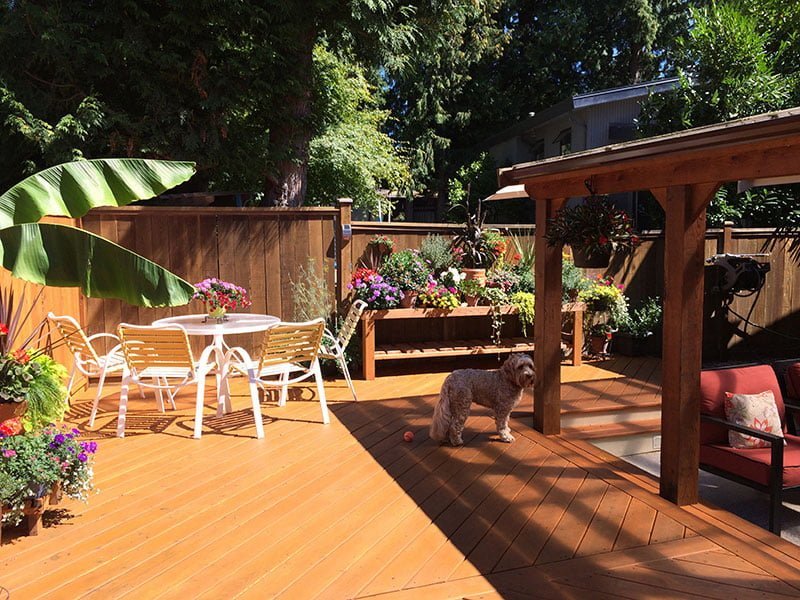
Armstrong Clark Mountain Cedar Semi-Solid

Semi-transparent deck stain on mahogany.
When to Use Each Stain Type
Let’s assess the factors that influence solid vs. semi-solid vs. semi-transparent stain decisions for a deck.
Solid
Using a solid stain is typically appropriate for two-toned decks, which is a combination that can complement or blend with different elements of a home’s exterior color scheme. Consider using a solid deck stain for the railings and other vertical parts and a semi-transparent or semi-solid stain on the floors and stairs.
A solid stain is generally the best option if your deck was previously coated with a solid. Solid stains tend to obstruct the “pores” of the wood and prevent semi-transparent or semi-solid stains from properly penetrating (soaking in).
Older decks with blemishes are best suited for a solid stain, as the thick, paint-like coating helps to hide the imperfections. Many solid stains offer comprehensive protection against water, sunlight, mold, and mildew and help to prevent slipping. Consider a solid stain with enhanced mildew resistance if you live in areas with a particularly damp, humid climate.
Semi-Solid
A semi-solid stain is the right call when your wood has some imperfections or color inconsistency, but you don’t want to fully mask the grain the way a solid stain does. It’s a strong option for older pressure-treated pine, cedar, and redwood where you want more color coverage than a semi-transparent stain provides, without losing all of the wood’s natural texture.
Semi-Transparent
I’ve found that a good-quality semi-transparent stain offers the “best of both worlds” by protecting from the elements and enhancing the appearance of the natural wood grain.
Should I Use Oil or Water-Based?
Oil-based stains do an excellent job of improving and protecting the appearance of natural wood, resisting water, and preventing mold and mildew development. Often, oil-based stains are easier to maintain because the deck can be recoated after lightly washing the surface.
Water-based stains are the eco-friendly answer to laws implemented in the U.S. and Canada intended to limit harmful volatile organic compounds (VOCs). Today, water-based stains also perform well against the majority of outdoor elements and hazards.
I prefer both types of semi-transparent stains as long as they can penetrate deep into the wood. For semi-solid stains specifically, I recommend sticking with oil-based formulas like TWP or Armstrong Clark — water-based semi-solids are prone to peeling. Check your state laws regarding the availability of oil-based products.
Application Tips for All Three Stain Types
Proper wood preparation will help you achieve the best results. Some common prep tasks include cleaning, stripping, and sanding. I recommend applying a wood brightener or neutralizer and rinsing it as the final step before staining. Visit my site for detailed, step-by-step stain preparation information.
- Using a deck cleaner is the primary step for newer decks, greyish wood, or when reapplying with the same stain product.
- Stripping is usually needed when switching brands or colors or when the existing stain appears uneven.
- I recommend RAD PaintStrip for removing stubborn, solid or semi-solid color deck stains.
- Sanding is usually not necessary if you properly clean, strip, and brighten the surface.
- If unable to effectively remove an existing paint or stain, use 40 to 60-grit sandpaper.
- Allow solid and semi-solid stains to dry completely before applying a second coat.
- Deck brighteners help open the “pores” of the wood to allow for deeper semi-solid or semi-transparent stain penetration.
When to Apply Fresh Stain
I always recommend reapplying a fresh coat of stain to horizontal surfaces such as deck floors and stairs every one to three years for semi-transparent, and two to five years for semi-solid and solid stains. Vertical wood surfaces such as deck railings or fences need less frequent staining — approximately every three to seven years.
Not great at keeping track? Just remember to promptly take corrective action if you notice your deck is peeling, fading, or showing similar concerns.
FAQ: Solid vs. Semi-Solid vs. Semi-Transparent Deck Stain
What is a semi-solid deck stain?
A semi-solid deck stain provides more color coverage and hiding power than a semi-transparent stain while still allowing some of the wood grain to show through, unlike a fully opaque solid stain. It penetrates into the wood rather than sitting entirely on top, which helps it resist peeling better than film-forming solid stains.
Does semi-solid deck stain peel?
Quality oil-based semi-solid stains like TWP and Armstrong Clark are much less prone to peeling than solid stains, since they penetrate the wood rather than forming a surface film. Water-based semi-solid stains, however, are prone to peeling and are much harder to apply — I’d avoid semi-solid formulas from Behr, Cabot, Olympic, Pittsburgh Paints, and Valspar for this reason.
Which lasts longest: solid, semi-solid, or semi-transparent?
Solid stains generally last the longest on horizontal surfaces, up to 5 years with a quality product, followed by semi-solid at 2 to 4 years, with semi-transparent lasting 1 to 3 years. That said, quality matters more than category — a well-made semi-transparent oil stain can outlast a poorly formulated solid stain.
Can I mix stain types on the same deck?
Yes, this is actually a common and effective approach on two-toned decks. Many homeowners use a solid or semi-solid stain on railings and vertical surfaces, where hiding imperfections matters more, and a semi-transparent stain on the deck floor and stairs, where showcasing the wood grain is the priority.
What’s the best semi-solid deck stain brand?
TWP Semi-Solid Pro-Series and Armstrong Clark Semi-Solid are our top picks, both scoring 8.5/10 in testing. TWP offers 30 color options versus Armstrong Clark’s 5, but Armstrong Clark has shown one of the best coverage rates of any stain we’ve tested and is straightforward to apply.
Can I switch from solid stain to semi-transparent or semi-solid?
This is difficult without full removal. Solid stains block the wood’s pores, which prevents semi-transparent or semi-solid stains from penetrating properly. You’ll need to fully strip the solid stain, typically with a heavy-duty stripper like RAD PaintStrip or power sanding, before switching to a penetrating stain type.
Solid vs. Semi-Solid vs. Semi-Transparent: Which Should You Choose?
Choosing a stain starts by determining the most suitable product for the current condition of your deck. Solid stains are typically the best choice for older decks needing full coverage to hide wear and imperfections. Semi-solid stains are the middle ground, adding color coverage while still showing some wood character. A good-quality semi-transparent stain is best for showcasing the natural wood grain. Either way, choose a stain that’s engineered to protect the surface from the challenging elements found in your outdoor environment, such as moisture, humidity, direct UV sunlight, or mold. Be sure to check out my deck stain ratings and reviews for additional information.
































What is the best type of stain for a pine wood deck with both old and new 2×6 boards? Size is 18 x 18 feet, in Silverton, oregon.
Add some pics in the comments of the deck.
Thanks for a refresher on solid vs semi transparent stains. I have an older tongue and groove porch stained with Cabot’s Decking stain. (semi-solid oil/alkyd). The color did set on top like a film, and the finish even still has a sheen where it has been protected. I need to make some porch repairs and am hoping to refinish with a solid stain without having to strip the current stain. I am not clear if that is possible. Maybe I need to use porch paint instead?
You do not have to remove it fully but you should prep by removing what is loose and or peeling. See this for tips:
https://www.deckstainhelp.com/how-to-reapply-a-solid-color-deck-stain/
Are you sure the old stain was oil-based? If so, you should use a solid stain that is oil-based for best results.
Is there a solid oil-based stain available? I could not find any on this site.
Maybe Cabot but hard to find the solid oil-based stains anymore.