




In recent years, solid-color deck stains have been reformulated to offer better adhesion, enhanced UV resistance, and improved flexibility to resist cracking and peeling. Today’s top products provide longer-lasting coverage, richer color, and easier maintenance than older formulas, making them a smart choice if you’re ready to buy a durable, opaque deck finish.
Check out these expert-tested solid-color deck stains for long-lasting color, coverage, and low-maintenance protection.
Shop Solid Color (Opaque) Wood Deck Stains
Buying Guide for the Best Solid Color Deck Stains – 2025 Expert Reviews
Solid color deck stains have come a long way in recent years, with major improvements in durability, adhesion, and resistance to peeling. While older formulations often cracked and wore down prematurely, modern solid stains now provide enhanced protection against foot traffic, weather, and UV exposure.
This guide below our product page breaks down the top solid color deck stains of 2025 so you can compare performance, coverage, and price at a glance. Use our expert reviews to make a confident purchase and choose the best product for your deck and budget.
Best Solid Color Deck Stains 2026 – Contractor Tips & Reviews
Key Takeaways To Consider When Buying
- Maximum Protection – Solid stains are the best choice for older or weathered decks, shielding them from UV rays, moisture, and heavy use.
- Proper Prep is Essential – Stains won’t adhere well to dirty, peeling, or loose surfaces, so cleaning, stripping, or sanding is necessary.
- Choosing the Right Base – Oil-based solid stains penetrate deeper for long-term durability, while water-based options offer easier application and cleanup.
- Climate Considerations – If your deck is exposed to harsh sun or frequent rain, opt for a stain with superior UV resistance, water repellency, and mildew protection.
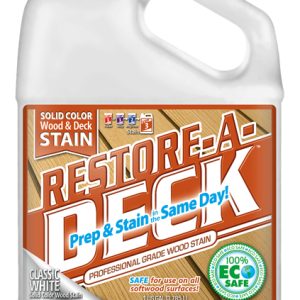
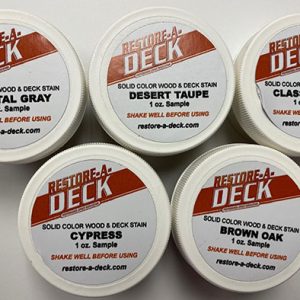
- Top Picks for 2025 – Restore-A-Deck, Defy Extreme, and Flood Pro Series stand out for their durability, adhesion, and long-lasting color retention.
Why Choose a Solid Color Deck Stain?
Solid deck stains are ideal for restoring aged wood or achieving a bold, uniform color while protecting the deck’s structure. Key benefits include:
✔ Superior UV Protection – Blocks sun damage and prevents fading.
✔ Excellent Coverage – Conceals imperfections and evens out worn surfaces.
✔ Extended Longevity – With proper preparation, modern solid stains can last 5+ years before needing reapplication.
✔ Versatile Color Options – Available in a wide range of shades to match any aesthetic.
By selecting the right solid stain and preparing your deck correctly, you can enjoy long-lasting beauty and protection for years to come. Stay tuned for our in-depth reviews of the best solid deck stains of 2025 to find the perfect match for your project.
Complete Your Deck Stain System
The best results don’t come from the stain alone; they come from using the right products in the right order. Every deck job I do follows the same basic system: clean or strip the wood, brighten it to restore the natural color, then apply a quality stain with the proper tools.
- Deck cleaner – Remove dirt, gray wood, mold, and mildew so the stain can soak in properly.
- Deck Stain Strippers – Take off failed or peeling coatings when a cleaner alone isn’t enough.
- Wood Brighteners – Neutralize the cleaner or stripper, open the grain, and bring the wood back to life.
- Stain Application Tools – Brushes, pads, and sprayers that help you get an even coat without fighting the job.
Then choose the stain type that fits your deck:
- Semi-Transparent Deck Stains – Show the wood grain while adding color and UV protection.
- Semi-Solid Deck Stains – Richer color and more hiding power for older or weathered decks.
- Solid Color Deck Stains – Maximum coverage when you need to hide repairs, patch boards, or heavy sun damage.
- Ipe & Exotic Hardwood Stains – Penetrating formulas made for dense woods like Ipe, Mahogany, and Cumaru.
Add everything you need to your cart before you check out so your complete deck restoration system ships together, and you’re ready to roll the moment your products arrive.
Shipping and Ordering Information
We offer free ground shipping on most items to the lower 48 states (3–5 business days). Any extra charges for oversized items or deliveries outside the contiguous U.S. will show at checkout, so there are no surprises.
Once you add all your products to the cart, you can review the total cost and ensure everything ships together.
See our Shipping Policy for complete details.
Expert Help When You Need It
DeckStainHelp.com is run by me, Scott Paul, a restoration contractor with 30+ years of experience testing deck stains in real-world conditions. Every product here has been personally evaluated.
Questions before you buy? Post in the Deck Stain Help Forum with your wood type, condition, and goals. I respond personally and can recommend exactly what you need, saving you time and money.
FAQs: Solid Color Deck Stain
Will a solid color deck stain look like paint?
A solid stain will give a uniform, opaque color similar to paint, but it’s not the same thing. Good, solid deck stains are designed to flex with the wood and allow moisture to escape better than most paints. The result is a flatter, low-sheen finish that hides grain and imperfections while still behaving like an exterior wood coating rather than a wall paint.
Can I just touch up worn spots, or do I have to redo the whole deck?
On small scuffed areas or spots under furniture, you can usually spot-sand, clean, and touch up with the same solid stain. For larger worn paths or if the color has faded unevenly, you’ll get a better look by cleaning the whole deck and recoating full boards or complete sections at a time. Random touch-ups in the middle of a board almost always show.
What causes a solid deck stain to peel, and how do I avoid it?
Most peeling problems come back to prep or over-application. If the surface was dirty, glossy, or still damp when the stain went on, it would have a hard time bonding. Heavy coats that sit on top of the wood instead of lying down thin are another big culprit. To avoid peeling, make sure the surface is clean, dull, and dry, follow the label spread rates, and resist the urge to “load it up” for extra coverage.
My deck already has paint or an old solid stain. Can I put a new solid stain over it?
Sometimes, yes. If the existing coating is mostly intact and not peeling, you can often clean, lightly sand any shiny or rough spots, and apply a compatible solid stain over the top. If the old finish is badly cracked, flaking, or has multiple layers built up, you’ll get a much better result by stripping and/or sanding back to a sound surface before recoating.
How do I pick the right color for an older deck with many patches or repairs?
For patched or heavily repaired decks, I usually steer people toward medium to darker tones rather than very light colors. Mid-tone browns, grays, and “driftwood” shades do a good job of hiding board replacements and old stains without showing every speck of dirt. If you’re unsure, start with samples on a few boards in different lighting and look at them both in sun and shade before committing.
Is a solid-color deck stain slippery when wet?
Most high-quality deck stains are designed with a flatter sheen to avoid being overly slick, but any smooth surface can feel slippery when wet, icy, or covered in pollen. If your deck tends to be slick, keep it clean and consider adding an approved non-slip additive on steps and high-traffic areas. Always follow the stain manufacturer’s guidance on which additives are compatible.
What temperature and weather conditions are best for applying a solid deck stain?
I like to apply solid deck stains when temperatures are moderate and stable – typically between about 50°F and 85°F, with no rain in the immediate forecast and the boards out of direct, blazing sun. Too hot and the stain can flash-dry and not level out; too cold and it may not cure properly. A dry, overcast day or light shade is usually ideal.
If I use a solid stain now, can I later go back to a semi-transparent look?
It’s possible, but it’s a big job. To get back to a semi-transparent finish, you would need to remove as much of the solid stain as you can with strippers and sanding, and in some cases, replace boards that are heavily coated. For most homeowners, that’s more work than it’s worth, so I tell people to think of solid stain as a long-term direction rather than a short trial.