


Hi, I am Scott Paul, a leading exterior restoration contractor and business owner with over 30 years of experience in exterior wood deck applications. My guide to spraying deck stain is based on hands-on experience applying stain to over 10,000 decks. See here for more info about me.
How to Spray Deck Stain: A Step-by-Step Guide
Staining a deck with a sprayer is one of the most efficient application methods available, and when done correctly it produces a fast, even finish. A pump-up sprayer can cover a 500-square-foot deck floor in under an hour. An airless sprayer can do the same job even faster. The key is knowing which sprayer works with which stain type, how to set up properly to control overspray, and how to back-brush after spraying to ensure the stain actually penetrates the wood rather than sitting on the surface. This guide covers all of it — from pump-up sprayers for transparent stains to airless sprayers for semi-solid and solid stains.
- Always back-brush or back-roll after spraying deck stain to push it into the wood grain and prevent premature peeling or flaking.
- Match your sprayer to the stain type: pump-up sprayers for transparent stains, airless sprayers for semi-solid and solid formulas.
- Control overspray by covering siding and plants with plastic sheeting, using a canvas tarp backdrop for railings, and avoiding wind above 10 mph.
- Always spray vertical surfaces like railings and spindles first so drips fall onto the unfinished deck floor, not a completed surface.
- Prep the deck properly before spraying: clean with a deck cleaner, brighten the wood, and allow at least 48 hours of drying time.

Choose Your Deck Stain Sprayer
Choosing the right sprayer for staining a deck depends on the stain type you are using. Using the wrong sprayer for the stain formula is one of the most common mistakes on sprayer projects.
Pump-Up Sprayers
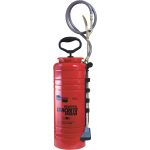
Pump-up sprayers are the most common choice for homeowners spraying transparent or semi-transparent deck stains. They are inexpensive at $50 to $150, easy to clean, and work well for most penetrating oil-based and water-based stains in these opacity levels. Chapin makes the most reliable pump-up sprayers for deck stain applications — their adjustable nozzle settings allow you to dial in the right fan pattern for different surfaces. Pump-up sprayers will not work with semi-solid or solid stains — the formula is too thick and will clog the nozzle or produce an uneven spray pattern. For semi-transparent and transparent stains, pump-up sprayers are the most practical and cost-effective option.
Airless Sprayers
Airless sprayers atomize stain at high pressure and work with all stain types — transparent, semi-transparent, semi-solid, and solid. They are significantly faster than pump-up sprayers on large surfaces and produce a more consistent fan pattern. The trade-off is cost — quality airless sprayers range from $500 to $2,000 — and a steeper learning curve. Graco makes the most widely recommended airless sprayers for deck and fence stain applications. When using an airless sprayer, wide fan tips are essential. Avoid cone spray patterns. For most deck stains, a 515 or 517 tip works well. Always use a tip guard and back-brush or back-roll after spraying to push the stain into the wood grain.
HVLP Sprayers
HVLP (High Volume Low Pressure) sprayers use a high volume of air at low pressure to deliver stain with less overspray than airless sprayers. They work well for semi-transparent and semi-solid stains on smaller projects and furniture. HVLP sprayers are not the most practical choice for large open deck floors because their slower application speed negates the time savings of sprayer application at that scale. For railings, spindles, and furniture, HVLP sprayers are an effective option with good overspray control.




Deck Stain Sprayer Type Comparison
Staining a deck with a sprayer requires matching the sprayer type to the stain formula. Use this table to identify the right sprayer for your project.
| Feature | Pump-Up Sprayer | Airless Sprayer | HVLP Sprayer |
|---|---|---|---|
| Cost | $50 to $150 | $500 to $2,000 | $100 to $400 |
| Works With Transparent Stains | Yes | Yes | Yes |
| Works With Semi-Transparent Stains | Yes | Yes | Yes |
| Works With Semi-Solid Stains | No — too thick | Yes | Yes (with thinning) |
| Works With Solid Stains | No — will clog | Yes | No — too thick |
| Application Speed | Moderate | Very fast | Slow to moderate |
| Overspray Risk | Low to moderate | High | Low |
| Back-Brushing Required | Yes | Yes | Yes |
| Best For | DIY transparent and semi-transparent stains on decks and fences | All stain types on large decks, fences, and siding | Railings, spindles, furniture, and smaller projects |
| Cleanup | Easy — water or mineral spirits | Moderate — flush lines thoroughly | Moderate — disassemble and clean cup |
| Recommended Brand | Chapin | Graco | Fuji, Wagner |
Tools and Materials Needed for Spraying Deck Stain
- Pump-up sprayer or airless sprayer (matched to stain type)
- Canvas tarps 9×12 (for overspray backdrop on railings)
- Plastic sheeting or poly tarps (to protect house, plants, and surrounding surfaces)
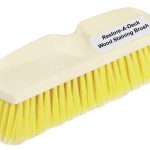
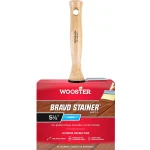
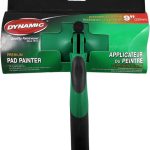
- Deck stain pads, brushes, or rollers (for back-brushing and edging)
- Paint stir stick or drill mixer attachment
- Gloves, goggles, and respirator
- Disposable rags
- Paint tray or bucket
- Mineral spirits or water for cleanup depending on stain type
Please note: Read all manufacturer directions before beginning. This guide covers transparent, semi-transparent, semi-solid, and solid stain application by sprayer. Manufacturer directions always override any general guidance here. When spraying, use wide fan tips and avoid cone spray patterns.
Step 1: Prep the Deck Before Spraying
Spraying deck stain onto an unprepped surface is one of the most common reasons for early stain failure. The stain may look good on day one but will not bond properly to dirty, sealed, or overly smooth wood. Prep is non-negotiable regardless of application method.
- Clean and brighten the wood – Use a quality deck cleaner to remove dirt, mildew, and gray oxidation. Follow immediately with a wood brightener to open the grain and neutralize the wood pH. Apply prep products by pump sprayer and rinse with a pressure washer at 1,500 to 2,000 psi. Allow a minimum of 48 hours of drying time before applying stain. For detailed prep guidance, see our deck prep guide.
- Remove all furniture and clear the deck – Remove all deck furniture, planters, grills, and other items. Store them at least 20 feet away from the deck to keep them outside the overspray zone. Even pump-up sprayers can carry fine mist further than expected in light wind conditions.
- Mix stain thoroughly – Stir the stain thoroughly with a paint stir stick or a drill-mounted mixer attachment. Oil-based stains contain pigments and oils that separate during storage and must be fully recombined before use. Stir again every 20 to 30 minutes during the project. Do not shake the can — shaking introduces air bubbles that affect the spray pattern and finish.
Step 2: Set Up for Overspray Control
Overspray control is the most important setup task when spraying deck stain. Stain mist can travel significant distances, especially with airless sprayers or in breezy conditions, and will permanently stain siding, windows, plants, and vehicles.
- Cover the house and adjacent surfaces – Use plastic sheeting to cover house siding, windows, and trim adjacent to the deck. Extend the sheeting at least 3 to 4 feet up the siding from the deck surface. Secure it with painter’s tape. For raised decks, cover the ground or surfaces below the deck with poly tarps as well.
- Check wind conditions – Do not spray in wind conditions above 5 to 10 mph. Even a light breeze can carry stain mist onto vehicles, neighboring property, or plant material. Early morning is typically the calmest time of day and is the preferred application window for sprayer projects for this reason as well as temperature.
- Load and pressurize the sprayer – Fill the pump-up sprayer or airless sprayer with stain. For pump-up sprayers, pressurize fully before beginning — a fully pressurized tank produces a consistent even fan pattern. A partially pressurized sprayer produces an uneven spray that results in blotchy coverage. Test the spray pattern on a piece of cardboard before moving to the deck surface.
Step 3: Spray Vertical Surfaces First
Always spray railings, spindles, and other vertical surfaces before spraying the deck floor. Any overspray or drips from vertical surfaces will fall onto the unfinished floor and be absorbed into the wood during the floor application — eliminating the need to clean up drips from a finished surface.
- Set up the canvas tarp backdrop – Hang a 9×12 canvas tarp along the railing section you are working on — approximately 4 feet on either side of the railing with 12 feet running the length. The canvas tarp acts as a backdrop to catch overspray. Position a poly tarp on the outside of the deck below the railings to catch any drips falling to the ground.
- Spray one side of the railing – Apply stain to one side of the railing using the sprayer, lifting one end of the canvas tarp as you work. The opposite end of the tarp catches the overspray passing through the spindles. Keep the sprayer nozzle 8 to 12 inches from the surface and maintain a consistent wide fan pattern. Keep the sprayer fully pressurized throughout for an even spray pattern.
- Walk around and spray the opposite side – Move to the opposite side of the railing and repeat. Make sure to get the outside edge of the deck floor as well during this pass. Back-wipe any excess stain drips on the floor of the completed section immediately using a brush or stain pad.
- Slide the tarp and repeat – Slide the canvas tarp down the railing to the next section and repeat the process until all railings are complete. After completing each section, check for drips, missed spots, and areas that need a second pass with a brush or pad. Complete all railings before moving to the floor.
Step 4: Spray the Deck Floor
With railings complete, move to the deck floor. The floor application process differs depending on whether you are using a pump-up sprayer with a transparent or semi-transparent stain, or an airless sprayer with a semi-solid or solid stain.
Pump-Up Sprayer — Transparent and Semi-Transparent Stains
- Edge the area next to the house first – Use a stain pad or brush to manually stain the 1 to 2 feet of flooring that butts up against the house. Work in a staggered line so the hand-applied edge blends naturally into the sprayed floor without a visible line. This prevents overspray from hitting the house siding when you spray the main floor.
- Spray the main floor in sections – Working away from the house, apply a light, even coat to the flooring using the pump-up sprayer. Work in manageable sections of 4 to 6 boards at a time running the full board length. Do not saturate — apply only what the wood can absorb. Be careful not to spray toward the house or over the railing.
- Apply a second coat by pad or brush – After spraying the first coat, use a stain pad or flooring brush to apply the second coat to the floor. This is the back-brushing step that pushes the stain into the wood grain. Apply only as much as the wood will absorb — overapplying leads to excess stain sitting on the surface, which causes premature failure. On new or less porous wood, one coat from the sprayer may be sufficient.
Airless Sprayer — Semi-Solid and Solid Stains
- Use the correct tip size – For semi-solid stains, a 515 or 517 airless tip works well. For solid stains, use a 517 or 519 tip. The larger orifice handles the thicker formula without clogging. Always use a wide fan pattern — 10 to 12 inches — and keep the gun 10 to 12 inches from the surface. Test on cardboard first.
- Apply in long, even passes – Work in long passes along the length of the boards, maintaining a consistent distance and speed. Overlap each pass by approximately 30% to ensure even coverage. Do not stop mid-board — keep moving to avoid buildup in one spot. With solid stains, two coats are typically required. Allow the manufacturer’s stated dry time between coats.
- Back-roll immediately – With semi-solid and solid stains applied by airless sprayer, back-rolling with a 3/8-inch nap roller immediately after spraying each section is essential. Back-rolling pushes the thicker formula into any surface texture and eliminates holidays — missed or thin spots — before they dry. Do not allow the stain to dry before back-rolling.
Step 5: Back-Brush for Penetration
Back-brushing is the step that separates a properly applied sprayer job from one that will fail early. Spraying alone deposits stain on the wood surface — back-brushing mechanically works it into the grain so it can penetrate rather than sit on top.
Use a 4 to 6-inch China bristle brush or a quality stain pad for back-brushing transparent and semi-transparent stains. Work in the direction of the wood grain using moderate pressure. You do not need to scrub aggressively — the goal is to push the stain into the open grain, not sand the surface. For semi-solid and solid stains applied by airless sprayer, use a 3/8-inch nap roller for back-rolling rather than a brush.
Skipping back-brushing is one of the most common causes of early stain failure on sprayer applications. The stain may look fine for the first few weeks but will peel or flake prematurely because it never bonded with the wood fiber.
Step 6: Cleanup After Spraying
- Remove tarps and sheeting immediately – Remove all plastic sheeting and poly tarps from vegetation and surrounding surfaces as soon as you have finished spraying. Plastic left on plants for extended periods will damage or kill them. Remove canvas tarps from the railing area and shake them out away from the deck before folding and storing.
- Store leftover stain properly – Store any leftover deck stain according to the manufacturer’s instructions — typically in a temperature-controlled space with the lid fully sealed. Label the can with the date, color, and project name so you can match it for touch-ups. Most oil-based stains stored properly will remain usable for 1 to 2 years.
- Clean the sprayer thoroughly – For water-based stains, flush the sprayer with clean water until the water runs clear. For oil-based stains, flush with mineral spirits followed by water. For airless sprayers, follow the manufacturer’s flush procedure for the pump and lines — residual stain left in the pump will harden and damage the seals. Disassemble and clean the tip separately.
- Dispose of rags and tarps safely – Important safety note: Oil-based stain rags and tarps are a fire hazard. Do not leave them bunched up, folded, or stored indoors, in trash cans, or in garages. The oxidation process in drying oil-based products generates heat and can cause spontaneous combustion. Soak all oily rags and tarps in water and lay them flat outside to dry before disposing. Follow your local regulations for disposal of oil-soaked materials.
How to Thin Deck Stain for a Sprayer
Most transparent and semi-transparent penetrating oil-based stains do not require thinning before sprayer application — they are formulated at a viscosity that works well through a pump-up sprayer or airless sprayer. However, there are situations where thinning is necessary or helpful.
When Thinning Is Needed
Thinning is most commonly needed when using an airless sprayer with a semi-solid or solid stain in warm weather — the formula can thicken slightly in high temperatures, making it harder to atomize evenly. It is also occasionally needed when using a pump-up sprayer with a thicker semi-transparent formula that is slow to push through the nozzle.
How to Thin Oil-Based Stains
For oil-based stains, use mineral spirits as the thinner. Add no more than 10% by volume — approximately 12 to 13 ounces per gallon. Add the mineral spirits to the stain and stir thoroughly before testing the viscosity. Never add more than the manufacturer’s recommended thinning ratio — over-thinning reduces the solid content and pigment density, which weakens UV protection and shortens the stain’s lifespan.
How to Thin Water-Based Stains
For water-based stains, use clean water as the thinner. Add no more than 10% by volume and stir thoroughly. Most quality water-based stains like Restore-A-Deck and Defy Extreme are formulated to spray well without thinning — check the product data sheet before adding water, as over-thinning a water-based stain can affect adhesion and color consistency.
Never Thin Solid Stains for a Pump-Up Sprayer
Even with thinning, solid stains are too thick to spray through a pump-up sprayer reliably. Thinning a solid stain enough to pass through a pump-up nozzle would require adding so much solvent that the formula would be compromised. Use an airless sprayer for solid stains — no thinning required.
Best Deck Stain Sprayers
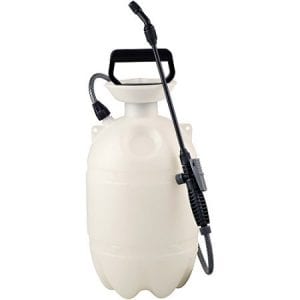
For pump-up sprayers, we recommend Chapin deck stain sprayers. They are the most reliable option for transparent and semi-transparent stain applications, with adjustable nozzle settings that produce consistent fan patterns. The Chapin 1949 and 20000 models are both well-suited for deck stain work.
For airless sprayers, Graco is the most widely recommended brand among professional contractors. The Graco Magnum series — specifically the X5 and X7 models — handles most semi-transparent, semi-solid, and solid deck stain formulas well and is priced in the range most serious DIYers and contractors will consider. Graco airless sprayers include SG2 metal spray guns, which hold up better to the solvents in oil-based stains than plastic guns.
Frequently Asked Questions: Spraying Deck Stain
Can you use a sprayer to apply deck stain?
Yes — a sprayer is one of the most efficient ways to apply deck stain and is widely used by both professional contractors and experienced DIYers. Pump-up sprayers work well for transparent and semi-transparent stains and cost $50 to $150. Airless sprayers work with all stain types including semi-solid and solid formulas and cost $500 to $2,000. The critical rule regardless of sprayer type is to always back-brush or back-roll after spraying — spraying alone deposits stain on the surface without pushing it into the wood grain, which leads to premature failure. With proper setup and back-brushing technique, a pump-up sprayer can cover a 500-square-foot deck floor in under two hours including the back-brush coat.
What type of sprayer is best for deck stain?
The best sprayer for deck stain depends on the stain type. For transparent and semi-transparent penetrating stains, a pump-up garden-style sprayer is the most practical and cost-effective option — Chapin makes the most reliable models for this application. For semi-solid and solid stains, an airless sprayer is required — pump-up sprayers cannot handle the thicker formulas. For railings, spindles, and furniture, an HVLP sprayer offers precise control with minimal overspray. When in doubt, check the stain manufacturer’s product data sheet for the recommended application equipment — some brands specify tip sizes and pressure settings for airless application.
Do you need to thin deck stain for a sprayer?
Most transparent and semi-transparent penetrating stains do not require thinning for sprayer application — they are formulated at a viscosity that works through both pump-up and airless sprayers without modification. Thinning is most commonly needed when using an airless sprayer with a semi-solid or solid stain in warm weather, when the formula can thicken slightly. For oil-based stains, use mineral spirits as the thinner at no more than 10% by volume. For water-based stains, use clean water at no more than 10% by volume. Never over-thin — reducing the solid content weakens UV protection and shortens the stain’s effective lifespan. Never thin solid stain for a pump-up sprayer — the formula is too thick for that sprayer type regardless of thinning.
How do you avoid overspray when spraying deck stain?
Overspray control requires preparation before you start spraying, not reactive cleanup after. Cover all house siding, windows, and trim adjacent to the deck with plastic sheeting extended at least 3 to 4 feet up from the deck surface. Cover vegetation and ground surfaces below raised decks with poly tarps. Do not spray in wind conditions above 5 to 10 mph — even a light breeze carries stain mist significant distances. Use a canvas tarp as a backdrop when spraying railings to catch overspray passing through spindles. Keep the nozzle 8 to 12 inches from the surface and use a wide fan pattern — cone spray patterns create excessive mist. Early morning application in calm conditions is the most reliable way to minimize overspray risk.
Do you need to back-brush after spraying deck stain?
Yes — back-brushing or back-rolling after spraying is not optional if you want the stain to last. Spraying deposits stain on the wood surface but does not mechanically push it into the grain the way a brush or pad does. Without back-brushing, the stain sits on top of the wood and is prone to early peeling and flaking, especially on smooth or dense wood surfaces. Use a 4 to 6-inch China bristle brush or a quality stain pad to back-brush transparent and semi-transparent stains immediately after spraying each section, working in the direction of the grain. For semi-solid and solid stains applied by airless sprayer, use a 3/8-inch nap roller to back-roll each section immediately after spraying. The extra 30 to 45 minutes this adds to the project is the single most important investment you can make in the longevity of the finish.
































Great article, only suggestion is tell beginners which tip to use, especially on rails and banisters, as stain is much thinner than most paints.
That varies based on the stain brand and type of stain. It is not universal that one tip will work for all.
Can TWP 101 cedar tone oil based be sprayed with a pump sprayer? Just need to do the lattice.Also what Chapin sprayer is best for this. Thanks
Yes, you can use a pump sprayer for applying the TWP 100 Series. This would work:
https://www.deckstainhelp.com/product/chapin-clean-stain-sprayer/
Can a pump sprayer be used to apply Minwax “ Special Walnut” 224 semi-transparent to a deck floor?
Minwax is an interior stain. It is useless for exterior wood. Don’t do it, it is a waste of your time and will make it difficult to fix.
Can Sherwin Williams semi-transparent deck stain be sprayed on with a pump up sprayer? If so, what is the best pump up sprayer to use? What is the best method to clean the sprayer afterwards?
Not sure as we stopped using their products many years ago due to peeling and failing. Fore better brands that can be psrayed look here:
https://www.deckstainhelp.com/best-semi-transparent-deck-stain-reviews/
A quality pump sprayer like Chapin brands works well.
Hi. How do clean or what do you use clean up the sprayer?
That would vary based on the stain brand and type of stain being used.
It is semi transparent, not oil based stain. Arborcoat Waterborne Exterior Stain
Hi, we do not use this product since it has issues: https://www.deckstainhelp.com/tag/benjamin-moore-arborcoat/
As for spraying, directions say it can be sprayed but it does not imply if it can be sprayed with a pump sprayer or if it needs an airless sprayer. See the attached directions.
In our experience, thicker water-based stains like this cannot be pump-sprayed very well.
The best pump sprayer out there for deck stains is the Chapin 1949 sprayer.
We purchased Benjamin Moore stain for staining 1,000 feet of fencing. What is the best pump sprayer to use with semi transparent stain?
Which version of BM?
What’s the best pump sprayer for spraying semi transparent stain on a wood fence. We have 1,000 feet of fencing.
Depends on the stain brand as not all can be sprayed.
Is it okay to use pump zero sprayer from scoots for driveway sealers ( box of sealer bottle is saying you can use sprayer but pump zero sprayer box is saying not recommended for staining. I am so confused.
We have never heard of this sprayer. If using a pump sprayer, get the best one that they have. Make sure it has a fan tip, not a cone tip.
They typically sell these in the garden or paint sections.
I have a Behr solid color stain. I have used a hand-pump sprayer before with this but I’ve learned it’s not recommended. Should I use it again or switch to a roller (for the floors) and brush (for rails, etc.)?
Do not use a pump sprayer with a solid stain. Rollers and brushes are correct.
Is there any deck sealer which will withstand or prevent mold
regrowth? I would clean, use sealer and then stain over sealer..
You cannot stain over a sealer or seal over a stain. Use a stain that prevents mildew growth. Try Restore A Deck Stains.
Hello – for 180′ of mixed privacy + regular picket fence, I’m looking at Ready seal (garden pump sprayer) or Armstrong Clark. For AC, would the unit in the link below work? Are there any garden sprayers that work with AC? Brush/pad would take too long for a weekend or two.
Garden sprayers will not work with the AC Stain. Only airless. Not sure if the HVLP will work but doubt it.
Thanks for the quick and helpful response. So rolling/brushing is the best option for AC Stain then?
Stain pads and brushes.
Many thanx for this info. Tried using a HVLP gun…..no bueno!! Going to do lattice spraying.
I have sprayed my fence before with the bug sprayer it took me two hours this year I bought a semi Translucent stain to bug sprayers later it didn’t work got a deck sprayer with five different flows and I still can’t get it to come out right it’s a mess what am I doing wrong is it because it’s semi-translucent please help
Depends on the brand of stain and how thick it is? Not all semi-transparent stains are sprayable.
So what do I look for on the stain can in a semi transparent?
There is nothing on the can that will tell you this. You learn from experience. For example, none of the semi-transparent water-based acrylics from Home Depot or Lowes will spray well or at all with a pump sprayer. Of the top brands that we rate, all will spray with a pump sprayer but the Armstrong Clark Stains (slightly too thick): https://www.deckstainhelp.com/the-5-best-deck-stain-reviews-and-ratings/
If you know what brand you are going to use then we can offer advice as to if will spray well or not.
Expert Stain & Seal semi-transparent. Color: Pecan. Will it spray well? Please give me the names of a few sprayers I can research and choose from. Barbara
Sorry but no idea if that product works well or can be sprayed. Best to ask them for help.
How do you open it to add more?
We do not understand your question.
Can I thin Thompson’s similar transparent so it will work in a sprayer?
If yes….than what do I thin it with?
No, that is probably not a good idea.
Can solid stain be used in a sprayer? And where to get info on sprayer ratings for semi and solid stains?
No you cannot pump spray a solid stain.
We just purchased Behr solid stain and it says right on the 5 gallon bucket that it can be sprayed .
Airless sprayer only, not a pump sprayer.
I’ve been trying to spray ReadySeal stain with a hand-pump Chapin sprayer, and, as one other person mentioned, it’s not coming out as a spray but thick droplets and using way way way too much. Any advice on how to remedy this?
Better sprayer or try pumping more to get more pressure.
How is the best way to clean out a pump up sprayer after you use it to spray stain or decking oil ?
Use mineral spirits.
I am gonna be staining a wood deck and patio furniture with a garden sprayer what is the best oil base stain to get that will give it a slight cedar color look to match the other deck.
Try Armstrong Clark or TWP Stains.
We recently purchased Sherwin Williams SuperDeck waterborne deck stain. We thought we could apply it with a hand pump sprayer and it didn’t work. It would only come out in a thick single line vs a nice, even spray coat. I checked the sprayer with water to make sure it was functioning and it was. Any thoughts or suggestions?
It cannot be sprayed with a pump sprayer. Too thick.
Ok so please advise on the best sealant that works in a pump sprayer… i’ve heard that Thompson’s is too thick as well. It just took me weeks to seal (transparent) 187 wood spindles with a brush and i’m hoping next use to use a pump sprayer (just for spindles, railing tops and floorboards, the pad application works well). Thanks!
Any of these top deck stains (besides Armstrong Clark) will work in a pump sprayer. https://www.deckstainhelp.com/the-5-best-deck-stain-reviews-and-ratings/
Having decided to use Armstrong Clark semi-solid stain, I’m trying to decide on the best way to apply it. I have 3 decks to stain so applying with a pad isn’t very appealing. I was wondering if I could use an airless sprayer with the semi-solid stain. There are several models that are between $60 and $110; I’d rather not spend more than that even though I’d use it for other jobs. A good hand-pump sprayer is about $45 so an inexpensive electric airless might be worth a relatively small amount more, especially if it saves significant time. On the other hand, the need to frequently refill the small cups hold might offset any gain in application time. Your thoughts, please.
Thanks.
The AC can be applied with an airless sprayer. It will not work with a pump sprayer.
Thank you.
Can I clean a pressure-treated swing set with RAD Cleaner and Brightener Kit and use RAD solid stain for protection? We are in south Florida where it gets a lot of sun, heat, and humidity. Will a gallon of stain be sufficient?
Yes, you can use the RAD for prep and stain. Probably two gallons for the two coats.
Can I use solid stain in a deck sprayer.
No.
Does not emphasize the need for back brushing?
Yes it does in step 5.
Hi! I’m planning on using the spray method to stain a new cedar deck for the first time. (After waiting about 8 months for the wood to dry) I’ll be using TWP 100 series, after reading your reviews. But I have black aluminum balusters. Do I need to tape these, or will the oil based stain wipe off without any issues?
Also, is there a pump sprayer that you recommend?
Thanks!
It wipes off the smooth coated black spinldes if you wipe right away. It does not wipe of powdered coated spindles. We use contractor grade sprayers by Chapin.
Hello, what does the canvas tarp do? Doesn’t it get in the way and stick to the stain?
Minimizes the overspray of the stain so it does not get all over your plants, house, etc. It can be slightly “messy” but that is why you will need to touch it up after doing a section of railings with a brush or staining pad.
Thanks. What deck stain pads to do you suggest?
Padco or shurline is what we use for our decks.
Any other alternatives. These are hard to find