


Hi, I’m Scott Paul, an exterior restoration contractor and business owner with over 30 years of experience in exterior wood decking. My review of Armstrong Clark Wood Stain is based on my extensive background as a wood restoration contractor and hands-on testing. I’m here to share my honest insights to help you make the best choice for your decking needs.See here for more info about me.
Armstrong Clark Wood Stain Review
Armstrong-Clark Wood Deck Stain is a semi-transparent, oil-based penetrating stain designed to condition the wood while providing UV protection and long-term durability. It uses a blend of drying and non-drying oils, which helps it both penetrate into the wood and replenish the wood fibers over time.
- Armstrong Clark Wood Deck Stain earned an 8.5 out of 10 overall rating after a rigorous 2-year hands-on test on a 600 square foot deck.
- The stain uses a unique blend of drying and non-drying oils, conditioning wood fibers while forming a protective barrier against weathering and UV damage.
- No peeling was detected at the 2-year mark, with only slight wear in high-traffic areas like stairs and around furniture.
- Armstrong Clark scored a 9 out of 10 for ease of application, performing well even in full sun at 90 degrees without drying too quickly.
- The stain is VOC compliant in all 50 states and Canada, with coverage rates of 200 to 250 square feet per gallon.
- Recoating is straightforward, requiring only a basic wood deck cleaner and light prep every 18 to 24 months without heavy stripping.
From my experience restoring decks since 1993, Armstrong-Clark is one of the better-performing oil-based stains when it comes to balancing penetration with color retention. It penetrates well into most wood types while still maintaining a richer, longer-lasting color compared to many traditional penetrating oils.
Overall, Armstrong-Clark is a great option for homeowners who want the benefits of an oil-based stain but with improved color longevity and durability.
8.50 Overall Rating for Armstrong Clark Stain

Armstrong Clark Deck Stain Review
Armstrong-Clark Wood Deck Stain – Quick Review
- Best For: Homeowners wanting oil penetration with better color retention
- Ideal For: Extremely dry wood needing maximum penetration or very low-maintenance expectations
- Type: Oil-based penetrating stain
- My Overall Rating: 8.5/10
My Take:
Armstrong-Clark is one of the most balanced oil-based stains I have used. It offers excellent penetration while holding color better than most traditional oils.
Armstrong Clark Stain Description
Armstrong Clark Wood Deck Stain is a well-respected oil-based stain, crafted with over five generations of experience in the stain industry. It comes in several formulas: transparent, semi-transparent, and semi-solid colors, offering options for a variety of wood types and aesthetic preferences.
What sets Armstrong Clark apart is its unique formulation, blending drying and non-drying oils that are applied separately. The non-drying oils penetrate the wood fibers, helping to rejuvenate and restore the wood’s natural oils. Meanwhile, the drying oils cure on the surface, locking in the conditioning oils and creating a protective barrier against the elements, ensuring long-lasting weather protection for your deck.
Armstrong Clark Stain Review
How I Rated Armstrong Clark Deck Stains
My Armstrong Clark Deck Stains review contains an 8-step process and the final average score. Each step is on a scale of 1-10.
- The appearance of Armstrong Clark Deck Stains after the Application
- Preventing UV Graying
- Peeling or Wearing
- Cost Per Square Foot
- Preventing Mold and Mildew
- How Easy was the Application
- Color Shifting for Armstrong Clark Deck Stains
- Ease of Reapplication
- Armstrong Clark Deck Stains Final Score
8-Step Review of Armstrong Clark Stain
1. Appearance After Initial Stain Application: 9
Armstrong Clark’s initial appearance was a rich, deep finish with naturally enhanced wood grain showing through the stain formula. Our choice of the Cedar Semi-Transparent color had a rich cedar tone.
Armstrong Clark Wood Stain Photos
2. Preventing UV Graying at 2 Year Mark: 8
Upon our 2-year inspection, Armstrong Clark Wood Deck Stain in the Cedar Semi-Transparent color produced above-average UV resistance. With the Armstrong Clark, the transparent colors would deliver slightly less UV shielding due to less pigment in the formula, while the semi-solid colors would have slightly better UV protection when in full sun.
3. Wear/Tear and Peeling: 9
No peeling was detected at the 2-year point. There was slight wear on the high traffic areas, around the furniture, and on the stairs.
4. Cost Per Square Foot: 9
Armstrong Clark Deck Stain can be purchased for $69.99- $89.99 per gallon (Free Shipping), depending on the formula’s opacity. In our testing, Armstrong Clark had one of the best spread rates among stains. We used 3.5 gallons on our 600 square foot deck applied in one coat.
5. Preventing Mold/Mildew/Algae: 8
At 2 years we noticed some slight mold growth on top of the Armstrong Clark stain in some shaded areas. We did not detect any mildew spores within the stain as the mildew spores could be wiped away using a wet towel.
6. Ease of Application: 9
The Armstrong Clark Deck Stain was super easy to apply and extremely user-friendly. Upon the manufacturer’s claims of being able to apply in direct sunlight, we tested our application on a 90-degree day in full sun. We were surprised the stain did not dry too quickly and applied evenly in those conditions, avoiding potential issues with Applying a Deck Stain in Full Sun. There were no excess dripping issues on the railings even though we applied using a pump sprayer and back wiped with a stain brush. The semi-transparent stain applied well using this method.
7. Color Shifting (darkening) after 2 Years: 8.5
Our 2-year test of Armstrong Clark Stain in Semi-Trans Cedar color did show signs of slight darkening from its original color. We figured this was likely due to the formula’s higher solid content. The AC is over 70% solids containing linseed and paraffin oils.
8. Difficulty of Reapplication: 8.5
Because Armstrong Clark Wood Deck Stain penetrates well and does not overly darken, it would be easy to recoat. A simple cleaning with a wood deck cleaner to remove dirt, grime, and mold spores would be sufficient prior to reapplying.
Overall Score Armstrong Clark Stain at 2 Year Period: 8.5
Armstrong Clark Wood Stain performed exceptionally well during our 2-year test. Its easy application and impressive coverage rates elevate it to the top tier of wood stains. We noticed no peeling, and the slight darkening color shift that occurred was more than acceptable. The stain is also easy to maintain and prep before recoating, which is a significant plus for long-term care.
Overall, Armstrong Clark remains one of our top choices for a professional, durable finish. It not only lasts but is also straightforward to work with, making it an ideal option for both initial applications and future maintenance.

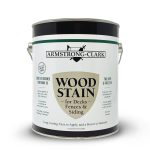
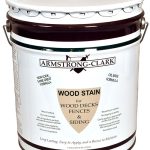


Product Information:
More Info: Armstrong Clark Stains
Cost: $72.99- $89.99 per gallon (Free Shipping)
Stain Type: Transparent, Semi-Transparent, Semi-Solid – Oil-Based
Available Colors: Transparent Natural, Transparent Cedar, Transparent Redwood, Semi-Trans Cedar, Semi-Trans Rustic Brown, Semi-Trans Sierra Redwood, Semi-Trans Amber, Semi-Trans Mahogany, Semi-Solid Mountain Cedar, Semi-Solid Woodland Brown, Semi-Solid Oxford Brown, Semi-Solid Sequoia, Semi-Transparent Chestnut, Semi-Trans Natural Oak, Semi-Trans Black Walnut for Hardwoods
Application Temperature: 50-110 F
Coats Required: 1 Coat
Coverage Per Gallon: 200-250 sq. ft
Application Tools: Sprayer, Pad, Brush, Roller
Dry Time: 8-72 Hours, Depending on UV exposure and air temps
Cleanup: Mineral Spirits
VOC Compliant: Under 50 VOCs. Compliant in All 50 States and Los Angeles Counties
More Info: Product Data
Manufacturer: Armstrong Clark
Test Deck Stats:
Deck Wood Type: Pressure Treated Pine
Deck Square Footage: 600
UV Exposure: Full Sun
How Many Years Tested: 2 Years
Stain Color Used: Semi-Transparent Cedar
*All products tested and results are from our experience. We offer no guarantee of similar results. Consider that results may differ due to different wood types, exposure to UV radiation, and natural weathering.
🔹 Pros and Cons
Armstrong-Clark Wood Deck Stain – Pros
- Excellent balance of penetration and color retention
- Conditions wood with both drying and non-drying oils
- Better UV resistance than most penetrating oil stains
- Rich, natural-looking color tones
- Can be reapplied with proper prep without heavy stripping
- VOC allowed in all States and Canada
Armstrong-Clark Wood Deck Stain – Cons
- Slightly less forgiving to apply compared to simpler penetrating oils
- Can over-apply if not careful, leading to uneven drying
🔹 Best Wood Types for Armstrong-Clark
Best Wood Types for Armstrong-Clark Wood Stain
- Cedar: Excellent color enhancement and protection
- Pressure Treated Pine: Very good penetration and durability
- Redwood: Rich color tones with good longevity
- Hardwoods (IPE, Cumaru, etc.) – requires hardwood colors: Amber, Mahogany, Black Walnut
👉 See: Deck Stain for New Wood
https://www.deckstainhelp.com/staining-a-new-deck/
🔹 Application Tips
- Apply to properly cleaned and prepped wood
- Do not over-apply—this is critical with Armstrong-Clark
- Back-brush or wipe excess stain to ensure even penetration
- Apply in thin, even coats for best results
👉 How to Prep a Deck
https://www.deckstainhelp.com/best-deck-prep-clean-strip-or-sand-the-deck/
🔹 Maintenance & Recoat Tips
Armstrong-Clark offers solid durability but still benefits from regular maintenance.
- Recoat every 18–24 months depending on exposure
- Clean and brighten before reapplying
- Light maintenance coats will extend performance
- Avoid letting the stain fully wear off to prevent heavier prep
From my experience, maintaining Armstrong-Clark before full fade will keep the deck looking consistent and reduce long-term work.
👉 Deck Cleaning and Brightening
https://www.deckstainhelp.com/cleaning-wood-deck/
🔹 Who Should Use Armstrong-Clark?
Who Should Use Armstrong-Clark Wood Deck Stain
You should consider Armstrong-Clark if:
- You want an oil-based stain with better color retention
- You prefer a richer, more vibrant finish
- You want a balance between penetration and durability
- Your deck is in good to moderately weathered condition
- Your deck is extremely dry and needs maximum penetration
You may want to consider other options if:
- You prefer a water-based or low-VOC product
👉 Best Deck Stains
https://www.deckstainhelp.com/the-5-best-deck-stain-reviews-and-ratings/
🔹 FAQs
Armstrong-Clark Wood Deck Stain – FAQs
How long does Armstrong-Clark last?
Typically 18–24 months depending on sun exposure and maintenance.
Does Armstrong-Clark peel or flake?
No, it penetrates into the wood and does not form a surface film.
Is Armstrong-Clark oil or water-based?
It is an oil-based penetrating stain.
Can Armstrong-Clark be used on new wood?
Yes, but proper prep is required to ensure even absorption.
How does it perform in full sun?
It performs very well, with better color retention than most oil-based stains.
Can it be applied over old stain?
Yes, if the previous stain is compatible and the wood is properly prepped.
🔹 Final Thoughts
Armstrong-Clark Wood Deck Stain is one of the better oil-based stains available when it comes to balancing penetration, color retention, and durability. It stands out from traditional oils by offering richer color and improved UV resistance.
From my hands-on experience working with deck stains for over 30 years, Armstrong-Clark is a great choice for homeowners who want a high-quality oil-based stain that provides both performance and appearance.
If applied correctly and maintained over time, it can deliver excellent long-term results without the issues commonly associated with film-forming coatings.
Armstrong Clark Wood Deck Stain Review Video

































I just stripped and stained my old redwood deck with Armstrong Clark Natural Oak semi trans and I’m happy with it. The directions on the can are great, but I’m surprised they don’t recommend pad application. Nonetheless, I used a pad and it worked really well,
Looks great!
Deck Stain Help,
We just wanted to give you a big thank you for all the prepping and staining advice. In the end we decided to go with Armstrong-Clark on account of some advantages it offers. We have a large south facing deck. The fact that we could put it on in the sun is a big plus as it is too hard to time a dry deck with an overcast day and no foreseeable ran here in the NW. The other big advantage of this product is that you let it sit and soak in for 24 hours instead of having to towel it off 30 to 60 minutes after application. This is a huge labor saver that keeps you from trying to towel up stain while you are still trying to get it on other areas. Within 24 hours it was all soaked in and looking nice. We used the Armstong-Clark Cedar Semi-Transparent on cedar deck boards. Thanks again for all the help!
Lee
Looks great!
Hi Scott. Should I put a second coat on now or latter? New con heart about two weeks old. Lightly sanded 150grit. Brushed on Anderson-Clark Amber. 2 1/2 gallons covered 800 sq.ft. I was surprised. Pics about an 1/2 hour after the 3 hrs it took to stain, once sanded and swept. How can I send pics?
Hi Perry,
Unfortunately, you stained your new deck prematurely and didn’t prepare it correctly. New wood neds to weather for three or more months and the prep should be the cleaner and brighentener to remove mill glaze and oxidation, not sanding. There is a reason it spread so thin, because the new wood directions were not followed, and your wood was unable to accept the stain properly.
New wood tips:
https://www.deckstainhelp.com/how-long-should-you-wait-to-stain-a-new-deck/
Just leave it alone for a year. It may wear unevenly since you stained it too soon. If it does, you will need to strip and brighen for prep.
FYI, never sand finer than 60-80 grit as it will reduce stain penetration.
I wanted to wait several years before posting this to be certain my recommendation was well founded and accurate.
It has now been seven years and I can confidently recommend the Armstrong Clark stain product for exterior, element exposed cedar. I am in Portland, OR and have cedar carriage garage doors.
The house was built in 6/2008. I had wanted a smooth furniture finish on the doors and so the painter applied numerous thin coats of lacquer to all exposed wood; mahogany front doors, cedar soffits, the cedar ceiling over the enclosed deck, and the garage carriage doors.
By 10/2013 the lacquer had peeled off the garage doors due to the direct southern exposure to sunlight, rain and snow but I will say all other exterior wood was and is still fine.
After researching and finding this site I removed the garage doors, stripped, brightened, properly sanded (going through each grit until 1200) and then applied the Armstrong product as four thin coats.
One gallon was sufficient for two doors (3 Car)
Throughout the years there have been no problems with the product or with any type of greying or fading of the wood.
Despite my best effort at sanding this is still not a smooth, glossy finish which what I desired but I see that that is not practical nor does the product purport to deliver that.
However due to the slight roughness on the surface I do find that pollen and dust stick to the doors so I just wipe them down monthly.
In considering all attributes that this site uses to rate stain products, the Armstrong is superior to the other products I have dealt with.
I helped a family member with his deck and he insisted on a using different product because of the price. What a foolish choice he made!
The cost of the stain is so minimal when compared to labor and time costs.
In 2020 I did give the garage doors a very light sanding and added a single coat before I sold my house.
It looked beautiful and I believe the doors were a contributing factor in selling the house, even during the slower housing market.
I highly recommend the product and I will use it again.
Extremely impressed with this stain. After a backbreaking job of sanding and brightening the cupped pressure treated 7’x28’ front porch and four 5’ wide steps, I was praying the finished product would be worth it. I wasn’t disappointed. A complete transformation. Very easy to apply, and huge bonus not having to time application to avoid the sun. Used two coats applied only about 20 mins apart but dries enough in that time to not have worries about leaving shoe imprints on previously coated surfaces. Finish was rich and smooth. After almost a year signs of wear are minimal, and only on steps used to drag bicycles and scooters up and down in addition to very heavy foot traffic.
Will recoat steps this summer and that’s it. Highly recommend,
Do you have any pictures to post?
I’m out of town for a couple of weeks but can get take some pictures when I return and post them at that time. I never think to do a before and after. If you had seen the before, you’d be amazed by the after.
Afters would be great. Thanks!
I’ve hired a company to strip and brighten our 10 year old red cedar deck before staining it with Armstrong-Clark Semi-Transparent Driftwood Gray. I am purchasing the stain this week. The deck is 350 sq. ft., southern exposure. Last stained in 2020 with oil based product. I’ve received conflicting advice on how many gallons to purchase. Can you advise?
About 3-4 gallons when applying two coats wet-on-wet.
Thanks! Do you have advice for how long to wait before placing furniture, plants, or rugs back on a deck freshly stained with Armstrong-Clark Semi Transparent?
24-48 hours.
Just had a professional prep the deck. Would you expect more of the original product (Oil Based Xtreme Weather) to be removed after stripping and brightening? I’m reaching out to the company to see what products were used. The current plan is to apply Armstrong-Clark Semi-Transparent Driftwood and now I’m worried about the old stain showing through. Appreciate any insights.
Yes, this needs to be stripped better. You cannot apply the AC over this as it is prepped now.
Is there any scenario where a proper stripper product, applied correctly by a professional, and for the recommended length of time could produce the result shown in my photos above?
Just the week before I spread an oxy laundry powder (mixed with water) for 15 minutes and scrubbed to test a sample stain. That result is why i had confidence that professionals could achieve a satisfactory if not better outcome. Company wants me to sign an $1700 change order to sand the deck w/ a hand orbital sander. I’ve pushed back.
What you had originally was semi-solid or fully solid/opaque. That would need to be removed with a Paint Strip or sanding to fully remove it. https://www.deckstainhelp.com/how-to-remove-a-solid-color-deck-stain-or-paint/
Did their original quote say full removal for prep? Sanding is a lot of work, and if the original quote did not specify full removal, then it is a valid cost.
The old product wasn’t a semi-solid or solid, though I can understand why you’d think that given the pics. It was 5-yr old Rymar Xtreme Weather Semi-transparent. The path we are now on is a full sanding. I’m writing again to see whether I can proceed to stain the deck w/ AC after the sanding or if there is a step needed in between. I’ve read I should brighten, but also that is not necessary. I appreciate you, deck therapist. 🙏
Brightening after sanding is a required step, not optional — sanding closes the wood pores, and the brightener reopens them so the AC stain can penetrate evenly. Order is: sand (60–80 grit, no finer) → brighten → stain. Since the deck is being sanded, plan on one coat of AC only.
One week ago we brightened the deck and then left for a family trip. It didn’t rain all week until last night. Today I used a moisture meter to check the boards. The tops of the boards all read between 10-11%, even near the edges. However when testing the exposed end grains of the baords, it’s between 30-40%. I really don’t want to put this off any longer. Can I stain the deck this weekend and wait to apply stain to the ends when the moisture is lower?
Yes.
Stained the deck yesterday. Applied with yellow deck brush, then back brushed and spread with 4″ Wooster Stain Brush. Could you help diagnose this issue and recommend next steps. Overall I’m happy with the color. It’s just inconsistent, barely there in some areas and some pooling in others. 24 hours after staining, we used a rag to wipe off the white areas. In some cases it took all the stain off. What’s going on in your opinion?
Pic 1: Left—Just after staining, Right—24 hrs later.
Pic 2: Left—White pools, Right—Wiped off w rag
The AC stain was not able to penetrate, most likley due to the sanding. It reduces penetration, hence why we do not suggest it unless needed. In your case, it was necessary to remove the old coating. I would leave it as is. Lightly clean to remove any dirt and apply a light coat when the wood is more porous in late Fall or Spring of next year.
I am looking to use this product without any tint to keep the wet look on the cedar deck. I understand I will need to recoat every 1 to 2 years after power washing. To you sell Armstrong-Clark Wood Stain (Transparent Clear Tone)
The AC stains do not come in clear. Clears will have zero UV protection and will start to gray out in months, not years: https://www.deckstainhelp.com/will-a-clear-sealer-prevent-graying-on-deck/
If you still want a clear, look at TWP 1500 in Clear:
https://www.deckstainhelp.com/product-category/twp-wood-stains/twp-1500-series/
I was wondering about a comment you made about Armstrong Clark
Not Ideal For: Extremely dry wood needing maximum penetration or very low-maintenance expectations
What constitutes “extremely dry” wood. My cedar deck is about 8 years old. Has full sun exposure all day. Has places where wood has split with the grain. Is this “extremely dry” and I should go another route? Also your comment about mainenance expectations needs a bit of clarification for me if you would. What do you mean by that. I like TWP color but I was hedging toward A C because you mentioned could be applied in full sun. Is AC superior to TWP due to the sun issue. I REALLY appreciate your input
Thanks
Not sure what comment you are referring to, as you can use it on old and dried-out wood. It helps replenish the lost oils.
Hi Scott–It’s stated in your “quick verdict” section
🔹 Quick VerdictArmstrong-Clark Wood Deck Stain – Quick Review
From your response I believe that you no longer have that opinion? Also is there a significant performance difference between TWP and AC if the application has to be in full sun as my deck gets sun from sunrise to sunset. You had mentioned AC performed well. Does TWP not do as well? Thanks
That’s a typo should be “Ideal”.
We fixed it.
Wow. That makes a huge difference. Thanks
My poolside cumaru is 10 years old and regularly maintained. This January I stripped,sanded and applied 3 coats of deckwise ipe oil. It drank it in and now looks blond. The second photo is the same cumaru in our linai. What other oil would I use to bring back the rich warm colors of the wood.? I miss the richness. FYI, we’re in southwest Florida.
Strip and brighen for prep. Do not sand. Look at the Armstrong Clark in Mahogany color if you would like it richer. Do not apply 3 coats to cumaru. Just one coat every year after cleaning.
Yes this is my PT deck pictured in late April here, but the deck is 3/4 open to the sun all day in summer? what would you recommend? I like seeing the grain.transparent? Armstrong…. nano seal what…..looking for something easy to refinish also. previous used defy crystal clean only lasted 2 years. Ty Dan
Strip and brighten for prep to remove the old coating, and then use the Armstrong Clark in one of the semi-transparent colors.
I’m looking for a product that won’t track oily shoe prints on my indoor wood floors! Does the Armstrong dry without oily residue remaining?
AC stains are fully curing and drying stains.
Hi Scott. Question on AC Cedar semi-transparent. Will be doing a full strip/brighten of Cabot ATO with RAD on a three year-old cedar deck. Deck surface, fascia, top rail (all cedar) is almost 400 square feet. Debating on purchasing four 1 gallon cans vs. one 5 gallon can. If I go with individual gallons, I would need to box them prior to staining (combine in a 5 gallon bucket) to ensure color uniformity, correct? Not needed with a 5 gallon can purchase, however, I don’t want to end up with a lot of extra stain I won’t use. I know I may need to put a maintenance coat on 12+ months or so, but don’t want it going bad (I could purchase some empty paint cans and transfer for that period of time). Also, what supplier does the stain come from if ordered here on your site? I’ve seen reviews on Amazon where a supplier (The Sealer Store in MI) had sent out old batch dates with hardening, leaking, and unusable product in the 5 gallon cans. Looks like the resources to get product to Illinois are limited to two (both MI), including that one. I certainly don’t want to spend $300 to get an old batch, whether that be 1 gallon or 5 gallon. If the 1 gallon cans turn faster (batches are current), it’s worth the extra cost. That’s one advantage to a stain like Cabot, where I can purchase off the shelf at a big box store and check the batches and dates. But I’ve done Cabot twice, and it’s not durable…hence moving to AC. Also, what is the expected lead-time to receive AC Cedar ordered here online? I’d like to get this done sometime next week. Thanks, and feel free to email me directly as well if that works better for your answer.
-Yes, mix well first and then box the gallons together.
-The Sealer Store has never sent out old stain with old batch dates; it is always new, based on their extremely high volume and turn rate. Anyone saying that is straight-up lying or making an incorrect assumption. As for leaks, UPS has been known to mishandle packages in some rare cases. If that ever happens, they will replace it at no charge. All stain products, whether in gallons or pails, are not expired or old.
Shipping to IL takes 1-2 business days.
Appreciate the response. For my size deck and age, 4 or 5 gallons? If five, five gallon can? Thanks again!
It is hard to say, but I would think 4 gallons should be enough for two coats applied wet on wet.
Hi Scott. Need some direction.
I used RAD stripper per the directions today on my cedar deck. I do not have a power washer, but did use a pressure wand attached to a garden hose. The stripper did not remove all of the stain…some larger patches, and some very small areas on many boards, a lot of which are around knots. Also, I did one half the deck that had a lot of intact stain and the boards are now neutral color. The other half of the deck has much more exposure and most of the Cabot ATO was already gone. The wood darkened quite a bit when the RAD was applied, so I gently scrubbed with a medium bristle brush. That created a lot of residue, which looked like balls of mud. The wood on that side was much more reddish after brushing, and I’m not sure all of the residue was removed. In both cases, the wood now has fuzzies (I read your instructions on that). I did not brighten because I could tell there was still stain post-stripper. What do you recommend for next steps? I do have a random orbit sander and plenty of 60 and 80 grit, if I should be lightly sanding at this point. Thanks!
FYI: Just purchased Armstrong Clark semi-transparent cedar from you, and it arrives tomorrow. Want to be sure I’m giving it the best prep possible so it doesn’t fail on me in the near future.
To strip best (and easiest), you need a pressure washer. Can you rent or borrow one? Add some pics of the project so far in the comments.
My neighbor has a power washer I believe I can borrow. Pics attached. Do I need to let it dry out before attempting again, and use the stripper again?
Additional photos
Most of the old stain is removed. No need to let it dry out; reapply the stripper and pressure-wash it off. Shoot for 95% removal or more. The brightener will restore the pH level and lighten the wood when done.
Hi Scott
So my newer pt pine deck is ready to be stained after following all prep guidelines. However our spring weather is making this a challenge. After a day of rain we will have 3 good days of sun. Although temps have dropped from the 80’s into the 50’s. On the 3rd day we will have temps in the 70’s which I would like to stain.
However the next day there is a chance of rain all day with chances starting around 4am.
Can I take the chance to stain? It will have around 12-14 hours of dry time with temps in the 70’s.
Thanks
You should be fine but it does vary based on the stain brand’s drying time.
It’s AC semi transparent cedar.
Thanks for the quick reply
Hi Scott
Well I finally got the deck stained! All the credit goes to your expertise and this great website. Also you can’t put a price on your willingness to answer questions quickly! I’m very pleased with the results and thank you again. Due to constant rain chances I still need to finish the steps. However the stressful part is done!
Mike
Another picture
Nice job! Looks great!
Thanks!
Thank you for all the posted information however i am looking for a final recommendation based on experience. I have narrowed my choices (I think) down to TWP 1500 or Armstrong Clark semi transparent stain. I live right outside Washington DC (warm/hot humid summers – sometimes snow and ice in winter). My deck is about 4 yrs old and never been stained. One deck is in filtered sun while the other is in full afternoon sun. After cleaning and brightening this spring, do you have a preference for either product? Or is it really 6 of one, 1/2 dozen for the other? Comments or recommendations.
Both are excellent and would work well for you. It may just come down to what color you like.
Does fence need to be stripped to original wood before stainingg
That varies based on the condition and if stained prior. Post some pics for advice.
I live in Massachusetts I want oil stain I can’t buy oil here or New York
Yes, you can have oil-based stains in NY as long as they are VOC compliant. Examples would the Armstrong Clark and TWP 1500 Series. You can order online and have them shipped.
I have an IPE deck and was using Deckwise solid color stain. It looks great when applied but turned black after 6 months in the south facing sun. I end up stripping it off every year and reapplying it. I looked at Armstrong stains and even tried a sample of their Amber color. A little orange to my liking but I could live with it. I don’t mind reapplying in a year or two but I’m tired of the stripping routine. What would you recommend for a stain that doesn’t turn dark in the sun?
Restore A Deck Stain: https://www.deckstainhelp.com/restore-a-deck-wood-stain-for-exotic-hardwoods-review/
A water based material on a previously oil stained wood that is inherently oily? Really?
Bill,
If you strip/remove the IPE Oil, you can use any stain brand or type. We have done this 1000s of times.
I appreciate your feedback
🙂 No issues. I edited the misunderstanding.
Cleaned cedar deck a few weeks ago but didn’t brighten. Unforeseen weather & then vacation got in between & the deck has grayed/bleached in sun. Can I still brighten at this point before staining? Putting Arm Clark semi trans Cedar for stain
Thank you
Redo the preo with both the cleaner and the brightener. Brightener alone will not work.
Can this product be sent to 80128 zip code (Littleton, Colorado)? Thank you.
Yes, it is allowed everywhere.
I have an 8 year old redwood pergola and just sanded the old home depot stain with 120 grit. Based on your recommendation, I just purchased RAD cleaner and brightener, as well as the Armstrong Clark Semi-transparent deck stain in redwood color. After sanding I saw your article that suggested using 60-80 grit. I haven’t cleaned or brightened yet. Should I go back and sand again with 80 grit before cleaning and brightening?
Yes, that would help.
Hello! I live on the beach in Hawaii and I just ordered brand new African mahogany garage doors. They still need to be sanded and stained/oiled. I am looking at AC semi-transparent oil in Chestnut. Hoping it will have enough UV protection and that it will hold up well with high sun, lots of rain, bugs, and strong winds that are full of salt. I also do not want to have to sand the garage doors or disassemble them in order to reapply the protective stain/oil when the time comes, even with all the salt in the air. The garage doors are west-facing, the ocean is on the north about 100 meters away, and the trade-winds usually come out of the northeast. Do you recommend the AC semi-transparent oil for this project? I’m a first timer at a project like this, so I really appreciate any guidance, thanks!
For hardwood, you would need one of the 3 Armstrong Clark Hardwood colors. Amber, Mahogany, or Black Walnut. It works very well. You can stain the wood after the doors are installed. You do not have to take them apart.
Thank you! I’ll choose on of those 3.
i have two old treated pine boards in pic, curious as to why it’s different colors when I first wet the boards or if it matters. They eventually all turn uniformly dark when soaked but want to make sure not an issue when staining. I did clean and brighten but will be doing it again as it’s been about 5 weeks.
Internally they are darker. They might stain darker as well. Might want to brighten it all again to see if that helps.
Hello! Been 2 years since I last stained with ArmClark. Needs a coat this year as it’s faded off & darkened in places. Will re-apply same stain…the semi, what should I do to prep again? I know I can’t just go right over old correct after cleaning?
Thank you
Use the Restore A Deck prep kits and then recoat.
Cleaner & brightener? Thank you
Yes.
About 8 years ago I stained my pool deck with Sherwin Williams semi-transparent water based stain and repeated the application a couple more times over the years. Every two years it was flaking and peeling so I just sanded the bad areas and cleaned the whole deck with a deck cleaner product. I got tired of doing this every two years so I switched to Benjamin Moore Arbor Coat solid color water based stain. Same thing is happening.
After reading many of your product reviews, I’m wondering if I could apply the Armstrong Clark product on the deck. I sanded the entire deck and got most of the old stain off, then cleaned it with a deck cleaner product.
Do you think I’d have better luck switching to the Armstrong Clark product or now that I’ve completely sanded the deck, maybe the Arbor Coat product would last longer?
Thanks,
Rick
You will have to fully remove the old stain before switching to the AC. AC is a far better stain then BM or SW products. It will not peel as it is a penetrating stain. If you want prep advice, post some pics of the deck.
Can I use this over Cabot Australian oil based?
Whenever you switch brands of semi-transparent stains, you need to remove the old coating first. You will need to strip and brighten for prep. Use the Restore A Deck Stripper/Brightener kits.
have a redwood deck, trellis, and fences to be stained. All are at least 10 years old.
The original contractor I hired became discouraged that the original chemical stripper didn’t remove all the existing stain, and he essentially abandoned the job around mid-November. While he hadn’t requested a deposit and I’m thus not out any money, it’s taken a while to find a new contractor. The one I’d like to use just informed me that he won’t be able to begin the job until mid-January. He’s booked through the end of this month and then will be off for the holidays until mid-January.
Is it safe for the exposed wood to remain exposed for almost 2 months? While some stain remains in spots, much already has been removed by the earlier chemical stripping and also some later sanding.
If you advise the work should not be put off until mid-January, are there contractors who work in San Francisco that you’d recommend? The one I’d like to use who isn’t available until mid-January is Sammy Alfadel at Envirotek Restoration in San Mateo. Other contractors I’ve interviewed didn’t seem knowledgeable. For example one didn’t understand what 2 coats wet on wet meant; he thought it meant apply one coat, let it fully dry, and apply the second coat a day or two later. Another said there was no need to remove all the old stain, it would be fine to apply your semi-transparent over the remaining stain. Another wanted a blank check at $85.00/hour for any and all sanding he deemed necessary. All those were of course no-go’s.
Thanks for your advice and help, much appreciated!
Post some pics for prep advice. Your wood will be fine until you prep and stain in a few months or later.
A film-forming stain was applied to some pressure-treated wood on the sides of a deck. In preparation for restaining, is there a safe way to sand the film-forming stain off? We’d prefer not to use a stripper product and brightener. A contractor has used that already, but apparently missed most of the sides. Thanks.
See this for sanding tips: https://www.deckstainhelp.com/how-to-sand-your-wood-deck/
could I use semi solid over a previously treated deck (used pittsburgh semi solid,latex,a few years ago and it didn’t hold up very well)
No, you have to remove all of the old stain first.
I have a 10r old cedar deck with a clear natural stain on it applied three years ago. . I can hardly notice the stain exists anymore . 1. Can I go over this with RAD stain? 2. Can I cover it with a solid acrylic stain. 3. what solid acrylic stain do you recommend?
You do have to prep and then you can cover it with the RAD Solid Stain. https://www.deckstainhelp.com/restore-a-deck-solid-color-stain-review/
We have used AC semi-transparent cedar tone on our cedar deck the last 3 applications but have not been impressed with the durability of the stain, typically having to re-stain every year, though we usually only apply one coat. Our floorboards look especially bad. I have prepped with RAD cleaner/brighter every time. Was wondering if the AC semi-solid cedar tone would hold up better without hiding too much of the wood grain. Also, would we be able to apply it without stripping the old semi-transparent stain. Thank you
More pigment = longer UV protection so yes, a semi-transparent will always give longer results than a transparent color. Clean and brighen for prep.
Would I need to strip the semi-transparent stain to apply the semi-solid stain? Both AC products. Thanks
It would be best to strip.
Hi,
I bought the ARMSTRONG CLARK STAIN 1 GALLON for my new deck last summer. I applied two coats on it. I thought it would be the best exterior oil-based semi-transparent stain for deck wood. But it turns out that the surface became quite oily and during the winter of 2022, it started building dust which make the deck looks like black mold grew on it. In spring, we washed the deck thoroughly with soap and water, the “black mold” appearance looked better. But after couple months, the surface of the whole deck looked oily and very dirty again. I attached the picture here. Could you provide some advice on how to clean the surface and remove that oily kind of looking? Is it necessary to power wash the old paint and re-do the painting using different piant? Thank you so much!
Hi,
New wood and Armstrong Clark is only 1 coat (you applied 2 coats) after 3 or months of weathering and prep with a deck cleaner and wood brightener. It seems this was not followed and that is why it is a little oily.
We would stick with the AC but strip and brighten for prep so you are starting over with a bare surface. Just do one coat.
Thank you ! I did weather and cleaned the new deck before applying the paint. so 2 coatings within one week might be the cause. what kind of product should I use to strip and brighten the surface if I want to re-do the painting? should I apply such product before power wash? and then sand the surface?
Use the Restore A Deck Stripper and Brightener Kits. You use them while pressure washing. No need to sand.
location mountains NE TN. I have 2 decks se & nw sides of house. Nw under porch roof haven’t cleaned any & that side no mold…just dirt. SE 52′ with 30 under roof. Sun & weather hits the two uncovered ends hard. SE is 2 story deck with 20′ posts supporting deck roof, I am wanting to stay as close to clear & natural as possible and understand uv issues. PT pine 8 yrs old & never treated. Have PW all SE. Deck surface no issue but the posts had blackened prior to pw and boards not under roof more faded. Is AC transparent natural best choice as like color cleaned wood? Not sure how much color the cedar version imparts. Only online purchases possible & need to get everything sealed up…not want to order samples & then additional wait for full product.
oh, if use the transparent & down road want semi-transparent or semi-solid on deck surface can that be applied after cleaning or require stripping?
Try Restore A Deck in Natural, Armstrong in Natural, or TWP in Honeytone. As for recoating, if you switch brands and transparencies, you will need to strip and brighten for prep.
I’ve read your review on Flood but wondering if Pro Series CFW-UV5 with pentrol same? It is available locally. Natural tint base. Can just the base be used? If suitable product (tho possibly not the best) would their honeygold be close to the natural fresh pine color? I want stick with natural coloring or protection with natural graying. I only want an oil based product. Modified oil makes me bit nervous but you would know more.
If not Flood I will probably mail order Armstrong. Their application & timing seems easier than some. Especially when can’t always tell when thunderstorms might show up…less frequent this year but then its intense heat.
Thanks! This website is a wealth of information & I’ve looked at it over the years. I too noticed Cabot took a fall. Their product was only thing worked on our CA deck & mine here different area TN. Used semi-solids tho.
Modified oil means water based so we would not suggest it for you. Use the Armstrong, much better.
Scott, Your BIO suggests to use one of your endorsed eCommerce sites if we want to express our appreciation of you and the site. How does one do that?
For which product?
AC semi transparent stain and the restore-a-deck kit
Thanks for asking. I updated the Bio page to reflect some of the more popular sites for our eCommerce:
https://www.deckstainhelp.com/author/administrator/
We just barely stained our deck with oil-based stain that resulted in a color failure. Can we apply Armstrong semi-solid to cover the undesired color? I really do not want to do any stripping so trying to figure out if I could possibly avoid any unnecessary work. Thank you for your advice. For your reference, the product we used – STORM SYSTEM Storm Protector Penetrating Sealer & Stain Protector – Deck Protector, Fence Protector, 1 Gallon, Hickory.
No, you have no choice but to remove and start over. You cannot apply another brand over the Storm Stain.
Thank you! Is that Storm Stain specifically or oil-based in general?
Whenever switching brands of semi-transparent stain, you should remove the prior coating. Does not matter the base.
Also, what would be the best removing solution in this case? I searched through the whole internet, so many opinions. I don’t want any hiccups anymore… Thank you for your help.
Strip and brighen for prep. Use the Restore A Deck Prep Kits.
Thank you so much!
I have a brand new deck that was finished about a month ago. The sun beats down on it mercilessly (plus georgia humidity) and after only 30 days it’s totally dry and ready to be stained. It looks like for a new, pressure treated pine deck Armstrong Clark is the way to go. Im likely going to go with transparent so I can enjoy the color of new wood. For a new deck would this brand be your top recommendation as well?
(Also, I’m so glad I did more research and found your site as I was going to go with Behr Premium and that looks like it would have been a horrible choice from the reviews.)
See here about new wood if you have not see it yet: https://www.deckstainhelp.com/how-long-should-you-wait-to-stain-a-new-deck/
The AC stains would work well.
I just applied AC semi-solid (espresso) onto my ~10yo redwood deck in Northern CA. Previously there was unknown old stain that was very uneven due to wear and some areas of the deck being more sun exposed than others. I prepped with RAD stripper and brightener with good results in removing all the old stain. After brightening some of the individual deck boards were much lighter in color than others (Pic 1) – and to my surprise this persisted even after the stain was applied (Pic 2, 36hrs after staining). Since the boards were different colors after prepping I assume that the difference is just due to them being from different lots of wood with different characteristics. I also noticed that the more sun-exposed boards in the center of the deck generally ended up lighter post-staining.
I had amazing results with this stain previously, getting a much older deck to a really nice uniform dark brown color, so I was surprised that this deck ended up with uneven coloration between the boards.
Is there anything I can do to achieve a more even look, or something I could have done different during the process?
The final color is always based on the wood’s age, type, and porosity. The one in the top left actually looks like a new board that was replaced. Same with the two in the top right. This is not a stain issue but the reality of using a deck (unless a solid opaque) stain.
Can this transparent stain be applied with a sorayer
No, slightly too thick.
Maintenance question.
I installed a new IPE deck 12 months ago. Let it sit unfinished for a year.
3 days ago, used the RAD cleaner and then brightener. Let it dry 48 hrs.
Yesterday I stained it with AC Amber. Looks good.
I plan to add a fresh coat of AC Amber every year for maintenance. Trying to make it last and look good.
The AC instructions say to “wash with mild scrubbing using 1 part bleach to 3 parts water with a max of 1/4 cups liquid dishwashing soap per gal. Then light pressure wash”.
Questions:
1. The cleaning sounds simple, and I like it. Is this cleaning method preferable over the RAD cleaning step 1 cleaner?
2. If instead, you recommend the RAD cleaner over the AC can instructions, do you recommend using the brightener also? Or just the cleaner step 1. I ask because on my front porch, I cleaned + brightened and stained with RAD over cedar last year. This year I cleaned and brightened before adding a maintenance coat of RAD stain and the cleaner/brightener combo removed a LOT of the previous years RAD stain. Seemed a bit aggressive to me.
3. I have one corner of the deck that can get more shade and hold moisture a little more. If this area starts to have issues with mold or dirt, (as was on the previous deck boards) THEN should I use the RAD cleaner AND BRIGHTENER? Or as long as the stain is still good only the AC cleaning instruction method or RAD Step 1 only?
Appreciate your help.
1. Use the RAD prep, bleach is bad for wood and users.
2. Use both to be safe. It is okay if the old stain comes off. Gives you a better surface to apply to.
3. Use both.
Any idea what caused this yellowing all over the deck boards?
IPE deck, installed 12 months ago. I let it weather for 12 months. Boards were a pretty even and consistent gray, but beautiful IPE color when wet. A week ago I used RAD 1&2. Gray was then a bit lighter, but still pretty even and consistent. Feel like I did a really good job getting all of the cleaner and brightened off. I let that dry for 2 days. Looked good. Applied AC Amber. Looked great for 4 days.
Then when it rained, many of the boards seemed to leach yellow. But not all boards. I can slide my shoe on the good looking boards smoothly like there is a thin dry oil coating on them. But the yellow boards are much dryer so shoe doesn’t slide the same.
Everything looked good thru all steps, and then out of the blue, this.
Ideas?
Not sure but it is not related to the prep or the stain. Does the yellow go away if wet with water or does it still show?
It does go away when wet. Other than water beading up, the color looks the same as when it was wet BEFORE the stain was applied.
But when it’s dry it looks terrible.
Nobody has ever seen this?
It may just need a very light coat to even it out.
And you think that’s ok to do on those certain boards over the existing stain, no prep?
Just want to confirm the best way.
Thank you!
Do a test board to see how it dries and make sure it fixes the issue. It should not have to be prepped.
Question:
California
Lots of sun, SE side of house, though partial oak shade
Redwood, circa 1990’s, good condition.
No significant mold/mildew.
Wanting a return unpigmented natural wood penetrating oil “stain,” in September 2020 I vigorously stripped (including some hand sanding) entire deck of old alkyd semi-transparent redwood stain and more recent redwood oil stain with sodium hydroxide, then neutralized with oxalic acid, followed by (at your suggestion) TWP 1500, non-pigmented. Two winters have passed—albeit with less than normal rain—and I am inclined to re-treat horizontal only, but after the previous exhausting/toxic effort, I am not willing to do more stripping or sanding work. As I recall, the TWP instructions were a little more restrictive than others, i.e. “wet-on-wet” procedure and two coat requirement, though that may not have reflected an actual difference in their product; thus, I was thinking of using Armstrong Clark this time, presumably after the two step cleaning/brightening with RAD. I still want to avoid any unnatural color, because I like the color of the deck without any red or yellow tint, despite the understanding that less color is less protection.
Armstrong Clark says I don’t need to strip Armstrong Clark, but do I need to strip the TWP before applying Armstrong Clark?
If switching brands you have to strip and brighten for prep. If sticking with the same stain brand and color, then just clean and brighten for prep.
The siding on my home is redwood. Never been painted. In the past 25 years I have always used Superdeck 1910 an oil based transparent stain/sealer. I refinish it every 4 years by stripping/cleaning, brightening and reapplying a new coat of finish. Now, with Sherwin Williams buying out Superdeck and eliminating the oil based product that I used for so long, I would like to get your opinion on what product I should now use. (I will not be using Superdeck as I believe it is now pretty much junk!)
what’s your opinion?
The Armstrong Clark would be a great choice to replace the old oil-based Super Deck. Make sure to strip and brighen again for prep.
I like the armstrong products I live in Oakdale and they are mde right up the road in Tuolumne county….but I think I mad a mistake ..I used the semi solid on an adirondack chair I built….I understnd now that it was a no no…that it will stain the clothing….is there a sealer I could coat so the clothing staining wont happen..also can I 2 coat….(doug fir and pine)
Sorry but no, you cannot seal over a deck stain or topcoat over it.
Applied a coat of AC driftwood. Looks great. One third were older never stained wood, two thirds 1 year old weathered. Obviously there is expected difference. I did not apply a second coat immediately, as it seemed still wet after 30 minutes. Anyways, it’s been ~3 weeks. Is it too late now to put another coat on for appearance sake?
Thanks
Adding another coat will not help the appearance at this point and may not take. Best to lightly clean and add another coat next year if you want.
I just finished staining my cedar deck with AC semi trans natural oak. With rainy days in the forecast for the next week, I took the risk of staining in a rain free weather window when we have 60% chance (unfortunately some heavier rain) after 24 hrs but before 48 hrs of the stain curing. Fortunately the verticals have had 48-72 hrs, but I could not get to the horizontals sooner.
I have plenty of stain to do a second coat (and was hoping to do a second coat anyway since the stain absorbed into the wood before 60 minutes as AC mentions). Well, I suppose I will just cross my fingers and take pictures afterwards! In reading about a 72 hr cure time now, I am a bit worried — but we shall see!?
You will be fine. AC can take a rain within 4-8 hours after applying.
Thank you! That is music to my ears — the deck is looking great and I have this website to thank for all the awesome guidance!
Am I correct that I can try a second coat since the stain soaked in within 30 to 60 min of application? My cedar deck is 3 years old and was fully cleaned/brightened and took the first coat very well (no excess to wipe). I don’t want to over apply — when I try in a week to do a second coat, how do I test to make sure I’m not over applying? I am also assuming brushing like I did for the firat coat is best approach? Thanks again!
Just do the one coat, you will be fine. You can always do a light wash and apply another coat in 12-24 months or as needed.
Our home was built in 1993, surrounded by decks, so huge job to maintain. We have most recently used Sikkens Cetol SRD, but since we live in NYS, we understand the VOC regulations have changed that product for the worse. Have 1200 SQ of deck so would like to get this right (and durability is a huge concern since so much deck). We are considering Armstrong Clark Semi-Transparent.
Questions: 1)Our contractor is unfamiliar with this product but willing to use. He is planning to strip decks completely… does he need to use Armstrong Clark product to do this (Stripper/Brightener) or will other typical products work? Should we plan on 1 or 2 coats? 3) Any other thoughts with an older deck that has been maintained but showing some wear. Another product to consider? Wood is pressure treated (Pine, I assume).
Thanks!!!
-Any stripper should work. Typically two coats.
-The AC would work well for this deck.
I stained my cedar deck with AC semi-trans natural oak in September 2019. I’d like to give it a refresher with the same product. My understanding is that I can use RAD clean, light pressure wash and then stain. There are some areas that have worn a little more from heavier foot traffic. I am getting mixed messages on whether I need to brighten. Including pics just in case.
We would brighten this since you are down to bare wood in spots.
I am a painting contractor in PNW on the coast. What is the best siding/deck stain for the PNW environment? Currently we are using super deck and woodscapes, but would like to try out something different. Thank you
Armstrong Clark would work very well for you. Another option is the TWP stains.
TWP stains?
https://www.twpstain.com/twp-wood-stains
We used Super Deck semi transparent stain on our cedar decks in the past, we sanded, and cleaned the decks ready to change to Armstrong Clark semi transparent stain, why do you have to use a brightener before the stain goes on?
To neutralize the cleaner and open up the pores of the wood.
Stained an ipe wood deck and teak furniture with the product about a month ago. Still smelling odor from the product. When should it dissipate?
Typically goes away within a week but can linger if less rain or airflow. You can try to dissipate it but washing with water or some kid of deoderizer.
That is dirt from your surround yard/trees. Not sure if using a water based stain will make a difference as it will still get dirty. You can try but if you do switch, make sure to strip and brighten for prep. Use the RAD.
Maybe, it certainly doesn’t clean off and it occurred on upright surfaces to a lesser extent. Could it have been overapplication that caused the severe darkening? I already have the RAD stripper/booster and brightener, just deciding on the stain – RAD seems to be a front runner.
It could be that you over applied it the dirt from the area “stuck” to the stain.
Great information on this site. We have a large batu deck that was installed in 2015, the previous owner chose not to treat the deck. We are now in the process of sanding the deck and plan to use Armstrong Clark Mahagony stain. Do you recommend any preperation for the stain after the sanding is completed?
Yes, clean and brighten for prep after sanding. This helps to open up the pores of the wood.
Thank you for the fast response. Is there a specific product recommended for “clean and brighten”?
https://www.deckstainhelp.com/restore-a-deck-cleaner-system-review/
I am a first time user of this product.I have already cleaned the deck according to your reccomendation. How many days after appling semi-solid stain, should I allow for drying. From the product information, it
indicates only one coat is necessary for semi-solid. My deck is old, should I apply 2 coats?
Trying to plan this project according to weather forecast.
One coat is fine. Drying can take a day or two to full cure, sometimes longer.
I installed a new cedar deck last spring and used Ready Seal, natural seal 512-5 and found after one year of Toronto winter that the sealer is peeling all over the 500 sq.ft deck. I don’t understand why. Please help and provide some guidance on how to reapply with RS or go to another brand. Much appreciated.
RS Stinks. Strip and brighten for prep and then try a better stain like the Armstrong Clark.
How do you recommend prepping the cedar surface? I’m looking for a natural cedar look and does Armstrong Clark has something similar in color?
thanks
Strip and brighten: https://www.deckstainhelp.com/restore-a-deck-injectable-deck-stain-stripper-review/
Your stain must be tinted for UV protection and cannot be clear. Picture is the AC Natural color that is lightly tinted.
We just cleaned and brightened our redwood deck which was stained 3 yrs ago with TWP1500. Going with Armstrong Clark Semi transparent Light Oak this time. We’re noticing that there are many holes and hollows in the wood. In a few hollows, some of the wood seems loose and can be pulled off by hand.
Just prep and stain as is as a hardener will not work and fillers do not blend with a semi-transparent stain.
BTW, you should strip and brighten when switching brands of stain. The TWP should be removed fully before using the AC.
Do you ship to NY
This is not a retail site.
I’m a painting contractor in NY. Do you shop your products here, I see they are available in NJ. You mentioned that this is not a retail site. What do you mean by that. Pat
This is an information only website, products are are sold here on this website.
We will be staining our 10 month old 700 sq ft pine deck in the coming weeks. Do you suggest one or two coats of the Armstrong Clark semi transparent?
One coat for newer wood. Make sure to clean and brighten the wood for prep.
I have a brand new long cedar deck wrapped around the house. Planning on putting transparent cedar tone Armstrong Clark stain. But I’m concern about footprints dirt will be showing on the deck. Any suggestions? Thanks Travis 02-17-21
No stain will be immune to dirty feet. Typically not an issue though, unless it is muddy prints.
Just replaced 3 boards on deck. Other boards are much older. I want to subdue the difference in age when I apply next stain. Not sure if a semi-solid will do it or if I need to go with a straight solid stain to cover. I have used Armstrong (on your advice) and loved it. They offer a semi-solid but do not recommend for wood less than a year old. Any insight on what opacity I should choose to lessen the difference between new boards and old wood?
A semi-solid would help with this but you will need to wait the 12 months. We would do this before using a solid stain.
We just installed a rough hewn split rail cedar fence and want to know the best sealer/stain to use to protect it from the summer sun (in Alabama) and moisture. We want to prevent graying and mildew as much as possible and we would don’t want to have to re-apply the stain every year if possible. Is the Armstrong Clark stain our best option?
The AC stains would work very well for this.
Awesome, thank you. And what is the best way to apply it?
I am building a new redwood deck, I used Redwood Con Heart & want the deck to maintain the current look. What product do you recommend I use to keep the fresh “new wood” look? How long should i wait to stain, if I wait I run the risk of discoloration and staining, like red wine. How often should i re-do the process to keep the look of new wood???
You have to wait and prep: https://www.deckstainhelp.com/how-long-should-you-wait-to-stain-a-new-deck/
Also, it is not possible to maintain the current color as a clear sealer with not tint has zero UV protection from graying. The stain must be tinted for UV protection and that means the color of the wood will change or be enhanced based on the stain color you choose.
Do Armstrong Clark Stains appear lighter on pressure treated pine wood? We have been testing with their sample stains, and some of their colors appear lighter than shown online. Rustic brown for example appears as a medium to light brown with red undertones.
It is not the wood type but the age of the wood. If testing on new wood, it will always be lighter in color since it is not porous.
Hi. My question is, I have mahogany entry doors. Full sun etc. I like a sheen on them. However after stripping & refinishing them every yr, since I was using minwax red mahogany stain & then a sealer on top for the look I want, I know they aren’t good to use tgthr & are the wrong products. Door is prepped to stain. I’ve chosen AC semi solid .
Curious which color of AC would get closet to this look & how can I get a sheen on it? Pictures of b4 & after below. I really would love to get some sort of shine/sheen on the doors, even if I have to refinish every yr. Is that even possible w AC? Any suggestions please.
Ty in advance. 😊
AC does not come in any sheen level and it cannot be top-coated with a shiny coating. Also, your prep would not be good enough for this. All coatings and stain would have to be fully removed.
In general, exterior wood and deck stains are not suggested for doors. They are designed for wood siding, decks, etc.
Could you list the dealers of this product near me that stock this product 21161 Thanks
We do not have a dealer list.
What color do you recommend for redwood cedar decking? Also should I use TWP or AC. I live in Ontario Canada. Thank you.
Any color that you like will work. AC or TWP 200 would both work well for Ontario.
I have never stained a deck. I want to use RAD, A.C., or TWP. Please tell me which is easiest to apply with a stain pad. This is a new deck 5 months old.
They apply about the same. See this for new wood tips: https://www.deckstainhelp.com/staining-a-new-deck/
If you sand an old deck to remove a prior stain, do you have to wait for the newly sanded wood to weather prior to staining?
Depends on how smooth you sanded the wood. Also, the final prep of a cleaner and brightener will be needed.
You cannot use the AC stain over this coating unless you have sand it all off.
Can I do 2 coats of stain on a new deck.? What do I need to do to prep my new pressure treated deck? Do I need to sand and then wash it. If I can apply a 2nd coat how long do I need to wait?. Thank you
Only one coat for new wood. You need the wood to weather for 3 or more months and then clean and brighten the wood for prep. No need to sand.
what about the factory glaze that is on the wood? the other thing is i had to sand factory stamp out of wood. now where i sanded out the stamp is lighter then the rest of the wood. what do i do for that? will a brighter help me on that?
The waiting and prep will remove the mill glaze. The waiting of 3 months will even out the sanding as well. Clean and brighten for prep prior to staining.
Rub off could occur when the stain was over-applied and the heavier pigment from the AC in semi-solids cannot fully soak into the wood. AC also suggests if this ever happens to lightly coat over the top with their Natural stain to “lock” in the pigment from being rubbed off.
This is the transparent stain, right? If that solves the problem that’s great! I’m assuming that down the road when another coat of the semi solid is needed, cleaning/brightening will be enough or will the added coat of natural require some additional prep?
Yes, Natural in Transparent. You will have to clean off dirt first. When redoing the entire project, you will need a full cleaning, brightening, and restaining.
OK, we cleaned the small deck, reapplied a coat of AC semi-solid Sequoia yesterday and it once again looks great. Tomorrow we will go over it with dry rags to remove any excess stain. How long should we wait before applying a coat of Natural? Thanks!
A few days or week.
so thompsons water seal may seal in the pigment also?..
You cannot add a sealer over the AC stain and Thompsons is a very poor product. Never use it.
you are probably right but from a business perspective it is unprofessional to publicly degrade a competitors product …..better to let your product do the talking…..speak for itself..
This is a review site, so that is what we do and the point of the site. Review products like Thompson and report our findings. You can read the review here and the 400+ customer complaints in the comment area.
https://www.deckstainhelp.com/thompsons-waterseal-finish-review/
We have a mahogany deck that was completed in late 2014. We stained it with Cabot Australian Timber Oil Mahogany in early 2016 and again in early 2018. Frankly it has never looked anything like it did when it was new (see Photo 1; new after rain 2014).
We want to retain again but have the following questions:
> Should we prep with RAD Stripper & Brightener Kit or with RAD Cleaner and Brightener Kit (We notice that the customer video does not even use the brightener!)
>> If we use the Stripper, do we need a power washer? (we don’t own one that works well.)
>>> In some places, comments say you recommend using AC Amber instead of AC Mahogany on mahogany decks. Can you tell us why?
Strip and brighten for prep. You will need a pressure washer. Amber or Mahogany would work. Color is up to you.
Thanks for your answer. I guess that means we won’t be doing the job. Can’t afford a pressure washer, and we had hoped for some professional advice on which color would best match our original deck.
that looks closer to the mahogany than amber. Amber dries more brown, mahogany more red
Considering using AC semi-transparent on a pressured treated deck that is about 14 months old. Deck has never been stained. Will do RAD clean and brighten first:
1. Should I do 2 coats applied wet on wet to deck given its age?
2. Should I expect to get 2 yrs out of AC verses Ready Seal?
3. Is AC application more forgiving than RAD/water-based stain when it comes to lap marks etc (though both need wet on wet)
Thanks
1. Yes, correct.
2. Yes, RS does not last a year.
3. Yes.
We just stained our deck with RAD based on your reviews, but we are novices and there were terrible lap marks (pic 2) and drip stains that required a very careful feathering of a second coat (pic 3). As we practiced we got better at it, (and learned to do one board at a time) but the RAD stain was pretty unforgiving of our lack of skill. My question is this: we are about to stain our 2 year old Rainbow Playset and are wondering if the TWP will be any easier to apply than the RAD in terms of drips and lap lines and such. The playset came from the factory with a light coat of water based stain/sealer and now needs its first maintenance coat. We are very wary to use RAD on it because it’s such a complicated surface and we are afraid we won’t notice splatters or we won’t back brush fast enough and then the finish gets so uneven. Is TWP more forgiving? We got very excited about the Ready Seal brand for this reason, but we really really don’t want to have to do this every year. And lastly, what application tool would be the fastest and least likely for error for us novices?
The RAD stain is not your issue but your technique. You cannot stop and start without blending in the middle of a board. Also, you cannot apply TWP or RAD over your factory stain on the playset, it has to be stripped and brightened. RS is not a good stain, issues with not drying and rub off.
Which color of RAD did you use on the deck?
And what kind of wood?
We have a composite deck the previous owners either painted or used a solid stain over it. We tried cleaning it off and pressure washing and the stuff wouldn’t budge. Not sure if we should try a stripper or find a good solid stain to go over it with??? I contacted the manufacturer and they say they don’t recommend painting but since original stuff is sticking so good that maybe a paint would adhere?? Thoughts, strip, paint or solid stain?? Material is ultra deck, and no clue on the solid stain
You cannot remove this so you will have to use a paint or solid stain again.
Hi there
I’ve been reading about all the problems with using inferior products and want to get the staining of my deck right the first time. We live in Toronto, Ontario. Deck floor is mahogany and seating and walls are cedar. I have included photos of deck area when dry and wet (which highlights difference). This was after a pressure wash and after application of Behr deck clean which I picked up at Home Depot before finding this invaluable forum. Have now returned all the Behr stain I purchased and thinking of the AC Mahogany or Amber for floor section (you seem to recommend Amber stain on mahogany decks so not sure why that is) and AC Semi Transparent Cedar for walls and benches. Would appreciate your views to confirm.
Thanks
Bruce
Use the Amber for both the floors and the walls. It will be much easier this way.
I want to stain my porch…is 10 years old and previous stain with solid stain. I powerwash but pain still in the rails! What can i do to remove it! And what stain you recomend. We are in michigan so the weather is ruf. Thank you!
You cannot remove a solid stain fully with pressure washing or stripping. You will have to sand it all off. If you do not want to do this then you will need a solid stain again: https://www.deckstainhelp.com/what-are-the-best-solid-color-deck-stains/
Thank you!
I want to install a 120 square foot cedar deck under a covered cement patio.The wood will never really become “weathered”and will never really see sun or rain.I would like to stain it.How can I prep the wood?
You have to let it weather even if not under direct exposure: https://www.deckstainhelp.com/staining-a-new-deck/
I want to put a small,120 sq foot,cedar deck on a covered cement patio.I t will never see full sunlight and little rain.I want to stain it,but it is new wood and will never become “weathered”.Any suggestions?
I have a 10’x20′ attached deck with wood rails and balustrades. The balustrades are square and need sanding but I do not have the time or inclination to do so manually.
What type of sander do you suggest for this tedious task? My random orbit sander is fine for the railing but I am fairly certain the a belt file sander will simply be too aggressive for the balustrades. Will a detail sander be more appropriate for what I am trying to do? Honestly – I am not lazy, just old as dirt!
A palm sander is best.
Had 1 coat of semi solid cedar by AC applied, how can I tell if I need a 2nd coat?
Wasn’t present so not sure how fast it absorbed
Only one coat is needed for the semi-solids.
I stripped, brightened and stained my deck 3 years ago using AC semi-transparent cedar and now am looking to restain using AC semi-transparent rustic brown. Do you recommend stripping and brightening before applying new stain?
Clean and brighten for the prep is correct.
I used transparent Cedar tone last year on my cedar deck after stripping Penofin off. Also did the brightening & it looked great. I’m in MN. Looks dingy after winter, what should I do to bring it back this season?
Clean for prep to remove dirt and apply one coat of the same color.
What do you recommend I clean with, just power wash or use oxi-clean or a deck cleaner?
Thank you!
Deck cleaner and lightly pressure wash.
We’re about to stain a new wood red cedar 8×12 greenhouse before putting it all together. Any suggestions on semi-transparent stain to use? Ready Seal, Armstrong Clark, WaterLox, or blend your own linseed/varnish/turp?
Thank you!
You cannot pre stain wood: https://www.deckstainhelp.com/staining-a-new-deck/
Would you recommend this AC for a wooden playset? The playset is “white wood,” bought it second hand so unsure what wood specifically. It is about 10 years old and seems to be quite dry. We need to replace some boards but want to salvage what we can. The previous owner stained a couple times with Cabot oil based. We’re planning to clean with power washer and power sand before applying the new stain. Thanks!
Another photo.
You would have to strip and brighten this as prep. The AC would work well after.
The wood is real rough so would I sand before or after stripping/ brightening?
Is there any stain you review that could go over without the step of stripping? Thanks!
Maybe just spot sand to remove splinters. No, you have to strip when switching brands.
I will be installing a white oak deck and checking with you help determine best oil product. Also, do you recommend sealing both sides?
Hello,
You cannot prestain new wood: https://www.deckstainhelp.com/how-long-should-you-wait-to-stain-a-new-deck/
Let the wood weather and prep. Just coat the top. The AC would work well.
What product do you recommend for sealing white oak? I will be installing new decking and if you recommend sealing both sides
Starting a big deck repair and refinish project on our North Carolina lake house. South facing with constant sun exposure. Approximately 1100 horizontal square feet + railing. We bought house recently so do not know how old the deck boards are. Guessing at least 10 years old. Previous stain looks to have been transparent and definitely not recent. See pics. I’ve replaced some of the boards that were in terrible shape with 2×6 PTP. Hoping to get a few more years from deck before full replacement. Lots of other priorities ahead of it (eg. siding, roof, dock) Thinking of applying AC semi transparent or semi solid rather than a solid or one of those deck repair applications like Deck Correct, which it probably needs. Worried about costs and look. Looking for recommendations. Thanks.
Strip and brighten for prep. You will need to let the new wood weather for a few months before the prep and stain. The AC is a great stain.
Can I sand the new boards and then prep and stain in coming week or so? Also would semi solid be better than a transparent or even a semi transparent because the existing boards are so weathered?
No. You cannot skip the weathering process. Transparency does not matter.
Hello, I am interested in using AC finish on maghony decking on a wrap around porch. I read that I should use 1 part bleach to 3 parts water for prepping, is that correct? If not, what do you suggest. Also, what would you suggest for finishing as we enjoy seeing the natural grain of the maghony show through the finish.
We are not fans of bleach and it can damage the wood. Have you stained the deck prior? If not, how old is the wood?
The wood is approx. 22 years old and has been stained in the past. I used vinegar solution and power washed the decking, but not sure that was enough before applying a finished coat. What are your suggestions. Thank you.
Post a picture.
1st picture is by steps, which gets the most wear
2nd pic is front section
3rd pic is side porch section
You should strip and brighten this so it is even for a new coating. Try the Restore A Deck Products.
Thank you!
See above.
I cannot remember who told me this and I want to verify that my memory is accurate. I was told that you shouldn’t use the AC semi-solid stain on the floor of the deck, that the semi-transparent should only be used on the floor. Is this correct. I cannot find anything in the PDS for the AC semi-solid stain that says it should not be used on the floor or steps of the deck. I have a potential customer that I am about to go estimate staining her deck. She has already purchased and received 5 gals of the AC semi-solid Mountain Cedar stain. I don’t want to improperly apply on the floor if only a semi-transparent should be used.
We use the AC semi-solid on floors of decks all the time so that is incorrect info. You do not want to use it on a floor of a new deck unless it is 12 months or older.
Thank you.
Very pleased with Armstrong Clark stain. Did semi trans Natural oak on my cedar deck after laborious stripping and cleaning of a poor stain (Benjamin Moore ArborCoat for the record).
I was able to apply two coats of AC this fall, but have extra stain and would love to do an additional coat or two this spring to get a slightly darker finish. From reading it sounds like I could do a deck cleaning and then reapply. What cleaner is recommended? I used Restore a deck before but wonder if that is more than I need this time. Too harsh? Brightener needed again?
Thanks for the help!
Use a deck cleaner and light pressure wash for the prep. No need to use the brightener.
Do you have a cleaner recommendation? I have TSP and a Behr cleaning product on hand. I have used and can pick up more RAD, but not sure what is best in this circumstance.
Ues the RAD for the best results.
New deck, weathered a few months. With a moisture meter, I found 10-15% pretty uniform across the whole deck. I want to get it stained before winter with Armstrong Clark semi trans. I’ve read that this is acceptable moisture content for application of stain. Any suggestions
Make sure to clean and brighten the wood for prep. It is not about moisture % but porosity. New wood does need to season for a few months and be prepped. Just one coat of the AC. https://www.deckstainhelp.com/staining-a-new-deck/
Thanks I did clean and brighten as recommended. Is there a need to sand as well. I read several places that sanding should be done to increase adsorption
Sanding hinders not helps absorption.
Is it necessary to sand as well? I read several places that sanding helps with absorption. Trying to avoid that if possible
Interested in the Armstrong Clark semi solid or semi transparent .which is best for walking out padio door and on out into the yard ? This is a 50 x12 deck cleaned never stained, 2years old treated lumber and covered .
Either would be fine but semi-solid will give longer UV protection.
I didn’t realize to use a deck cleaner and instead deeply pressure washed my deck. Some AC semi-transparent stain remains in some corners & a number of deck boards. What should I do to further prep my deck for a darker AC semi-transparent stain and what timelines should I expect if a “prep” product is recommended. Will I need a pressure washer again? Hoping to finish this project within a week. Thanks for your help.
Post a picture of the current prep.
will take a photo when home later today.
I did one coat of my AC Natural Oak semi-trans. I might have a weather window in the next two weeks to do another coat and would love to get the horizontals a touch darker. Would a sweep and/or light rinse be adequate prep before applying? What do you recommend?
If I’m not able to do a second coat, will my stain keep/store until Spring? I have a 5 gallon pail. Would it be wise to transfer it to smaller gallon containers so there is less air and perhaps a better seal?
Thanks so much for the assistance.
-Chris
Light water wash and let dry for 48 hours.
Thank you so much. It has been a bit longer than I expected (2 wks vs 1), but I have a potential weather window this week to do a second coat. If the deck has gotten a little dirty (light soil footprints) in some higher wear areas could/should I do more than a light water wash? The high wear areas are minimally patchy as well since they were potentially walked on a little early after the first coat, but I hope a 2nd coat will help. I can send pictures if helpful.
Just to a pressure wash rinse. That should clean it.
Hello,
We live in Calgary, Alberta, Canada. We have not stained our 9 year old cedar deck and fence for a few years. We recently strpped and brightened it and are ready to stain. Our last stain was 5 years ago with Defy. Our deck is a west exposure with 1/2 day of full sun. Our summers are not that hot and our winters are very cold, some winters get a lot of snow, but not every winter. After reading the reviews on your website, we have narrowed the choices to three stains: TWP 200; Armstrong; and Restore-a-Deck. What do you recommend for the deck and fence? Thank you. Johnny
Any of those three would work very well. Up to you.
Michigan, PT pine, Sherwin semi-trans penetrating has been stripped with RAD step 1.
Next day, dampened, brightened with RAD step 2.
Now raining. Rain predicted for next 5 days.
1. What prep steps do I need to take to finish once rain quits?
We are going with AC. Probably the semi-solid.
2. AC product sheet states “not for seating areas”. We have 6ft planter bench with place to sit…. what should be done here?
3. Can semi-solid be “touched up” year after year?
Thank you.
1. Nothing, just make sure it is dry.
2. Just the semi-solid is not for seating areas.
3. Yes if needed.
This company has the Best Customer Service! They take their time, listen to you and give you really helpful feedback. When I spoke to a representative there, he educated me on the process and which and whether the stains from Armstrong would be the best option. I highly recommend their stains. It’s so rare these days to find that kind of guidance and good intentions.
I am looking to stain a new cedar deck in the Pacific NW. Does this product apply well on new wood?
You will need to allow the new wood weather: https://www.deckstainhelp.com/staining-a-new-deck/
I am building a brand new deck with Western Red Cedar. I love the natural color of cedar and would like to keep that as long as possible. I do NOT want it to turn gray. So here are my questions:
1. If I use a transparent stain, will it protect against graying?
2. Your testing on all the deck stains was done on pressure treated pine. How do those tests apply to cedar?
3. The supports of my deck will be pressure treated pine – how close will the colors end up looking with the stain applied to pine and cedar.
4. How many years will AC stain really last before I have to reapply it?
1. Transparent will have some UV protection. Better to use semi-transparent.
2. Cedar wood stains the same with AC.
3. Slightly different.
4. See here about new wood: https://www.deckstainhelp.com/staining-a-new-deck
I am thinking of using Armstrong Clark to restain my 17year old cedar deck. I have previously used Defy water-based stain but was not happy with the results or the sun restrictions for application. I will be replacing some deck boards in some sections. Is there any special treatment that I need to do prior to starting this project
You will need to strip and brighten the wood to remove the Defy first.
Good morning –
The attached pictures illustrates my concerns but it’s not with stain. I strongly believe it came out the way it did because of the hired hand. I watched as they sprayed using an electric paint/stain sprayer and the guy was going across the pickets instead of up and down. I also had a lot of stain left over indicative of him not using enough. I’m not positive but don’t believe he mixed the 5 gallon pails of stain either. Yeah, I apparently didn’t due my homework in choosing the right professional. I prepped the fence as instructed. It was a brutally hot and humid day when they sprayed. What do you think? Are my reasons for the splotchy and unsightly finish due to the pro?
The staining was done just over a month ago. Can I re-stain now or should I wait? Since I paid a lot of money to hire this company I’m asking them to come back and fix. What advice should I give them besides what I identified to already be the issues with their work above.
Thank you.
definitely poor application. Not sure though if apply another coat will or will not even it out. Best to try a few boards and see if it will.
“Not sure though if apply another coat will or will not even it out” – what does that mean? My fence may or may not ever have a nice even look? Is there a better chance of achieving an even coat by waiting until the fence needs a second coat in 3-4 years?
Adding more stain does not alway even out a poor application job. If it does not, then best to remove and start over. Waiting a few years would probably not make a difference.
Great!! Thank you for the replies. Wish me luck.
If the stain was applied with a sprayer it still needs to be worked into the grain with a brush. Someone should come behind the spray guy with a brush and spread and work in the stain. This may account for the blotchiness as the stain has not been spread evenly. Also, most of the stain manufactures do not recommend applying stain in really hot weather. if the board is “hot” to the touch, it is too hot to stain. just my two cents worth.
After reading a whole combination of reviews including those here on deckstain help I went with Armstrong Clark Mahogany for my 18-year-old mahogany deck. I went to the company website and ordered a sample can to test for color. Liked it and the way it went on so ordered a 5lb can. Stripped old Cabots stain (which actually worked quite well but wanted to try something else to see if it would last longer and also because AC is said to be able to just put on a fresh coat each year with little preparation) using RAD stripper and brightener. Then decided I wanted to sand it down to smooth out some areas and flatten some boards which had slightly curled over 18 years. Brightened again after sanding. (not sure if that was necessary but it looked awesome after I did it. Applied Armstong Clark with a combination of brush and pad. Went on very smooth (I recommend Cabots stain pad over the Amazon highly-rated Shurline pad, WAAAY better). I started at 6 am but as always the cutting and brush work took way longer than anticipated so I was still working at noon when it was scorching sun and over 92 degrees. Saw zero difference in application ability from 70 degrees in shade to 92 degrees and full sun. Thought it was going to dry much darker than I hoped as it darkened within minutes but actually settled into a very nice color with individual mahogany boards keeping their own character. Pouring rain today and very happy to see water beading as if the deck was made of plastic. This with only one thin coat. Will update this review in one year when I see how it holds up from a weathering standpoint. My deck is almost full sun from sunrise to sunset.
I’m going to be staining my PT pine deck which I just sanded off all the Behr solid stain off of with Armstrong Clark Rustic Brown semi-transparent. I have 2 questions regarding application:
1. It seems that standard applicator pads are 9″ wide, while my deck boards are 6″ wide. Won’t this create a dark line on every other board? I plan on backbrushing, but since the boards are staggered and if I use a 9″ pad – I won’t be able to cover the entire length of 2 adjacent boards at one time. What is the best approach here?
2. If I want to have the color as dark as possible – I can do a second application after 20 minutes correct? Is it okay to walk on the already applied areas after 20 minutes?
Go on Amazon and order the Cabots stain pad. I had one of those and one of the 9 inch Shur Line pads. The Cabots was 6 inches, thicker, did not drip (the Shur Line dripped like crazy) and lasted twice as long.
I have a large rooftop deck about 2 years old (1 sealed one year ago with a clear coat). Wood had mild graying in exposed areas. Waterproofing is also pretty much gone in exposed areas. We get tons of sun and rooftop deck gets little relief during exposure to sun.
I would like to apply a semi-solid dark coat. Something like slate. What would be my steps to prep for that stain? I’m willing to go solid as well. Preferably on the stairs at least. Is solid a wise choice for a rooftop deck? I get LOTS of sunlight.
It would be better to use a penetrating semi-solid over a solid stain. Less chance of wear. The best brand for this is the Armstrong Clark in a semi-solid color. They do not have a gray but they have a nice rich dark brown called Espresso. Clean and brighten for the prep.
Clean not strip right? Any videos or pages you can point me to if you don’t mind?
Clean and brighten for prep should work. https://www.deckstainhelp.com/best-deck-cleaners/
Getting ready to stain my smaller 12×12 deck. New stain (Ready Seal Natural Cedar 112) put on last May 2018 after sanding, power wash. Deck people said it would have to be done again this year of which it does. I’m going to power wash and stain with the same now. That going to be all I need to do? Just faded. Wood good. Thanks
Yes, but you should go with a better stain like the Armstrong Clark that you posted the question under. Ready Seal will only last one year so it will need to be redone next year.
Follow up question please. I just power washed and will let let dry a couple days. I’m probably going to still use my Ready Seal stain from 1st time. Will putting 2 coats on last longer than a year or applying heavy on 1 coat be ok? Thank you.
Ready Seal will not last more then a year no matter if it has 1 or 2 coats. Better to only do one since over applying the RS could lead to oil tracking inside the house. It is known for doing this as it is a non-drying oil.
I’ve been using Cabot timber oil to stain my deck, and if I switch to Armstrong-Clark, can i just directly apply the AC on the surface, or do I need to remove the original stain?
You will need to strip off the Cabot first.