


This post was updated on April 4, 2025
How to Remove Wood Fuzzies on a Deck
At DeckStainHelp.com, we remain committed to being your go-to source for expert deck staining tips and industry updates. One common issue that arises during deck prep is wood fuzzies, also known as wood furring—a rough, raised wood grain texture that appears after using a deck cleaner or stripper. If you’re dealing with this problem, don’t worry! We’ve got solutions to restore your deck’s smooth surface before staining.
What Causes Wood Fuzzies?
Properly prepping your deck before staining is critical to ensuring a long-lasting finish. Whether you’re cleaning the wood or removing an old stain, the prep process can sometimes cause wood fibers to lift. Here’s why:
- Deck cleaners and deck strippers break down surface contaminants and oxidized wood cells.
- The more damaged or grayed wood you remove, the higher the chance of exposing loose fibers.
- Older, weathered wood and multiple layers of stain removal increase the likelihood of fuzzies appearing.
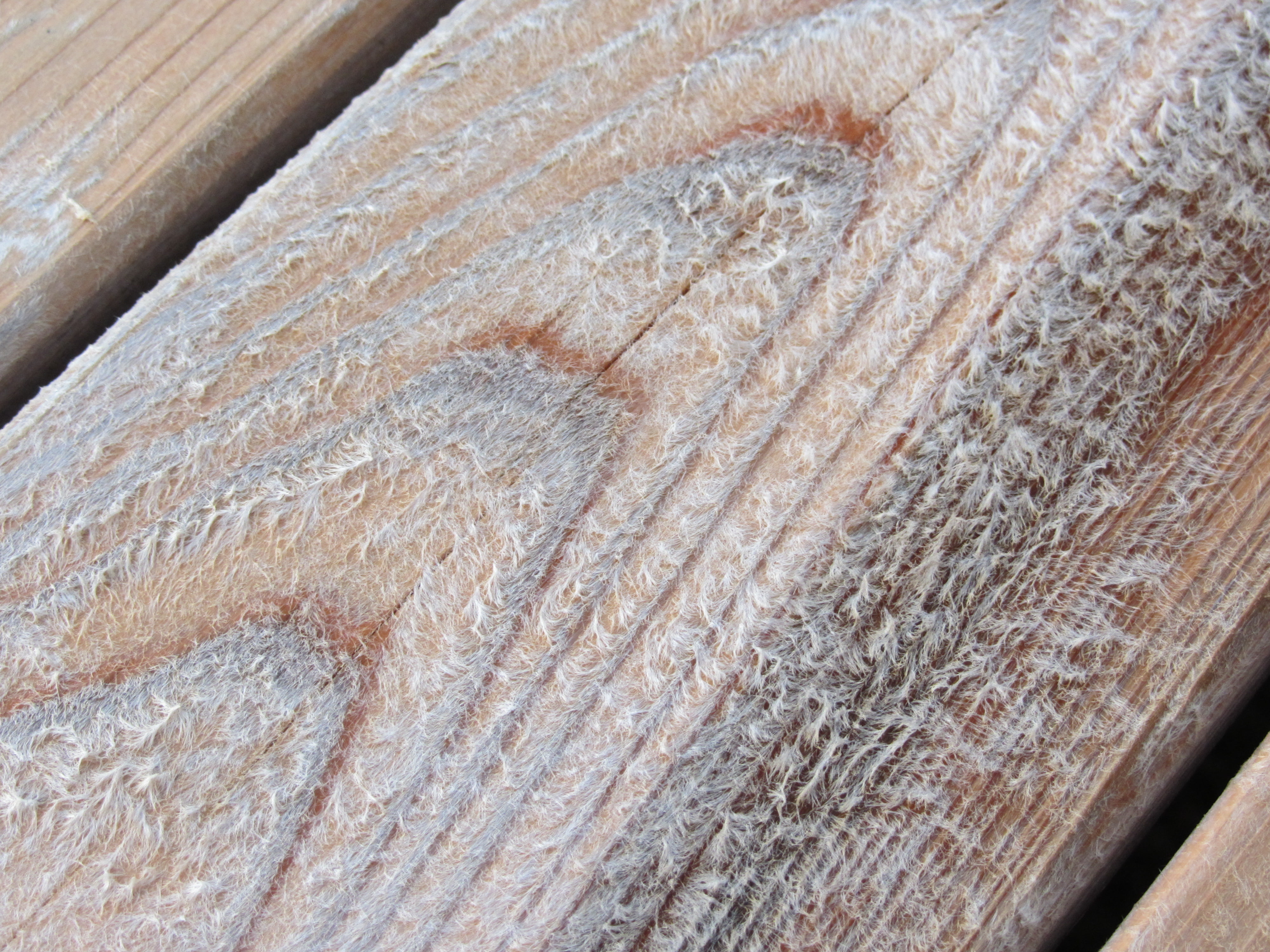
Deck Furring
When to Use a Deck Cleaner vs. a Deck Stain Stripper
Use a Deck Cleaner When:
✔ The wood has no existing stain.
✔ The wood is heavily grayed from UV exposure.
✔ The deck is new and needs to be prepped before staining.
✔ You’re applying a maintenance coat of stain.





Use a Deck Stain Stripper When:
✔ You need to remove a failed or peeling stain.
✔ The old stain was over-applied.
✔ You’re switching to a different stain brand.
💡 TIP: Always follow up with a wood brightener after using a deck cleaner or stripper to neutralize the surface and minimize wood fuzzies!


When Are Wood Fuzzies More Likely to Occur?
1️⃣ Heavily Grayed or Neglected Wood
- Sun exposure oxidizes the wood, creating a damaged layer that needs to be removed.
- The grayer the wood, the more aggressive the cleaning process, increasing the risk of fuzzies.
2️⃣ Multiple Layers of Older Stain Are Being Removed
- Deck stain strippers contain mild caustics that may roughen the wood grain.
- The stronger the stripper, the higher the chance of getting wood fuzzies.
How to Prevent Wood Fuzzies
✔ Use only the necessary concentration of deck cleaner or stripper—stronger isn’t always better.
✔ Apply a wood brightener immediately after cleaning or stripping (while the wood is still wet) to restore a neutral pH balance and minimize fiber lifting.
✔ Don’t let new wood sit too long unstained—exposure to sun and moisture can lead to early oxidation.
How to Remove Wood Fuzzies
If wood fuzzies appear after prepping, follow these steps to smooth out the surface before staining:
1. Rinse Thoroughly After Cleaning
- Use a garden hose or pressure washer to rinse away any loose wood fibers.
- Ensure the wood is completely free of excess pulp before letting it dry.
2. Lightly Sand or Buff the Surface
- Once the deck is dry, gently sand or buff the wood to remove the fuzzy texture.
- Use sanding buffing pads with a floor buffer instead of traditional sandpaper to prevent over-sanding.
3. Use a Floor Buffer for Large Decks
- Contractors often use a floor buffing machine (available for rent) with a sanding pad for quick and efficient removal of wood fuzzies.
- A 500 sq. ft. deck can be buffed in about 10 minutes using this method.

4. Hand Buff Railings and Tight Areas
- For railings and small spaces, use a handheld buffer or a handheld sander with a smaller pad.
💡 TIP: Never sand finer than 60 to 80 grit! See How to Properly Sand a Deck
Final Thoughts
Wood fuzzies are a normal part of deck prep and can be easily managed with proper techniques. By rinsing thoroughly, using a wood brightener, and buffing as needed, you can achieve a smooth and stain-ready surface.
Have questions or tips to share? Drop them in the comments below! Also, feel free to post pictures of your completed deck projects—we’d love to see them.



















This web site has been very helpful in my process of cleaning and staining my deck. What seemed to be just a labor intensive chore required knowledge I did not have and every question and obstacle was answered by deckstainhelp. Sometimes what appears to be a simple job is more detailed than first glance.
Thank You
Wayne
Thanks, Wayne!
HI! I have been reading this website when my huge deck project started in 2018. First, pressure washers, in my experience, should be banned. They ruin wood, cause leaks in windows, split cedar, spelled, expensive, etc. I began with my Insurance underwriter and mortgage company writing me up for “unsafe deck due to no stair rails and some rotted boards. I did not know where to start. My deck was old redwood, 1200 square feet, electric, benches, speakers built by a talented carpenter in the 1980s before the now, 9 pages of deck code, chapter 507 of the IRC. I got estimates of up to 50,000 for a rebuild. Yikes. I studied your website, the code, Professional Deck Magazine, YouTube videos, the, bought tools. Cutting to the chase, after lots of rain, cold, heat, and Covid, I am at the end of rebuilding my deck to current codes. Did, I say, since the original deck had been built, 3 trees dumped leaves, algae, mold, and were never cleaned. I have, so far, spent over 15,000. on materials, including twp stain, brightener, cedar, pressure treated framing, hardware now required, copper naphenate, now required, and am, after 400 hours, almost finished. I hired a few helpers for a week to push the project along and had to redo their work. If you want your deck done correctly, study and stand over any carpenter that you hire or your inspection may fail. Wood, especially cedar, and forget getting redwood in the northeast, has become irreplaceable. Mills are shut down and those still in business are working at 50 to 25% capacity plus the fires on the west coast. I wrote this so that homeowners will take care of their decks. My neglect could have caused me to lose my house. Decks are high maintenance but make a house so much more enjoyable. I bought my house partly because of my deck and then took it for granted. Follow the great advice on this website. An once of prevention is worth a pound of cure!😎
O.K. hopefully one last question but probably not. LOl Why not use Thompons. You said “It will peel. Prep and buff the floor to remove the fuzzies as suggested” Is it because its old wood or because some of the remaining stubborn fuzzies ??
It;s because it’s a a good stain: https://www.deckstainhelp.com/thompsons-waterseal-finish-review/
O.K. things r starting to look up with lots of great advice plus some reading I’ve done on this site!!! Pressure washer instead of the garden hose has reduced fuzzies substantially!! My neighbors showed me how to use it without damaging the wood. Now having said that if I rent a floor buffer which are usually round right?? Well, do I go with the grain or in a circular motion like I’ve seen???
Also, am I ever glad I didn’t use the Thompsons to stain and protect my deck!!! All that work and money… however I am worried that there may be places that may look clean to the eye but are not and staining it will cause peeling so what other option do I have???
P.S. Thanks for all your time and patience. Just a girl w zero experience with any of this stuff or did u guess that?!?!? LOL
Buffers are only circular. Not sure of any decent brands in Canada at stores. Many buy online one of these brands: https://www.deckstainhelp.com/the-5-best-deck-stain-reviews-and-ratings/
I started cleaning with Thompsons deck cleaner and brightener which worked ok in some places but the scrubbing required discouraged me and it didnt’t remove the mold or algae (green). Home Hardware suggested Activox which works better on the tougher black weathered boards. It says I don’t need to use anything after that before staining???? Should I go over the deck with a cleaner after the activox?? This is a Canadian product exclusive to home hardware.
Thanks for all the advice. Greatly appreciated…
Never used it or heard of it so not sure.
I was going to go with a light honey color. What would look better a lighter or darker stain for these problem areas. Also a friend is going to show me how to use his belt sander he said that should do the trick. Does this sound right???
Floor buffer is better for the flooring than the belt sander. Darker colors wil hide better.
One site went as far as saying these “fuzzies” would disappear on their own in a few weeks. I would be ok w that. Is there any truth at all??
They do not just dissapaer but when you stain, they do not show much or at all.
Major wood fuzzies!!! I’ve done some sanding with my brother’s hand held but still fuzzy looking in the groves but the surface is smooth to the touch. What will it look like after using Thompsons tinited wood protector, semi transparent????
Help I started this project to surprise my husband while he is our fighting wildfires and I am in an awful mess!!!! Severely weathered wood never toughed!!!! I’ve done the walls so far I’m scared to start the floor…
Dont’ use Thompons. It will peel. Prep and buff the floor to remove the fuzzies as suggested. Stain with a quality stain: https://www.deckstainhelp.com/the-5-best-deck-stain-reviews-and-ratings/
Hello again,
Just stripped and brightened my cedar deck, and have quite a bit of fuzzies from all the abuse the deck took. The wood itself is fine and not damaged. I am considering the floor buffer technique, but my concern is my deck surrounds a large pool, and I am not proficient in floor buffer usage and am worried about the buffer getting away from me and something bad happening, like it falling into the pool.
Would a 10 inch orbital buffer/polisher get the job done? I don’t mind the extra time it would take. Thanks.
It should work for this.
Awesome, what grit sandpaper or attachment do you think would work best?
60 or 80.
I’m ready to brighten and buff the main part of my deck. There is heavy rainfall expected the next few days. Can I spray the brightener before the storms and let the rain rinse it off? Does the wood need to be completely dry to buff? These forums are wonderful resources for us weekend warriors. Thank you!
Rain will not rinse off brightener after the brightener dries. The wood does need to be completely dry to buff.
At my local rental they have floor sanders (rectangular oscillating sanders) that uses the pads. They also have the floor buffers that are round base and buff in fast circular pattern. In the below posts are you guys using the round floor buffers or rectangular floor sanders?
Round floor buffers.
I rented a floor buffer to take care of furring on my cedar Deck. The white and red pads were pretty useless. I went to the coarsest (black) pads.
They worked pretty well but it did take a while. I ran it for about three hours on a 700 square foot deck.
Also the idea one poster had about the 3.8″ x 6″ scotch brite pads in a palm sander works great for the tight spots. If you don’t have a huge deck you can defurr pretty quick with the scotch brite pads in a palm sander, I would skip the floor buffer for a smaller deck.
Thanks for the tips.
Hello. Thanks for all the great advice. I have some fuzzies after stripping and power washing. I still have to use cleaner/brightener. Should I use brightener, then use buffer or visa versa or does the order not really matter as long as both are done?
Buff with sanding pad first and then use the brightener is how we normally do it. Probably does not matter that much though,
i’m confused about what machine and pads to use to remove the fuzzies. My local rental place says go with a sander, not just a buffer. Is there a difference that matters in this case. Also, you suggest using 80 grit pads and white pads. Are the white pads the finest of the plastic buffing pads; and are the 80grit pads just the thin “sand Paper” disks? Any preference and will both work on mildly uneven deck boards?
Use a floor buffer and the sandingp ads by 3M or similar. They are not thin but about an inch thick. No sure what the grit is for the pad, but they work well to remove the white fuzzies.
Try a deck broom, if they are barely attached, my wife and I knocked out 600 sqft in 15 minutes, using a deck broom a bought to scrub out restaurant floor. Worked great and got between boards too.
Please help! We stained our cedar deck after cleaning and brightening, and after the stain was dry, we noticed fuzzies and some of the tops of the railing don't look very good, not at all what they looked like when the stain went on. How long do I need to wait before buffing out since the stain is fresh? We used Armstrong Clark natural transparent. Thanks!
You cannot buff the fuzzies when it is stained. You can strip and brighten then buff. Othe option is to applying another llight coat of the stain. It may darken the fuzzies so it all looks richer and blends better. Try a test spot to see. This would be much easier to do.
Hi, we have a new large outdoor deck (blackbutt timber). The instructions for the stain we used said to use a wood clean first and then high pressure clean it, which we did, however after one coat of stain, it now has deck fuzzies and we can't walk on it in bare feet without getting splinters. I assume the pressure clean was too harsh for the wood. Is the only way to remove the rough bits to sand the whole thing and start over with the stain?
Rent a floor buffer and buy a white pad for the buffer. Buff the floor with the white pad and it will remove any splinters and fuzzies.
Could you use a pad like a scotch brite on the floor buffer?
No, that prbaobaly will not work.
I just read 101 responses saying "use a floor buffer".
But how do I remove the fuzzies without one?
Is there something I can put on my 5" random orbital?
Hand buff with 3M green? red? gray? pad?
Hand sand with 80?
I'd rather not buy a palm sander, but will if I have to.
Also, would it be beneficial to route a groove between deck boards that are so tightly butted that they don't allow water to pass through and tend to get clogged with gunk? Most of my boards have enough gap to allow water through, but some are tightly butted.
Thx,
Jon
You can rent a floor buffer for $50. It is really the best way and the fastest way. Doing by hand can be done, but will take substantially longer and the results may not be as good. Sanding pads should work. They come in grits. Use about 80 grit. I would not router the butted boards.
A friend just finished stripping alot of old stain and new stain we botched off of our deck to get it down to the bare wood and told us not to worry about the fuzziness and that our Cabot semitransparent cedar will cover just fine, is this true? Should I just leave it be as he says, what's the worse I can expect if we don't remove the fuzzies?
The fuzzies do not show as much when stained as they darken in color. Impossible to say if they will show somewhat. Depends on the stain type and how bad the fuzzies are.
Some excellent advice here!
I took the initiative to pressure wash the stain off my 16×20 pressure treated deck, and of course, note I see it was a mistake. They're are ridges and the deck, after dung looks terrible. Should I take a belt sander to it, or is there a better way? I intend to stain it before putting it in the maket in a couple weeks. Thanks!
If you have pressure wash damage from using too much pressure, you will need to sand the entire deck to even out. Not possible to spot sand and apply a stain the is semi-transparent. It will stain unevenly unless you sand all.
We cleaned with bleach and water (wished I'd come across this great website sooner, as I see this was a mistake). Parts of the wood in less grain areas are now whiter than everything else. I came across your site and decided to try a wood brightener to see if that would neutralize the effects, but was over a week later. Whiter areas still there. Will semi transparent stain be forgiving enough and take consistently or are we going to be stuck with a lot of unevenness? Crew is supposed to come out day after tomorrow to stain for us. 🙁
If it looks better when wet with water, then it should look okay when stained.
Second question:
if I sand it with sandpaper 80 does I need to use another time the water pressure and the cleaner? before I will pass an air compressor blower.
Hi last year i did my cedar fence with twp 1520 pecan . This years we use restore-a-deck cleaner and brightner. When we rince with water pressure we saw the stain was change: the side sun exposed have a lot of wood fuzzy. The other side have some spot (look like stain was stay and other place was more white). Wich pad do you recommand to me to buff my fence. I will use my car buffer with some modification. I try to remove with a green scoth bright but it still stay littlebit white fuzzy. Also i try to stain another part without sand but it ugly. If it will be better to sand it all with a hand orbital sander with sand paper80.
Little bit of fuzziness is fine as it will darken when stained. I would not worry about it too much and just leave alone and go ahead and stain.
i try to stain a little area and it stay white. Actually a try a palm sand and scotch brigth green.
Where can I find sanding buffjng pads?
Rental yards where you rent the floor buffers.
I pressure washed my deck, and I have wood fuzzies, and also some ridges.
Can I just sand down the ridges, or should I use a thicker stain? It was suggested I use Deck Do Over. I want some sort of stain because I find when they fade, they still look good, as opposed to the brown/purple paint that people seemed to love in the 90s.
Use a semi-transparent stain that fades, like the TWP stains. Light sanding the ridges and fuzzies with a floor buffer.
White pad on buffer saved the day. Took about an hour to do my 470sf deck. Use green Scotch Bright pad to touchup stubborn areas. Great advice. This was done two weeks after applying Q8 log oil. Looks great. Don't think I'll use a harsh chemical deck cleaner next time. I never use a pressure washer, just water hose. Oil manufacture suggested Tide and scub.
I've got the fuzzies. Where can I find the "sanding buffing pads" you mentioned? What should I ask for at Menard's, Lowes, etc.?
Rent a floor buffer and sand screens and or pads. They have them at rental places.
I stained my deck 2 yrs ago with TWP 1530 natural and had a little over two gallons left over. It has been in my garage since then. The stain is in its original 5 gallon can and the garage is very cold in the winter and hot during the summer. Is the stain still good to use?
Depends if the closed well and if anything evaporated out. Check to see if clumpy or has a thick gel on top. if it does, then it went bad.
can you leave the wood gray and put the stain over? I partially sanded an old building and left some gray on. Like the look and would like it to stay this color. What will a stain do over this? Not trying to change the color just preserve the wood. Thank you!
It will not look very good if you stain gray/oxidized wood. You can apply a clear sealer and that will allow the wood to gray naturally.
I have some "fuzzies" that have appeared on my cedar fence after cleaning. What do you recommend to use to take care of them, since I obviously can't use a floor buffer? Just fine grit sand paper? TIA
Kyle
Kyle, the really do not show on verticals when using a stain so you may not need to do anything. Try a test spot with the stain to see if the \”fuzzies\” go away and are not noticeable.
My wife & I did the cleaner and brightener this past Sunday. Took longer than anticipated, so I was rinsing the deck in the dark for a couple of hours last night in order to do what I thought was a very thorough rinsing job. Was excited to get home today to see our masterpiece! … but came across a deck full of fuzzies. Here are my questions:
1)Should I use red (5100) or white (4100) pad?
2)I would’ve thought that a belt sander would be better (to ensure it goes with the grain), but it looks like a rotary sander is the one that’s recommended. The rotary sanders don’t leave any circular markings on the deck?
3)For railings and spindles, is there a recommended electric sander, or should I just do them by hand? And what grit?
4)I’ve cleaned and brightened. Can I now just sand, then rinse, then stain (after at least 48 hrs or until below 10% moisture)? Is hose rinsing okay, or would lightly pressure washing do better?
5)I’ve cleaned/brightened deck, so prefer not to have to do either step again before staining. Unfortunately, there’s some rain in the forecast for the next couple of weekends, so it may be 3 (or 4) weeks since we cleaned/brightened before I can stain. Is that okay?
6)This isn’t “fuzzy” related, but I’ll ask anyhow. We have a pine PT deck with composite trim around the deck as well as composite handrails. Before we stain (we’re going to use TWP 1520 Pecan), your site previously mentioned that the stain will affect the composite, so we should tape it off. For interior paint jobs, I’ve used all kinds of tape depending on the job (i.e., Frog-yellow, Frog-green, 3M-blue, Painter’s Mate-green, etc.). For taping composite, is there a recommended brand and type? With the extra challenge of it being on composite in the sun, I want to keep the composite protected from the stain without ending up with some messy nightmare when I go to remove the tape. Thoughts?
Our deck is 950 sf, so I want to do all of this in the best, most efficient manner … and only once. Thanks for your advice & help (as always)!
1. Use white pad
2. You want a floor buffing machine and pad. Not aggressive like a small rotary sander.
3. We would just use a palm sander for the rails. 60-80 grit.
4. Light pressure wash or very good rinse. Your goal to to remove any sand dust while \”swelling\” the wood pores/
5. 3-4 weeks is pushing it. Hard to say if you will need to lightly wash again and brighten again.
6. Not sure on the tape as we never use it. Stains tend to bleed under the tape. We are just very careful and immediately within seconds clean off any stain that get on the composite with Goof Off.
That sounds good. I'll be sure to do whatever I can (weather permitting) to get it stained within 2 weeks of cleaning/brightening. That seems to be the ballpark time frame to shoot for. (Lordee knows I don't want to have to wash/brighten it again!) And thanks for the tip/info about the taping-off-composite-trim question. I was a little nervous about taping it off in the elements. I like your suggestion better … to essentially very carefully stain right alongside the composite, and then immediately wipe off any excess that gets on the composite with Goof Off. Thanks!! 🙂
Use a 1/4 sheet pad vibration sander($30 sander) and buy heavy duty 3M scotch brite pads, 6"x3.8" and cut about 1/4" off the 6" dimension then mount on the sander, for the railings, it is what I did. Heck I did each board with that too, due to the buffer not working out too well for me. I tried sand paper in the vibration sander, but for me it still just worked up on the peaks of the railing and didn't get into the valleys like the green scotch brite pads do.
Kartboarder22G — I like that idea! Because of the size of our deck, we're starting out with a floor buffer w/ white pad for the main area. And I did get some 60 grit sand paper for my palm sander (manual) for the rails/spindles, but I really like the idea of using the Heavy Duty 3M Scotch Brite pad (6 x 3.8), so I bought a pack of 3 this evening. Hopefully the buffer/white pad works for the main area, but at least you've given me another option in the event I run into an issue with the board 'peaks.' By the way, do you mind sharing the make/model of the $30 vibration sander you successfully used? Thanks again. I'll be sure to let you & DeckStainHelp know what ended up working best for our pine PT deck. -Al
Very helpful! Thanks
So I have a brand new pressure treated deck that is about 11 months old with no stain that is on the south side of my house in direct sunlight. I used deck cleaner to clean it up and after it had dried the next day I had fuzz on my deck, basically the deck looked worse then before I used the cleaner. So I rented a floor buffer with the red disk as per the comments in this site and it basically removed about 50% of the fuzzies after about 2 hours of buffing. Not only that but I was left with red marks all over my deck on the peaks of the boards. At this time I pretty much regret spending the time and money to rent that 105lb. machine might I add. The deck is only 220 sq. ft.
So what I did to remove the rest of the fuzzies and what I recommend others do is buy cheap heavy duty 3M scotch brite pads, 6"x3.8" and cut about 1/4" off the 6" dimension and put it in a 1/4 sheet sander, one with the metal clamps to hold it in place. Then just run that over the fuzzy areas. I suppose you could find a bigger piece and cut a circle out of it to mount on your orbital hand sander. I think some places might sell pre-cut scotch brite pads to mount to and orbital sanders. Might be the faster way to go, using that type of sander. If you don't have one of these sanders they cost same as the buffer rental to buy or you can rent them too for even cheaper. Plus for the small size you can use them on the railing.
Now I still have to sand the peaks of my boards to remove the red left behind by that buffer pad…wonderful!
Thanks for sharing. We never had a pad leaves marks so that is very odd.
I got the wood fuzzies after applying the wood cleaner. It's been over 1 week now, will applying a wood brighter provide any benefit?
Not to the fuzzies after a week. Buff them off with a floor buffer and sanding pad.
I cleaned and brightened a new pine treated deck (after a 10 month drying period) and ended up with some of the boards containing fuzzies. I will be renting a floor buffer and will be using a white buffing pad to remove the fuzzies before applying one coat of TWP deck stain. Do i need to brighten again after buffing, or just rinse of the dust well with a garden hose before staining?
Just rinse well and you should be fine.
Can I just buff and sweep and stain. Don't want to wait another 48hrs after the rinse to dry as sunny days are numbered…..
Depends on how much sand dust you create. At the very least use a leaf blower and really make sure the dust is removed well.
We stripped our white cedar deck and cleaned and brightened it. We applied Defy for Hardwoods but did not notice the fuzzy patches. Now that the stain is dry, those fuzzy patches show a lot. Is there anything to do now or do we have to wait for the next time we strip? would light sanding & restaining work now? It's only been 2 weeks since we stained.
Either strip off now or wait until late Fall or next Spring to apply a light coat. It will not take another coat of stain right now.
I am paranoid to purchase the wrong type of buffing pad. Is there a specific one you can recommend?
Sorry, not sure if this is a double post
They are buffing pads that go on a floor buffing machine. About an inch thick and maybe 15\” in diameter. Usually white, red or black. Made my 3M I believe.
removed old stain with stripper. Do I sand it then use Brightner then let it dry then re-stain OR do I use brightner let it dry then sand then re-stain
Sand then brighten before the stain.
I have an elevated deck (~ 10 feet off the ground) built in 1986. The wood decking on the majority of the deck is in good condition except on one side that catches the ocean breeze. The area impacted by the fuzz is approximately 36" into deck. It is on the top and on the underside of the decking and on the joist. I've attempted to use a belt sander (w/ 50 grit) on top with a success rate of about 50%. What are my alternatives?
Try a floor buffing machine or a osborn brush.
I just washed a deck and I have those fuzzies on the rails. What color buffing pad do you suggest? Also is this going to be a long process? If I was just to seal it would the fuzzies come out that way?
It is easy to buff a floor. Less then 30 minutes. We normally use a red or white pad.
My deck is fuzzy, not sure I want to sand the whole thing. I was only going to apply an oil. Can I apply oil without sanding?
Yes you can do that and it should not show as much when stained. If you want to buff the deck with a floor buffer and sanding pad, it will only take 30 minutes.
You can remove the fuzzies over 500 sq ft with a floor buffer in 10 min. that's fast.
Curious if anyone has tried using a floor buffer with a brush head to clean a wood deck, as opposed to buffing pads and screens?
With the right brush head , it would seem that this combined with bleach or a deck cleaner would be highly effective.
Anyone tried it?
We have not but many other contractors have. They use a brand call Osborn Brushes.
How well are those Osborne brushes working? I guess they are like 16 or 18" round?
Reading on the site This Old House, they like a liquid deck cleaner and a good old fashion scrub brush with a long handle.
It would seem that a floor buffer with it's weight and the right brush might be more effective and faster than power washing, and that's if why anyone can share real word experience it would be a great help before I make the investment..
Pressure washing and a good deck cleaner or stain stripper is the way to prep for sure when it comes to efficiency. Pads or Osborn brushes are only used after if needed to knock down fuzzies. They are not used as prep.
The Osborne brush is small like 4-6" and works with an angle grinder or something similar to a car polisher.
I spoke today to an expert with floor buffer sales, and he claims that he has numerous customers cleaning decks with large floor buffing machines with like a 16-18" head. He recommends a polypropylene or nylon brush that's not too stiff. Claims that it works fast and well if the underlying wood is in good shape!
Worth trying if you have access to a large buffer and have a large deck!
Incredible tip to use a floor buffer for removing wood fuzzies. I rented a floor buffer and used a 120 grit screen placed on the buffing pad. It did the job on our 500 square foot cedar deck in 10 minutes just as was stated (took 2 screens to do the job for 500 square feet). Surprisingly, this is not a well-known tip amongst home improvement stores. They are clueless and want to rent you a hand-held orbital sander instead. The floor buffer is the way to go. I had to purchase the 120 grit screen at a commercial janitorial store and they were about $8 each. Thank you for sharing your expertise! Note: Make sure you receive a tutorial at the rental store prior to using a floor buffer. The buffer can be a bit of a beast until you are used to its operation. The rental store allowed me to "practice" in their store with the buffing pad and it helped immensely.
Awesome! We have our own buffer that we use all the time. Fuzzies happen!
Good tip on the use. Buffers are a balancing act. Tips up slightly and it goes right, tip down slightly and it goes left.
Once the sanding is done to remove the raised wood fibers, do I need to do anything other than brush the deck off prior to applying stain? I've already stripped and brightened our cedar deck. I've read both opinions by various professionals – 1) Sanding causes the wood pores to be blocked so cleaning is necessary first before staining — and the contrary 2) Stain immediately after sanding as the wood absorption of the stain is the best. I'd rather not have to apply any more water to the deck if not necessary and would think brushing off the wood dust off is sufficient.
Best to rinse well with water after the sanding. Brushing is not good enough.
I have a deck that is just over a year old. We had it installed in May of 2013 and waited a year for the wood to dry out before staining. The wood greyed a lot and several black spots appeared. We power washed it last weekend and it looks terrible. Talk about fuzzies!! Is this because we didn't use a cleaner? What is the best solution at this point. We want to make sure it looks good before applying the semi-transparent stain we bought.
Fuzzies are because you let it gray heavily. When this happens you have to remove an excess amount of wood cells that have oxidized. This would have happened with a cleaner as well but maybe less. Try rewashing with a cleaner and wood brightener and to remove the excess fuzzies. If needed when done, you should rent a floor buffer and a sanding pad to remove the rest.
I just bought a house with a pine deck which obviously had never been treated or stained. I used Defy wood cleaner and brightener on the main deck boards. The top of the railings had some kind of old failed stain on them so I used Defy stripper and brightener on those. Throughout these processes I used simply a hose with a strong nozzle for cleaning and removing the chemicals (no power washer) and a stiff bristle brush. The floor boards now look great, but these railing tops are now totally covered with fuzzy raised fibres. Perhaps I scrubbed and scoured too hard on the top, or perhaps this is natural – not sure which.
The question is: How can I get rid of these "fuzzies" from the railing tops? I don't have access to any floor buffing machines as suggested above. I tried using a little 80-grit sandpaper sponge on an inconspicuous spot but it didn't improve it. I am reluctant to apply stain to the deck until I get those raised fibres off the railing. Any recommendations?
Try a palm sander for the tops of the rails and 60 grit paper.
What would be the best way to deal with warped boards? We have an old deck (25 yrs old) that wasn't maintained for at least last 15 years. All previous stain seems to be gone, and the wood is gray. We want to keep this deck for as long as possible before replacing it, and the boards seem to be in ok shape (not rotten, just warped).
I'm planning to sand the whole deck (~500 sq ft). Is there anything better (and less time/labor consuming) than that? Thanks!
No there really is no way to deal with warped boards.
Use deck screws to try and get them down flatter to the joists.
I have a deck that is around 20 years old in Denver. It has been cleaned and stained numerous times but never stripped. There are areas near the house that are very good and traffic areas that have ridges and is worn. I was considering renting a sander this time and sanding the deck before pressure washing and staining. What do you think?
Bill
Denver Co.
It needs to come off so either strip, sand or both to remove before reapplying.
My deck is 4 years old, pressure treated wood
Was heavily greyed so I used Defy cleaner and brightener on it, once dried the wood looked much whiter – clean
I had some spots of stains that did not come out even with some hard scrubbing so I took a sander to those areas, 60 grit paper I believe, in some spots I had to sand for a few seconds to get it
The sanded areas are now obvious, a light brown color vs the white from the un-sanded areas, I also have a pretty big case of the fuzzies
It has been almost 2 weeks since applying the brightener, my next steps were to be lightly sand the rest of the deck with palm sander to get rid of the fuzzies
Will I need to use a brightener again? I'm worried about the heavily sanded areas standing out even after staining – was thinking of using Armstrong Clark Rustic Brown
I would lightly sand to even and use a brightener as well. Rinse well with water after applying the brightener.
How 'perfect' does the sanding need to be? Instead of renting a floor sander I just used a combo of my 4 1/4 sheet sander and 5" round random orbit sander with 60 grit paper
Of course the wood has high and low points so the wood surface isn't 100% sanded, would take quite a bit of effort to do so… but the fuzzies are gone!
I applied restore-a-deck brightener afterwards and it dried to look the same
Is this ok? Just worried that when applying the stain that the color will look off and uneven
If you sand unevenly than yes the stain may absorb uneven resulting in a blotchy appearance. Hard to say it it will or not. Does it show evenly when wet with water?
I tried a water test and I would say you can see it a bit, but you have to actually look for it and if the whole board was wet then I probably wouldn't be able to pick out which spots were the sanded spots
I took some pics:
Dry: https://imageshack.com/i/nlb9r2j https://imageshack.com/i/nci11ij
Wet: https://imageshack.com/i/msy92jj
Probably good to stain.
What grit paper should be used to remove fuzzies? Do you try to go with the length of a cple of boards at a time?
We like to use sanding buffing pads. Put on a floor buffing machine and you can sand off the fuzzies in 20 minutes.
what grit do i use? 60,80,100?
60 or 80 at the most.
I have a fairly new cedar deck that was cleaned and stained in the spring of 2013. After going through the summer, fall and winter it's pretty dirty and a little mildewed. I washed a couple of boards with oxyclean and they look great, but there are dark patches in areas that have high exposure to water dripping off the roof that don't come out. I'm thinking about using the restore-a-deck products you recommend on this site. I don't want to remove the old finish, I just want to clean it off and put another coat of stain on. Sikkins SRD is on the deck right now. I'm trying to determine if I should use the brightener after I use the cleaner over the cleaned stained deck. Will the brightener penetrate the stain and remove the dark areas? Will it also remove the old Sikkins stain? How do you recommend I proceed with this project?
Rick, the brightener is designed to neutralize the cleaner/strippers. It does remove black rust stains. It may help on water stains but if they are deep, they will not come out. Nothing we know of will get out deep water stains. The brightener does not remove old decking stains. The cleaner may if the old stain has failed substantially. I would clean and bright and hope the water stains go away.
can I use a 60 grit instead of 80 to get off the fuzzies?
Yes.