


This post was updated on April 4, 2025
How to Remove Wood Fuzzies on a Deck
At DeckStainHelp.com, we remain committed to being your go-to source for expert deck staining tips and industry updates. One common issue that arises during deck prep is wood fuzzies, also known as wood furring—a rough, raised wood grain texture that appears after using a deck cleaner or stripper. If you’re dealing with this problem, don’t worry! We’ve got solutions to restore your deck’s smooth surface before staining.
What Causes Wood Fuzzies?
Properly prepping your deck before staining is critical to ensuring a long-lasting finish. Whether you’re cleaning the wood or removing an old stain, the prep process can sometimes cause wood fibers to lift. Here’s why:
- Deck cleaners and deck strippers break down surface contaminants and oxidized wood cells.
- The more damaged or grayed wood you remove, the higher the chance of exposing loose fibers.
- Older, weathered wood and multiple layers of stain removal increase the likelihood of fuzzies appearing.
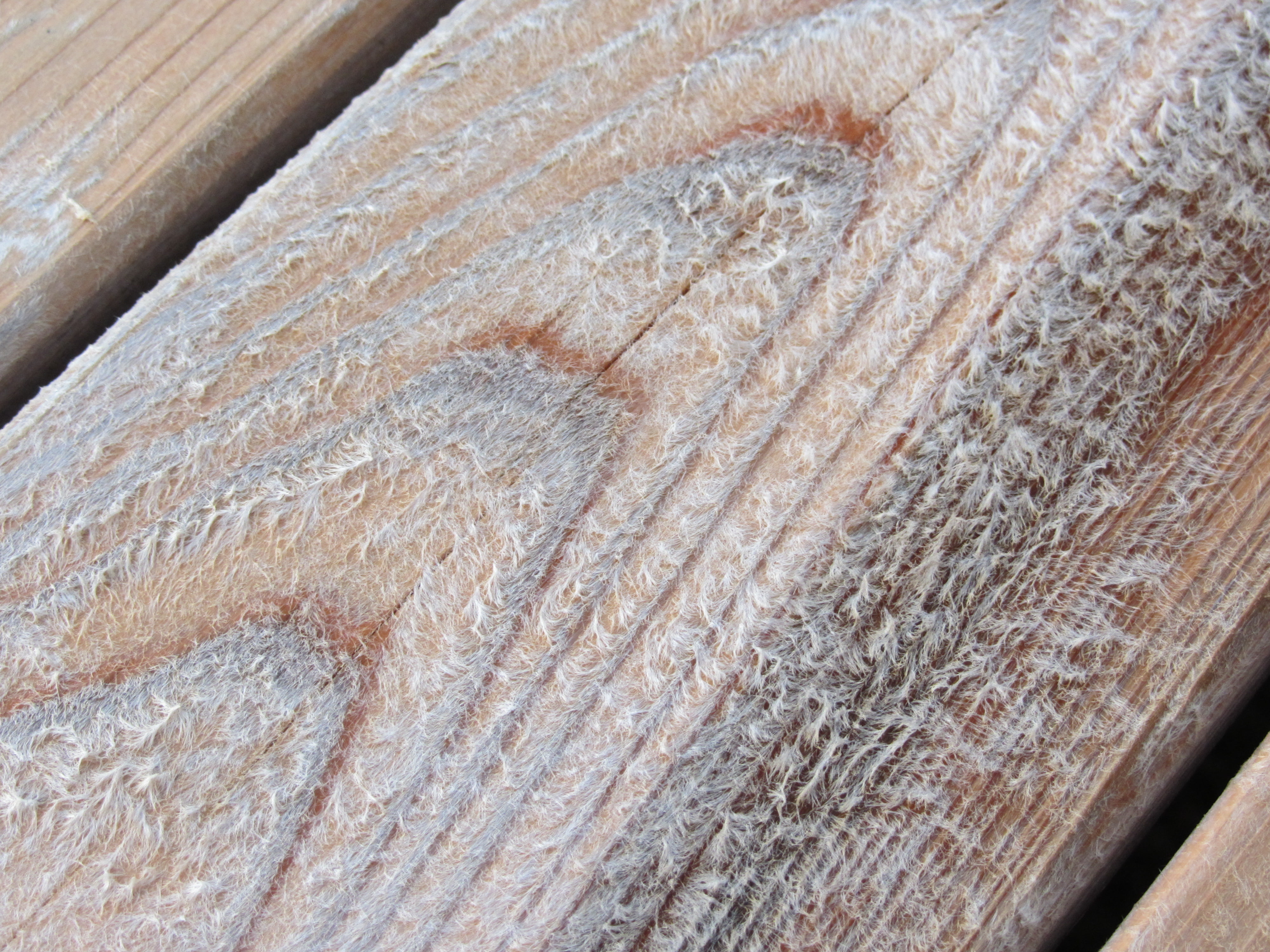
Deck Furring
When to Use a Deck Cleaner vs. a Deck Stain Stripper
Use a Deck Cleaner When:
✔ The wood has no existing stain.
✔ The wood is heavily grayed from UV exposure.
✔ The deck is new and needs to be prepped before staining.
✔ You’re applying a maintenance coat of stain.





Use a Deck Stain Stripper When:
✔ You need to remove a failed or peeling stain.
✔ The old stain was over-applied.
✔ You’re switching to a different stain brand.
💡 TIP: Always follow up with a wood brightener after using a deck cleaner or stripper to neutralize the surface and minimize wood fuzzies!


When Are Wood Fuzzies More Likely to Occur?
1️⃣ Heavily Grayed or Neglected Wood
- Sun exposure oxidizes the wood, creating a damaged layer that needs to be removed.
- The grayer the wood, the more aggressive the cleaning process, increasing the risk of fuzzies.
2️⃣ Multiple Layers of Older Stain Are Being Removed
- Deck stain strippers contain mild caustics that may roughen the wood grain.
- The stronger the stripper, the higher the chance of getting wood fuzzies.
How to Prevent Wood Fuzzies
✔ Use only the necessary concentration of deck cleaner or stripper—stronger isn’t always better.
✔ Apply a wood brightener immediately after cleaning or stripping (while the wood is still wet) to restore a neutral pH balance and minimize fiber lifting.
✔ Don’t let new wood sit too long unstained—exposure to sun and moisture can lead to early oxidation.
How to Remove Wood Fuzzies
If wood fuzzies appear after prepping, follow these steps to smooth out the surface before staining:
1. Rinse Thoroughly After Cleaning
- Use a garden hose or pressure washer to rinse away any loose wood fibers.
- Ensure the wood is completely free of excess pulp before letting it dry.
2. Lightly Sand or Buff the Surface
- Once the deck is dry, gently sand or buff the wood to remove the fuzzy texture.
- Use sanding buffing pads with a floor buffer instead of traditional sandpaper to prevent over-sanding.
3. Use a Floor Buffer for Large Decks
- Contractors often use a floor buffing machine (available for rent) with a sanding pad for quick and efficient removal of wood fuzzies.
- A 500 sq. ft. deck can be buffed in about 10 minutes using this method.

4. Hand Buff Railings and Tight Areas
- For railings and small spaces, use a handheld buffer or a handheld sander with a smaller pad.
💡 TIP: Never sand finer than 60 to 80 grit! See How to Properly Sand a Deck
Final Thoughts
Wood fuzzies are a normal part of deck prep and can be easily managed with proper techniques. By rinsing thoroughly, using a wood brightener, and buffing as needed, you can achieve a smooth and stain-ready surface.
Have questions or tips to share? Drop them in the comments below! Also, feel free to post pictures of your completed deck projects—we’d love to see them.



















This web site has been very helpful in my process of cleaning and staining my deck. What seemed to be just a labor intensive chore required knowledge I did not have and every question and obstacle was answered by deckstainhelp. Sometimes what appears to be a simple job is more detailed than first glance.
Thank You
Wayne
Thanks, Wayne!
HI! I have been reading this website when my huge deck project started in 2018. First, pressure washers, in my experience, should be banned. They ruin wood, cause leaks in windows, split cedar, spelled, expensive, etc. I began with my Insurance underwriter and mortgage company writing me up for “unsafe deck due to no stair rails and some rotted boards. I did not know where to start. My deck was old redwood, 1200 square feet, electric, benches, speakers built by a talented carpenter in the 1980s before the now, 9 pages of deck code, chapter 507 of the IRC. I got estimates of up to 50,000 for a rebuild. Yikes. I studied your website, the code, Professional Deck Magazine, YouTube videos, the, bought tools. Cutting to the chase, after lots of rain, cold, heat, and Covid, I am at the end of rebuilding my deck to current codes. Did, I say, since the original deck had been built, 3 trees dumped leaves, algae, mold, and were never cleaned. I have, so far, spent over 15,000. on materials, including twp stain, brightener, cedar, pressure treated framing, hardware now required, copper naphenate, now required, and am, after 400 hours, almost finished. I hired a few helpers for a week to push the project along and had to redo their work. If you want your deck done correctly, study and stand over any carpenter that you hire or your inspection may fail. Wood, especially cedar, and forget getting redwood in the northeast, has become irreplaceable. Mills are shut down and those still in business are working at 50 to 25% capacity plus the fires on the west coast. I wrote this so that homeowners will take care of their decks. My neglect could have caused me to lose my house. Decks are high maintenance but make a house so much more enjoyable. I bought my house partly because of my deck and then took it for granted. Follow the great advice on this website. An once of prevention is worth a pound of cure!😎
Regarding a pine fence: Same issue with the furring but will take your advice and buff it out. Have you seen or heard this: I have a pressure treated pine fence that’s been “weathering” for almost 2 years. Just pressure washed (with the grain) and I noticed that the tops of all of the boards have furring that appears to be much worse than anywhere else. In the photo, I circled where I see horizontal lines in the wood as if that area alone was pressure washed against the grain. Any thoughts?
It furrs since the wood oxidized for 2 years. This is normal and cannot be prevented as you have to remove the oxidation.
That is what I understand. However, I don’t understand why there would be multiple horizontal lines in the area circled in the picture. They are embedded in the wood making it appear as if the furring is worse than other places. Im concerned about how the top six inches of the entire fence is going to look once stained due to those lines. It looks as if someone took the pressure washer too close to the top of the fence while going against the grain. Could this have something to do with the pressure treatment process?
Unfortunately, we cannot see anything in the picture showing the issue. Might need a closer up picture.
Also, if you do not see any issues when wet with water then it will not show when stained.
Hi,
I have the fuzzies as described after cleaning heavily oxidized cedar deck. I have tried sanding and have realized this will not get at the fuzzy without taking a lot of wood off which seems unnecessary and a ton of time and effort. I’m going to try buffing with 3M pads as recommended here and elsewhere. What pads do I get? Do they come in “grits”
Thanks!
You can get them and the buffer at a rental yard. The pads come in different colors and have a different coarse based on the color.
Thanks!
Hello –
We are in the process of restoring an older (20-25 yrs.) deck and have been following the advice on this site. We’ve stripped the old stain off, and most of the boards have some degree of the fuzzies. The deck is large and we’re running up against the obstacles of limited time on weekends to do the work, and either too hot or rainy weather. We may have to skip sanding the fuzzies to get the job done without having to re-clean the deck and are wondering how this might affect our results.
The information above states that removing fuzzies will result in a longer-lasting stain application. Can you explain this in more detail? To us, it seems like fuzzies are more of a cosmetic problem (which we’re thinking about living with at this point) and we’d like to understand how fuzzies can reduce the life of the stain. We’re planning to use RAD semi-transparent stain.
We’re not opposed to renting a sander/buffing machine as mentioned in many of the Q & A, but we’ve never worked with one before. The deck was constructed with nails (that pop up quite frequently) and my husband is concerned that the pad might get caught on the nails and ruined. Is this something to be concerned about?
Thanks in advance for your advice. We appreciate this site and all the great info you provide!
Fuzzies are more cosmetic than the longevity of the stain. If you do not sand them off, it will not make a difference on how long the RAD stain will last.
Thank you!
I just had my deck power washed with water and steam and it did a good job taking off a pealing semi transparent stain that was only one year old, but it left a new problem: a ton of fuzzies. The company I hired told me this is wood pulp and it will go away on its own. Is this true? He said he sanded and stained already.
Probably will.
How can you tell if a deck sealant is any good after several years? Can I use deck sealant on my wood shed?
Are you asking about an unused container? If opened, it has most likely gone bad.
How long does deck stain last before you have to throw it out? How can you tell if deck sealant is any good?
Our deck was built 10 months ago, pressure treated pine. Used defy brightener and stain on railings and it turned out pretty good. Started on floor today and wanted to use defy cleaner to prep before staining. Applied cleaner then brushed. Dirt (I’m assuming) along with pulp-type clumps were coming up from the wood… like a lot of it. Used power washer to try to get the clumps cleaned off easier.
Wood has dried and looks horrible! Did we damage the wood with the power washer or was the defy cleaner too concentrated? It looks really bad.
Steps to correct this:
1. Buff with 60-80 grit
2. Rinse off deck (is it safe to use the power washer to rinse, or could that cause damage again?)
3. Use defy brightener
Do we do this when the deck is still wet from rinsing after sanding? Or is it better to let dry then dry sweep to remove sanding dust, then re-wet and apply brightener?
4. Let deck fully dry
5. Apply defy stain
How long should we wait after sanding and brightening to apply the stain?
Any help would be greatly appreciated, thank you!
Photos
Add on question… half of the deck is currently in this state. The other half has been power washed only and has no fuzziness. Do you recommend using the defy cleaner on the other half of the deck, knowing full well it will cause these fuzzies – to get the whole deck in the same fuzzy state? Then sand/buff the entire deck at the same time?
The cleaner does not cause the fuzzies but the 10 months of oxidation of the wood from the sun does. This oxidation has to be removed fully.
Buff to remove the fuzzies when the wood is dry. Apply the brightener and rinse well. Let wood dry 48 hours and stain.
Can I sand off furring / fuzzies after the stain was applied and dry? They showed up after staining. We had stripped, then neutralized/brightened, powerwashed, let dry, and buffed out the wood. At that point it looded good. Then applied stain. A day later the furring is back and I can scratch off the material with my fingernails. Wondering if I can let it finish drying and then sand it, and if so what grit sandpaper to use because we will be doing it by hand.
No, only when there is no stain on it.
Bummer. I really didn’t want to do the deck twice. 🙁 I very much appreciate your helpful responses.
My deck was built 8 months ago. I hired a guy to stain it yesterday. He pressured washed it and now the wood looks all fuzzy and furry. How should he continue with the stain?
That happens from oxidation removal. Try buffing out the fuzzies as described above.
I have clear T&G cedar siding —installed vertically— that was last stained with Flood semi solid oil stain —8 years ago. The stain is mostly gone and flaking— and the siding is gray with some black mold in sections. The house is in NY City —so lots of hot humid summers and damp winters. The East, South, and North sides of the house take the most abuse. After stripping,cleaning, and brightening, —-what stain do you recommend? I was thinking about Defy —but wondering —if —even after stripping, cleaning, and brightening— I can go water-base stain over previously oil stained wood?
If you remove all the Flood then yes, you can switch to a water-based stain like Defy.
I finished laying my cedar deck boards last October and let them weather and grey over the winter, which they did.
A few days ago I used RAD cleaner and brightener as per the instructions. Used pressure washer to remove cleaner and then used a hose to remover brightener.
The product worked really and the deck looked amazing when it was wet.
Of course when it dried, there were fuzzies and some grey areas around the knots and other grey patches.
I used a soft sanding pad with light pressure (80grit) to remove most of the fuzzies by hand sanding.
I then went over with a floor maintainer /buffer with white and red buffing pads. I rented from Home Depot as per your recommendations.
This worked well to remove all remaining fuzzies.
I rinsed everything with a hose and then applied brightener again. I let sit and rinsed.
Deck looked amazing wet and when dry no fuzzies!
I still have some grey patches though. Is this ok or do I need to remove. You can only notice when the boards are dry, wet looks great though.
I plan to stain in a couple of days.
The above photos are after the cleaning and brightener, still wet.
The following photos are after removal of fuzzies, rinsing and brightener and after drying. Here you can see the grey patches. Is this ok or do I need to sand off?
Again, they aren’t grey when wet only dry. When wet those areas are darker, then changes to grey after drying.
Most likely if you cannot see the gray when wet, you will not see it when stained. Just an FYI, it is normal for knots to be lighter in color when stained.
Ok thanks!
From the second set of pictures, do those very light grey patches look like oxidation that wasn’t completely removed from the cleaning/brightening process?
I’ll test a small area with stain (sikkens) and see what it looks like.
If it doesn’t cover the grey, worst case scenario is that I go over everything lightly with a 5″ random orbital sander using 60-80 grit paper, followed by a water rinse.
Yes, it is oxidation that was missed when you washed.
Had a heck of a weekend cleaning and brightening my deck, 11 months old, never stained cedar. Tried without pressure washer, using scrub brush, that was useless. Repeated the cleaning with a pressure washer, the decklooked beautiful wet. When it dried, lots of gray areas and fuzzies, mainly near the knots.
Went to HD and rented the buffer and white and red pads. that did nothing. Took it back and HD recommended a random oscillating sander with 60 grit paper. That worked well, took all the gray fuzzies off.
Question is, do I have to Brighten again or can I just wash and wait to dry and stain? Thanks and great site!
Before sanding.
If you rinse really well with water to remove the sand dust you should be okay since you sanded with no finer than 60 grit.
So happy to have found this article and chain of questions. I have a bad case of the fuzzies, and will be taking the advice already mentioned. What do you think of Home Depot Deckover? Is it a good product, and will it possibly mask the fuzzies if I don’t do a terrific job of getting them off the wood?
Behr Deckover is horrible: https://www.deckstainhelp.com/behr-deckover-review-2015/
Read the consumers comments below our review.
I stripped and brightened our deck last weekend. Everything looked great until it dried. I think its due to the fuzzies. Do I need to hit it with a buffer? If so do you need to set all the screws first?
That’s not that bad. Most times if you cannot see the fuzzies when wet with water, they will not show when stained.
Our 3-year-old cedar fence, stained in Thompson’s clear water seal, has weathered terribly due to the Southern California sun. It was pressured washed recently but now shows spots where the stain was removed, other spots not. Additionally, fuzzies are apparent, even with sanding. What is your recommendation at this point? We plan to now use Defy in their water base product after we resolve the issues. Pictures show after pressure wash and sanding. Thank you.
You will need to sand off the fuzzies. Not really any other way to remove them.
Yes, of course. I relayed there were parts of the fence where the pressure wash did not remove the Thompson’s stain. It’s very uneven. Some came off, some did not. Also there is a black area around the nails. It’s all visible in the photos. Do you have advice?
The black around the nails is rust. Sounds like your fence builder did not use galvanized nails or screws. A wood brightener should remove the black rust spots but they may come back when it rains.
Ok, thanks. And the most pressing question I asked: the uneven parts where some stain is still on the fence. It’s very uneven. It was only pressured washed. It’s only 3 years old and we are so saddened as it looks ruined. At this point do we strip, then brighten? Or will this make things even worse?
There is no old stain on the wood in the pictures. Try the brightener to even out the appearance.
Please look at picture 1. Thompson’s CLEAR OIL based stain was used and is still visible. We will be using Defy CLEAR WATER based next. Will we damage the fence even more if we strip and brighten it? I understand you sell products to help with this. I’m just trying to seek a better understanding. Thank you.
Sorry but that is not the oil but discoloration of the wood. Stripping and brightening will have no effect at this point. Just sand and then brighten the wood.
So this oily surface, slick in feel is discoloration? Ok
Yes.
Have a cedar deck that is a year old. It is spotty with black mold on every board and also has some dark strips of mold on some boards (appears to be on boards slightly cracked). Have tried bleach and doesn’t make a difference and I also have fuzzies. Not sure if best way to handle all the issues. I also had an old oil based stain that was stripped and there are light spots of that stain remaining on railings (vertical surfaces). I am thinking of starting there with a stripper and then a cleaner for everything and then finally an oxalic acid brightener. Is that best way to proceed? Can these steps be done on a damp/lightly raining day?
Pictures, please.
Board detail below. Spotting and more serious stubborn strips of black.
Entire deck for reference and railings with just touch of stain remaining (same stain that was previously on deck boards).
Your steps are correct. Strip the spots first, clean all after, then a wood brightener.
Deck looks much better now — I do have fuzzies but they aren’t horrible. Deck is slick when wet. If I get a HD buffer is it obvious what kind/type of buffing pad I want? Do I clean again after buffing?
Just rinse with water when done. We use the white 3M pads.
If I am hand sanding the fuzzies which 3M hand sanding pads would be equivalent: the “ultra fine hand sanding” (Grey), “very fine” (maroon) or final stripping” (green)?
All the HD pads seem to be Diablo Rather than 3M brand now but assuming they are the same.
Yes.
Sorry but not sure about this.
Below.
Have tried to post pictures, but they are not going through.
I just had my covered porch pressure washed in preparation for staining. The man who did this used a large round device on the end of the pressure washer. After it dried you can see circles on my deck. Will these show thru after I stain it? Is there any way to remove them before staining?
Post a picture.
Here is the picture
It will show when using a semi-transparent stain. Looks like a ring from a 5-gallon pail.
He used a round device on the end of the pressure washer so it would be faster I suppose. There are several of these on my porch which is 15×57. What type of stain should I use?
One of these brands: https://www.deckstainhelp.com/the-5-best-deck-stain-reviews-and-ratings/
Thank you so much!!
We pressure-washed a deck..(I am a contractor) so we have done many decks over the years. This particular deck had
the fuzzies. And while we were washing, they were so bad that they actually rolled up into balls and were sticking to the side of the house and brick. So we had to rinse it over and over again.
We applied semi-transparent stain and now a few days later I can scratch the stain off with my finger nail.
Do you think because of the heavy fuzzies, the stain did not penetrate like it should?
The stain will still penetrate. It will just not look that good if you have a lot of the fuzzies left on the wood.
Just had a new deck built with pressure treated wood, was ready to get it prepared to stain since spring is around the corner but I have sanded rough edges and where screws were placed. I will give it another month or 2 after sanding to weather and then prep with cleaner and brightener. I noticed quite a few cracks and knot holes and was wondering if there is a filler to keep them from getting worse? Would like to use a lighter stain but didn’t know if there was a clear sealer for the cracks and holes that could be covered by stain? Thanks!
No, a wood filler will not work on exterior wood. Leave it alone as this is normal to have the cracks.
My cedar siding was just cleaned by a contractor who either used too much chlorine bleach (80-100 gallons on my end townhouse) or too much pressure from his truck-mounted pressure washer or both. So much furring (fuzzies) has occurred that is is clumped on the siding and and clumps have fallen onto the screens of my windows and onto my decks. How can this be SAFELY removed before staining. I live in Northern VA and staining needs to occur soon because the weather will soon be too cold.
Rinse with water the fuzzies that have accumulated on the screens and windows. For fuzzies on the wood, you will need to sand to remove.
I used a patio and deck cleaner with a nylon brush and noticed the fuzzies the next day. Frustrated, I didn’t know what to do so I’ve waited. Now, two weeks later, I found this conversation with many answers…… My question: Now what should I do? Start over with cleaner, then sand, then brighten, then seal/stain?? All in what time frame???
Post a picture.
These are pics after I cleaned AND lightly sanded!!!
You will need to reclean to remove the first of the oxidized wood fibers. Let dry and then buff sand the wood. Brighten the wood after and rinse well.
I read earlier that you said use brightener before the wood dries. We cleaned yesterday and did not know to use brightener. What does it do to the wood? Also. Do we need to make sure wood is 100% dry before buff sand?
Brightener after buffing. Opens the pores of the wood. Rinse well when done.
Yes, needs to be dry when buffing.
Is this picture sufficient? Note that it is cedar siding, not a deck.
Looks good.
Hey there, I just cleaned and brightened my deck that has never been stained (8 months old treated pine) and I have fuzzies. I was reading your responses and wanted to see if you could clarify a few things for me.
A) Can I stain (semi transparent Armstrong Ruatic Brown) immediately after sanding or do I need to brighten again?
B) What is the Home Depot near me doesn’t have a buffer but just a normal floor sander? Should I search for a buffer or will it do the trick?
C) 60 or 80 grit?
D) Will Bud Light, Miller Light or Coors Light help me stain better?
Thanks for your help and quick response.
-Brighten again for best results.
-Buffers are much easier and better for the overall wood. HD has them.
-60-80 is fine
-Craft Beer
Thanks for the reply. If I didn’t do the primer, how soon could I stain after I sand? And I know it won’t be optimum results but will it still be “good” results?
Thanks for the tip on beers. 😉
You cannot use a primer with stains like the AC.
*Brightner instead of primer.
If I didn’t use a brightner how soon could I stain after I sand? Will I still get “good” results if I don’t brighten?
Autocorrect gets me every time.
You should brighten. Opens the grain after the sanding and the water rinse will remove the sand dust. Only takes 20-30 minutes.
Thanks for all your quick replies. I went ahead and sanded and brightened yesterday. The deck looks really good now!
It was mid 80’s yesterday and today. It will also be mid 80’s tomorrow with a 40% chance of rain on Sat (Charlotte, NC). It looks like there is dew on the deck in the morning. The deck only gets afternoon sun to dry. Will it be ok to stain tomorrow around noon with the wood a little damp from the dew? Or should we wait until around 2-3 when the sun hits it? I wanted to give enough time to dry in case it rained on Sat. We are using Armstrong Rustic Brown semi transparent.
You have to wait for the dew to fully dry off the deck. Afternoon would be best,
Pressure washed our wood fence tons of fuzzies. What do I do?
The article above does explain this.
It’s confusing. After buffing them out do I power wash again or go ahead and stain?
Go ahead and stain.
Have lots of fuzzies. 1) clean, 2) Buff 3) use Brightner 4) pressure wash. I pressure washed with deck cleaner. Got lots of fuzzies. Used 80 grit on all parts except floor of deck to smooth fuzzies, while waiting for your answer. I checked with Home depot they don’t have Brightner here in Canada, and today I went to get buffing pads and was offered white non woven buffer pads by Diablo used to remove light scuff marks and dirt. The deck floor is the hardest, ( bad back, plus 68) so trying to find easiest method possible. Are these the correct pads or is 80 grit orbital disc what I need. Also a friend mentioned Scotch Brite Sanding pads with a handle that can be purchased. Thinking back when deck built should have used the decking that never needs staining, worth the extra expense. Await your reply, thankyou
The pads are typically red or white in color and go on a floor buffer. Made by 3M or similar. Round about 15″ in diameter. You can find them in the HD rental area.
We have a redwood fence that is several years old now, having never had any coating/stain applied. We attempted to do it after the first winter, but were stopped by what I know know is “fuzzies”. Trying again, with some hope of actually getting it done before winter. I’ve tried a number of things.
1. Restore a deck cleaner, with power washing. This gets the grime off, which leaves a thin layer of grayish material. It’s not uniform, so it cannot be just left. Power washing removes this fairly well, but now we have fuzzies. A scotch brite pad while wet removes all this gunk but gunks up the scotch brite quickly. If dry, it works better, giving a buffing action, as you suggest. But, doing a couple hundred feet of fence, board by board, by hand, both sides, is not feasible.
2. Tried the Behr cleaner, chlorine based. Reacts very quickly, making it look very light. However, closer inspection shows that it’s just the same grey coating, and when you rinse the cleaner, the grey starts coming off, leaving the fuzzies behind. Plus, I don’t like the chlorine product.
3. Sanding with 80 grit when dry is obviously a workable solution except that the surface is wavy from the aging of the wood. But, it eliminates the fuzzies. However, I think I’ve found a solution that is comparable to your floor buffing pads for decks. This appears to be a similar, thick-ish scotch brite like product that I can use on my RO Sander, hopefully being much quicker and less aggressive than 80 grit on the wavy surface. (Backup would be the scotch brite on the palm sander that someone has suggested.
So, now, my question. (All the above was just to put this in perspective…we’ve been very frustrated by the lack of a reasonable solution until finding your page…)
So, the three steps will be: 1. clean using the deck restore cleaner; 2. use the deck-restore brightener; 3. sand/buff the fuzzies away.
What is the correct order of steps 2 and 3?
Reading through all of the material here, it’s not clear whether it’s best to let the wood dry after step 1, buff it and then rinse/brighten it, or, if the brightener should be used immediately after the cleaner/powerwash, and then, after drying, do the buffing, followed by another rinse. We have over 200 running feet to do, both sides, so even small time saving and efficiency improvements will add up.
Thanks for your help.
Clean
Buff when dry
Apply the brightener and lightly pressure rinse after.
Just finished clening my deck( 8 yrs. old, no finish). Lots of fuzzies. From reading your article, I have to buff the deck with buffing pads, then apply a stain and sealer or stain/sealer combo. Hope this is correct, I still have to do my front steps and porch. Why couldn’t I bave just stained over the deck without cleaning it,since it never was stained before.
You have to prep to remove the oxidation of the wood fibers that the UV created.
We have a deck with Thompson waterseal semi transparent in a color we don’t like (there when we bought the house, we also reapplied it two years ago because we didn’t know better). Today we used a wood stripper and then a wood brightener. Unfortunately the stain is still there in many places so we are planning to wait for it to dry (3 days or so? Some rain forecast for tomorrow) and then sand to remove it. Does that seem like an okay plan? After sanding, what should we do? I am seeing conflicting advice (option 1: vacuum/sweep, then immediately apply new stain/sealant. Option 2: rinse off, wait for it to dry, apply new stain/sealant. Option 3: apply brightener again then follow option 2. Option 4: ???). Thanks!
After the sanding, lightly pressure rinse the deck and use a wood brightener.
Is it ok to remove fuzzies on my deck with an orbital sander?
Yes.
So I have a fence I want to stain but after cleaning it I have the fuzzies. I cannot use a floor sander and homedepot here in Canada does not seem to have sanding buffing paper. Can you post a link to what you mean so I can maybe order some from somewhere else? Or am I ok with just sanding it with an 80 or 100 grit to get it prepped for staining?
Just sand with 60-80 grit paper.
I soon after sanding do I have to stain? Can the wood get wet after I sand it then dry again before I stain?
Thank you.
Don
Yes. Try to stain within a couple of weeks.
Fuzzies have appeared after taking solid stain off deck and cleaning. Do I sand deck before using Brightener or after sanding off fuzzies?
Sand first and then brighten the wood.
Thank you. One more question. I was going to restrain with extreme defy but now I am wondering if oil base TWP would be a better choice for the coastal Oregon weather. Only problem is getting 48 hours of dry weather. Would you suggest plastic cover over deck for drying or do something else?
No, do not use plastic to cover. Needs air to dry. Either brand will work well.
Hello, My deck has never been stained or maintained and is very Dry and grey. Should I lightly power wash it to remove the grey, then sand the fuzzies?
Use a deck cleaner and then pressure wash off. Brightener after. Sand only if needed after the cleaning.
(my previous posting attached the wrong picture… here is the correct wet picture) I stripped and brightened my deck yesterday with the restore a deck kit. It worked great and looked really good while wet, but as it began to dry, I can see the furring. I’m attaching some pics of when it was wet, and what it looks like today when dry. Would you recommend using the floor buffer, or will the TWP 1503 dark oak stain be dark enough to hide it?
Staining should hide this so it is not noticeable.
I stained the deck yesterday with twp 1503 dark oak. In some spots, it looks fantastic, but there are other spots where the furring is very visible. I know I can’t do anything about it now, but an wondering about next year. In the spring, should I go through the whole process of cleaning, brightening, buffing and then staining? Or can I get away with just buffing it?
Hard to say. Might be best to revisit this in the Spring.
After sanding our whole PT deck with #60 my wife used #220 on the railings b/c she wanted them to feel smooth. After brightening, will that fine of a grit prevent the stain (Sikkens CETOL SRD Dark Oak) from absorbing deep enough into the wood on the railings to protect them well over the next 2 years?
Yes, it could. Your deck should not be smooth like a hardwood floor.
Hi, so here in England for some God only knows reason we are intent on having grooved decking, not your lovely smooth hardwood. So in someone’s infinite wisdom grooved decking is now the norm and cleaning and maintaining is hard. Do you have any idea on how to remove bad fuzzies from a grooves deck as no machine I can fine will get into the grooves. It was laid over a year ago and never treated hence it went really grey. After scrubbing the patina it now all fuzzy. Many thanks
Not much you can do here but the good news is should not be that noticeabl when stained. Try Armstrong Clark in a semi-solid color.
We recently prepped and stained our deck using the cleaner and brighter suggested by Armstrong Clark. The painter followed all the instructions but didn’t remove the furring. We are planning a second coat in about 6 months to give it a richer look. Should we go ahead and sand it to smooth out the furring and let him add a second coat at the end of the summer or will that help at all? Thanks
Picture please.
Here are a couple of pictures. Color is nice but a little splotchy. If I scrape the wood the furring seems to come off and the color stays. Would like a more uniform coat
Buff it off to remove some of the raised wood fibers with a sanding pad just before reapplying. Might want to wait 1 year though.
It looks pretty good overall!
I have an older (15+years) redwood deck. It has deep grooves from previous owners power washing. I used Olympic deck cleaner today to help get the fadded and greying Olympic semi trasparent stain off. Some old stain remails and the Fuzzies are back. I purchased a 4 inch belt sander and a handheld smaller palm sander today at Harbor Freightt. Will the belt/palm sander get the job done. Some grey still remains but hoping the sanding will help. Its a large deck thats old but surprisingly sturdy.
It should but it will be a lot of work.
Any thoughts what color 3M pad I should use with a Tennant F14 orbital floor machine (20”x14”) on a cedar deck? I was thinking the 3M SPP.
Those should work.
I noticed in a previous pat you said white pads in a rotary buffer. The white and maroon SPP are very different. How do I tell if the SPP is too aggressive?
They typically have a grit rating to them. 80 grit is normal.
What is the best way to get fuzzies on floor under the railing where buffer can’t reach?
Hand sand or palm sander.
What color pad on the buffer?
White.
This is what I’m working with. I cleaned it using defy deck cleaner and now I have to use the brightener but it’s all fuzzy.
I have a 12×16 foot deck. The paint needs to come off. I tried Behr stripper and this is what happened! Please give me some advice on what to do next! I need to get this paint off!
You have to power sand to remove paint from a deck. Strippers will not work.
Any way to remove furries after staining? I used Armstrong Clark natural tone after cleaner and brightener with pressure washer. I used an 80 grit sander to remove 90% of furries but more showed up after stain. I need to do a light clean and light coat of stain anyway to even out the blotchiness.
You would have to strip/brighten and then buff the floor to remove the fuzzies.
I cleaned my deck with Olympia Deck Cleaner and pressure washer… I have some fuzzies and a few lighter spots on the boards. The deck is a year old, never been treated, and I would prefer to just seal. Being that I have the fuzzies, will sealing it still show the fuzzies? Or do I need to stain in order for the fuzzies not to show? Is sanding/buffering the only way to remove them? I don’t have the option of using a hand sander or buffer, what grit of sand paper should I use when sanding by hand? Thank you in advance!
Clear sealers will show the fuzzies. Stain will help to hide them. Clear sealers also will not provide UV protection from graying. Try 60-80 grit paper.
what happens if you put a water sealer over the furring? Am I going to have to sand and reapply the sealer?
and can it be done in one day
It will show through. Best to lightly sand and then seal.
If I have to sand my wood fuzzies, how long should I wait to apply stain? Thanks.
Same day is fine.
You can apply stain directly after sanding or do you need to use brighter again? What stain would be best for PTP deck that has not been stained or sealed and 14 months old. After Cleaning and brightening there is some fuzzy/furring. Thanks for info!
If you buff it lightly for sanding you can do same day. If you power sand with 80 grit, you should brighten the wood and rinse well. It really comes down to how smooth you sand the wood. Too smooth and you should use a brightener to help open the wood grain so the stain can soak in deeper.
Try TWP Stains or Armstrong Clark Stains.
Which TWP series would you recommend. Live in North Carolina, plenty of rain, some snow, summer humidity. Have had mold/mildew problems. House siding is beveled cedar with cedar tone CWF stain. Do not want to use this on deck and wish had not used on siding. Like everyone would like something that holds up and do not have to maintain yearly. Also, do you know who does the fastest shipping for Armstrong Clark stain? Also, what are the lowest temp conditions allowed for TWP and AC? Thank you for info!
TWP 100 Series. No idea as to how does the fastest shipping. Lowest temp is typically about 50.
Thanks for immediate response, so beneficial especially since I’m in a time crunch to get deck stained. Can we just stain over fuzzies? Their not all over the deck just in spots. What color TWP would you recommended to go with cedar tone on cedar siding? Lookin for semi-transparent.
If the fuzzies do not show when wet with water then they typically do not show when stained. We like TWP 120 Pecan color. Not as orange as the Cedartone.
Any ideas on how to sand the inside portions of the 150+ 2×2’s that make up the railing? Or do I worry about that? Thanks!
Just leave it alone and stain.
Hi, just moved into a house and the deck seemed to have just lost its ability to repel water recently so I decided to stain it, after pressure washing it and removing tons of black I found the wood to be in pretty good shape underneath but as it dried I see little gray patches, especially around knots. Is this just because it’s not fully clean, or what are these things? They show up through the stain on the part I tested so I want to get rid of it before I begin.
That is normal around knots due to the density of the wood there. Knots can be lighter in color when stained. It is not an issue.
Hi, purchased a home recently and found that the deck was covered with layers of black. I applied biokleen and power washed, I used krud kutter and washed, I used Defy Cleaner, power washed, Defy Brighener, rinsed and defy Brightener and rinsed again. The result is attached. I’ve noticed fuzzies too. At this point I’ve given up. I have Defy stain ready to go. Can I get away with applying stain now and go back to this after next winter. Or what can I do right now to fix it?
Thank you
The black will show through the stain. Maybe try some watered down bleach at one part bleach to 3 parts water. Apply and rinse well afet 20 minutes. See if that helps with the black.
We used behr last year and it did not hold up. We had to use stripper and pressure washer to remove. It left our deck fuzzy. We tried reapplying a new stain last night on half the deck and it looks terrible. The fuzz is awful and some of the boards look green. Help! Do we sand all of it now or remove last nights stain before reapplying any??? Don’t know what to do
Strip off or sand off the new coating then sand/buff the floor when it dries.
Thank you. So this is a dumb question, but do I rent the same machine to sand and to buff?
Yes. It is a floor buffer and sanding pads. The rental yard will know what you mean.
Wanted to add on to my last comment…
If we have to sand the fuzzies…I thought sanding closed the wood pores and does not allow stain to penetrate? What would be do to open the wood pores again?
1. This is the result of the heavy oxidation of the wood sitting unstained for 14 months. It is not from the cleaner or pressure washing.
2. Probably can just leave.
3. Do not spot sand. Sand all or not at all.
4. Yes, you can sand and then brighten again to open the wood pores.
5. You cannot avoid this from happening if the wood is heavily oxidized.
Hi there!
We just used Defy Wood Cleaner and Brightener on our cedar front porch (wood is 14 months old and has never been stained).
We wet the wood, applied Defy Cleaner for 15-20 minutes and used brush to rub off the grey gunk.
We then lightly pressure washed off the deck (using a 2000 psi pressure wash machine and holding it about 18 inches from the wood, since we knew 1000 psi is recommended)
We then immediately applied the Defy Brightener for 5-10 min when the wood was still wet.
Last we lightly pressure washed off the brightener.
As it is drying, we notice some fuzzy areas but they are sporadic.
1) What caused the fuzzies? Do the fuzzies come from pressure washing too hard or from the cleaner?
2) Since there are not very many fuzzies, should we just leave them or will the stain take uneven?
3) I see you recommend the floor buffer with 3M pads, but if we only have a few areas then should we just use a palm sander (60-80 grit)?
4) If you do say that we need to sand…then, what are the steps in the process since we already did the cleaner then brightener? I see it is often said to sand and then use brightener but would that be ok if we already used a brightener on it?
5) We still have to clean and brighten our backyard cedar deck so I want to be sure we do everything possible to avoid fuzzies coming on it. It is about 12 months old, never stained.
THANKS SOOO MUCH!
Katie