


This post was updated on April 7, 2026
Hi, I’m Scott Paul, a seasoned exterior restoration contractor and business owner with over 30 years of expertise in exterior wood care. This article is one of my favorites because it breaks down all the different deck stains available, giving you the insights you need to make an informed choice. If you’re researching wood and decking stains, this is a must-read. Learn more about me here.
What Type of Stain Should You Use on Your Deck?
Choosing the right deck stain comes down to selecting a high-quality product that suits your deck’s condition and meets your specific needs. One of the most important factors to consider is the stain’s transparency or opacity, which ranges from clear, transparent, semi-transparent, semi-solid, to solid finishes.
✅ What Are the Different Types of Deck Stains? (Quick Answer)
Deck stains are categorized by how much pigment they contain and how they interact with the wood. The four main types are:
-
-
- Clear Sealers – No pigment = no UV protection from graying
- Transparent stains – Minimal color, show full wood grain, lowest protection
- Semi-transparent stains – Add light color while allowing grain to show, best balance of protection and appearance
- Semi-solid stains – More pigment, better UV protection, partially hide wood grain
- Solid color stains – Fully opaque, maximum coverage but highest maintenance
- Oil-Based stains – Deeper penetration than water-based stains
- Water-based stains – Eco-Friendly and water cleanup
- Penetrating stains – Easier to maintain and prep
- Filming stains – Prone to peeling
-
Oil-based stains typically outperform water-based options in terms of penetration and durability, though they often come at a higher cost and with fewer color options. However, water-based stains may be more eco-friendly and easier to clean up.
When selecting a stain, consider your local climate. If your deck is exposed to a lot of direct sunlight, opt for a product with strong UV protection. For damp or humid regions, choose a stain with mildew-resistant properties. Also, check your state’s environmental regulations to ensure the product complies with VOC restrictions.
By choosing the right stain for your deck, you’ll not only enhance its appearance but also ensure it stays protected for years to come.
✅ How to Choose the Right Deck Stain Type
Choosing the correct deck stain type depends on your specific situation:
- New Wood:
Transparent or semi-transparent stains allow the natural beauty of the wood to show. - Older Wood:
Semi-solid or solid stains help hide imperfections. - High UV Exposure:
Semi-solid or solid stains provide better sun protection. - Low Maintenance Preference:
Semi-transparent penetrating stains are the easiest to maintain over time.
Understanding the Different Types of Deck Stains
Over the past 30+ years, I’ve worked with countless deck stain brands and types. Having tried them all, I’ve seen some excellent options—and others that didn’t hold up to their promises. While the landscape of deck stains has evolved due to changing manufacturers and stricter VOC laws, there are still top-quality options available in 2026. The key is knowing where to look.
Deck stains have come a long way since the early 1990s. Many manufacturers have shifted from oil-based to water-based formulas, but oil-based stains are still permitted for use across all U.S. states and Canada. With my team restoring 300-400 decks annually, my personal go-to options remain penetrating semi-transparent and semi-solid stains for their durability and natural finish.
In this guide, I’ll break down the various types of deck stains, compare their pros and cons, and help you make an informed decision on the best option for your deck.
See My List of the Top 8 Best Deck Stains
| ; | ; |
| ; | ; |
Scott’s Steps To Understanding Deck Stains
- Watch my video that explains the different deck stains available
- Water-Based Deck Stains
- Oil-Based Deck Stains
- Deck Resurface Coatings
- Solid Color Stains
- Semi-Solid Deck Stains
- Semi-Transparent Deck Stain
- Transparent Deck Stains
- Clear Deck Sealers
- VOC Laws and what does that mean?
- Read Common Deck Stain Questions
- My Best Deck Stain Suggestions
Deck Stain Type Comparison Chart
-See below for full in-depth differences and descriptions for each.
| Stain Type | Appearance | Durability | Ease of Application | Maintenance | Best For |
|---|---|---|---|---|---|
| Clear / Wood Toner | Natural wood grain visible, slight tone | ★☆☆☆☆ (1 year) | ★★★★☆ | Easy recoating | Newer wood, cedar, or if you want a natural look |
| Semi-Transparent | Enhances wood grain with color | ★★★★☆ (2–3 years) | ★★★★☆ | Moderate – light cleaning | Most deck types needing color & UV protection |
| Semi-Solid | Less grain visibility, more pigment | ★★★★☆ (2–4 years) | ★★★☆☆ | May require stripping, but varies based on brand | Older decks or those needing more color |
| Solid (Opaque) | Paint-like look, hides grain | ★★★☆☆ (1–3 years) | ★★☆☆☆ | Difficult – sanding/stripping | Very old wood or previously painted/stained decks |
Notes:
- UV protection improves as opacity increases.
- Durability may vary depending on prep, wood condition, and climate.
- Darker or richer colors provide better UV protection with semi-transparent and semi-solid colors.
- Penetrating stains are easier to maintain as they have less chance of peeling and flaking.
Penetrating vs Film-Forming Deck Stains
- Penetrating stains (transparent & semi-transparent):
- Soak into wood
- Do not peel
- Easier maintenance
- Film-forming stains (solid):
- Sit on surface
- Can peel over time
- Require more prep
👉 This is a high-volume keyword gap most sites miss
Explaining the Types of Deck Stains Video
Watch my video on all the different deck stains sold today. This is one of my more informative videos, and it will help you narrow down what is best for you and your deck.

Water-Based Wood Deck Stains

Water-Based Wood Deck Stains
Water-based deck stains have risen rapidly in the last 8-10 years. The main reason for the vast number of water-based stains on the market today is related to changes in VOC laws across the country. Many states have adopted or will adopt lower VOC (Volatile Organic Compounds) regulations, which has prompted stain manufacturers to increase the production of water-soluble decking stains. Water-based deck stains are “thin” paints with varying amounts of acrylic and pigment. Most water-based deck stain brands have a high failure rate, but a few great options exist.
✅ Water-Based Deck Stains (Acrylic Coatings)
- Appearance: Natural to slightly enhanced color (varies by opacity)
- Wood Grain: Visible in transparent and semi-transparent versions
- Protection Level: Good UV resistance and water repellency
- Best For: Newer wood, maintenance coats, and areas with strict VOC regulations
- Maintenance: Moderate—easier than solid stains but not as forgiving as oil-based
Water-based deck stains use acrylic resins to bond to the wood surface while still allowing some penetration. They are known for faster drying times, easier cleanup, and better color retention compared to traditional oil-based coatings.
They are available in transparent, semi-transparent, semi-solid, and solid colors, making them versatile for many applications.
👉 When to Use a Water-Based Deck Stain
- You want faster drying times and easier application
- You are working in an area with VOC restrictions
- The deck is newer or in good condition
- You want better UV color retention over time
⚠️ Downsides of Water-Based Stains
- Do not always penetrate as deeply as oil-based stains. *Restore-A-Deck Wood Stains and Defy Wood Stains are the only exceptions I have used successfully. They penetrate the best of all water-based stains, nearly as well as an oil.
- Can be less forgiving during application (lap marks possible)
- May require more prep for proper adhesion
- Slightly harder to recoat than penetrating oil stains
🔍 Water-Based vs Oil-Based Deck Stains
- Water-Based Stains:
- Faster drying and easier cleanup
- Better UV color retention
- Lower VOC content
- Oil-Based Stains:
- Deeper penetration into wood
- Easier long-term maintenance
- More natural aging and wear
🧠 Expert Tip
Expert Tip: Water-based stains perform best on properly prepped wood. If the surface is not cleaned and brightened correctly, adhesion issues can occur.
My Pros: Water cleanup, less chance of mold or mildew growth. Environmentally friendly.
My Cons: They do not penetrate as well as an oil-based product can. They are slightly more complicated to apply as they dry quickly. They can be prone to peeling and wearing. *Restore-A-Deck Wood Stains and Defy Wood Stains are the only exceptions I have used successfully. They penetrate the best of all water-based stains, nearly as well as an oil.
Oil-based Wood Deck Stains

Oil Based DeckStain
Oil-based decking stains have been around for 30-40 years and have traditionally been what all stain manufacturers produce. Oil-based stains are typically made up of natural and synthetic oils. Many contain oils, such as Linseed Oil, Paraffin Oil, Tung Oil, Rosewood Oil, Etc.
✅ Oil-Based Deck Coatings (Penetrating Oil Stains)
- Appearance: Natural-looking finish that enhances wood grain
- Wood Grain: Visible (varies by transparency level)
- Protection Level: Excellent water resistance, moderate UV protection (with pigment)
- Best For: Most exterior wood decks, especially older or weathered wood
- Maintenance: Easy—can be cleaned and recoated without heavy stripping
Oil-based deck coatings are designed to penetrate deep into the wood fibers, helping to protect from moisture while enhancing the natural look of the wood. Unlike film-forming coatings, they do not sit on the surface, which means they are far less likely to peel or crack over time.
They are commonly available in transparent, semi-transparent, and semi-solid versions, depending on how much pigment is added.
👉 When to Use an Oil-Based Deck Coating
- You want a natural wood appearance with enhanced grain
- The deck is older or has been previously stained
- You prefer easy maintenance and recoating
- You want a coating that is less likely to peel
⚠️ Downsides of Oil-Based Coatings
- Slower drying times compared to water-based products
- Can attract mildew in humid or shaded areas
- VOC restrictions in some states may limit availability
- Requires proper application to avoid over-penetration or darkening
🔍 Oil-Based vs Water-Based Deck Coatings
- Oil-Based Coatings:
- Deeper penetration into wood
- Easier to maintain and reapply
- Rich, natural finish
- Water-Based Coatings:
- Faster drying
- Better UV resistance retention
- Lower VOC and easier cleanup
🧠 Expert Tip
Expert Tip: Oil-based penetrating stains are typically the easiest coatings to maintain long-term since they wear naturally instead of peeling like film-forming products.
My Pros: Excellent penetration into the wood. The better a deck stain can penetrate, the better its performance. It is also easier to apply and more natural-looking.
My Cons: Stronger odors, longer drying, and curing time. Some oils can promote the growth of mildew. Some oil-based stains will darken in color over time.
Deck Resurface Coatings
✅ Deck Resurfacing Coatings (Restoration Coatings)
- Appearance: Thick, opaque coating that fills cracks and hides wood grain
- Wood Grain: Not visible
- Protection Level: High surface protection, seals and bridges damaged areas
- Best For: Severely weathered, splintered, or structurally sound but worn decks
- Maintenance: Moderate to high—can peel or wear unevenly over time
Deck resurfacing coatings are designed to restore old or damaged wood by creating a thick protective layer over the surface. Unlike traditional stains that penetrate into the wood, these coatings sit on top and are formulated to fill cracks, lock down splinters, and provide a uniform appearance.
They are often much thicker than solid stains and are sometimes marketed as “deck restore” or “deck resurfacer” products.
👉 When to Use a Deck Resurfacing Coating
- The deck is heavily weathered, splintering, or rough
- Previous coatings have failed and the surface is uneven
- You want to extend the life of the deck without replacing boards
- The wood is still structurally sound but cosmetically worn
⚠️ Downsides of Resurfacing Coatings
- Can peel or crack over time, especially in high-traffic areas
- Difficult to remove once applied
- Requires extensive prep before application
- Not suitable for newer or healthy wood
🔍 Resurfacing Coatings vs Solid Deck Stains
- Resurfacing Coatings:
Thicker, designed to fill cracks and restore damaged wood - Solid Stains:
Thinner, provide color and protection but do not repair surface damage
🧠 Expert Tip
Expert Tip: Deck resurfacers can be a short-term solution for heavily worn decks, but they often require more maintenance and prep than penetrating stains. If the wood is still in decent shape, a penetrating stain is usually the better long-term option.
My Pros: Excellent UV protection, enhanced traction, and filling of voids and cracks. Restoring an older deck is an excellent idea if it works.
My Cons: So far, most of these product types have failed miserably. They peel after the first Winter and cannot be removed with a deck stain stripper. Sanding, scraping, or even the replacement of the wood is needed. There are many reviews on our site and other sites with angry consumers and product failures. Class action lawsuits are being filed against Rust-oleum Deck Restore and Olympic Rescue-It. Behr Deckover has the same issues as well. Only a couple of these products seem to work. Consider the Gulf Synthetics Deck Revive if you want one of these coatings. See this link for more info, articles, and reviews on these coatings: Deck Resurface Coatings.

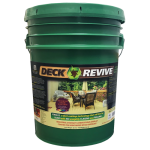

Gulf Synthetics Deck Revive Photos
Solid Color Decking Stains (Opaque)
✅ Solid Color Deck Stains
- Appearance: Opaque (paint-like finish)
- Wood Grain: Hidden
- Protection Level: Maximum UV protection
- Best For: Very old or damaged wood
- Maintenance: High—prone to peeling and requires more prep
Solid deck stains look like paints but are thinner for better adhesion and penetration into the wood. They cover or mask the wood, so you will no longer see the wood grain. Once you apply a solid decking stain, there is little chance you will ever be able to go back to a transparent stain. Solid stains come in water-based versions only nowadays.
My Pros: Excellent UV protection.
My Cons: Films on top of the wood do not penetrate well, are susceptible to peeling, look like paint, and are more challenging to apply. They cannot be effectively removed with a deck stain stripper.


Solid Color Deck Stain Photos
Semi-Solid Wood Deck Stains
✅ Semi-Solid Deck Stains
- Appearance: Rich color, less grain visibility
- Wood Grain: Partially visible
- Protection Level: Higher UV protection
- Best For: Older decks with imperfections
- Maintenance: Moderate—can build up over time
A Semi-Solid Deck Stain will only show a small amount of wood grain as it contains a high amount of pigment. Only a limited number of manufacturers offer semi-solids, which can be both water-based and oil-based.
My Pros: They provide excellent UV protection. However, if they are water-based, they are prone to peeling. Look for oil-based semi-solid stains only.
My Cons: Only a tiny amount of wood grain will show. Oil-based semi-solid versions will penetrate and perform much better than water-based versions.


Semi-Solid Deck Stain Photos
Semi-Transparent Wood Deck Stains
✅ Semi-Transparent Deck Stains
- Appearance: Adds color while enhancing grain
- Wood Grain: Clearly visible
- Protection Level: Moderate UV and water protection
- Best For: Most decks
- Maintenance: Easy to clean and recoat every 2–3 years
These are my favorites, but the primary key is that it must be a penetrating semi-transparent stain. Semi-transparent deck stains contain pigments that highlight the natural grain while sealing the surface. Both water and oil-based are available.
My Pros: They offer average to better-than-average UV protection, show natural grain, and have very good penetration. In most scenarios, they can be cleaned and re-coated easily and removed with a deck stain stripper.
My Cons: Most water-based versions perform poorly compared to the oils. Many states with Low VOC laws have limited quality oil-based stains available. You may need to buy online if you live in a low VOC area.




Semi-Transparent Deck Stain Photos
Transparent Wood Deck Stains
✅ Transparent Deck Stains
- Appearance: Clear or very light tint
- Wood Grain: Fully visible
- Protection Level: Low UV protection
- Best For: New wood, premium hardwoods (ipe, mahogany)
- Maintenance: Requires frequent reapplication (annually in many cases)
Transparent deck coatings look the most natural as they contain minimal pigment. The average life of a transparent decking stain is about one year. Mostly oil-based only are available.
My Pros: Straightforward to apply and reapply as needed. Natural-looking.
My Cons: Below average UV protection. Typically, it needs to be re-coated annually.

Transparent Deck Stain Colors
Clear Wood Deck Finishes

Clear Deck Sealer
✅ Clear Wood Sealers (No Color Added)
- Appearance: Completely clear with no pigment
- Wood Grain: 100% visible (natural look)
- Protection Level: Low UV protection, good water repellency
- Best For: New wood, hardwoods (ipe, mahogany), and users wanting a natural, unstained look
- Maintenance: Requires frequent reapplication (often every 6–12 months)
Clear wood sealers are designed to protect the wood from water penetration while maintaining its natural color. Unlike transparent deck stains, they contain no added pigments, which means they offer little to no UV protection from the sun.
Because of this, wood sealed with a clear sealer will typically gray faster when exposed to sunlight compared to even lightly pigmented stains.
👉 When to Use a Clear Wood Sealer
- You want a completely natural, “no-color” appearance
- You want the wood to gray
- The deck is covered or has minimal direct UV exposure
- You are okay with more frequent maintenance
⚠️ Downsides of Clear Sealers
- No UV protection
- Faster graying in full sun
- More frequent maintenance than pigmented stains
My Pros: They do not change the appearance of the wood. They are extremely easy to apply.
My Cons: In months, the wood will gray and oxidize from the sun’s UV.


Low VOC Stains and States
Currently, 20 States and Canada restrict Decking Stains and Coatings. These states require fewer Volatile Organic Compounds to be released into the air. The lower VOC changes mainly affect oil-based coatings. By lowering the amount of “solvents” that can evaporate into the ozone, you need to increase the amount of “solids.” This can cause issues with oil-based stains, which may have drying and curing problems. A few good oil-based stains are still allowed in the Low VOC States but are not as readily available at your local stores. You may need to go online to find them and have them shipped. Examples would be the TWP 1500 Series and Armstrong Clark Wood Stains.
Current Low VOC States:
California, Colorado, Connecticut, Rhode Island, Maine, Massachusetts, Michigan, New Hampshire, Vermont, Delaware, District of Columbia, Maryland, New Jersey, New York, Northern VA, Pennsylvania, Arizona, Ohio, Illinois, and Indiana.

Common Deck Stain Type Questions
What are Deck Stains, and Why Use Them?
Deck stains protect and preserve exterior wood. They offer UV protection, water repellency, mold and mildew resistance, and more. Deck coatings come in many types of opacity and bases. Based on their VOC laws, many deck stain brands can be restricted in certain states, cities, and countries, and unfortunately, walking into your local store may produce some of the worst options available.
Difference of Non-Drying Oil vs Drying Oil-Based Stains
Drying oils are “curing” oils. This means that they actually dry on top of or just below the surface. They will also help “seal” the wood. Non-drying oils are the opposite. They never dry or fully cure but dive deep into the wood to help condition the cells. Paraffin oil (not wax) is the most common.
Are Deck Finishes, Stains, Sealers, or Both?
This question can be confusing to homeowners. All deck stains are sealers that will help prevent water absorption. Deck sealers typically are not stains, as they do not have any pigment. Some, though, may have a very light tint.
What’s the Right Deck Stain for My Needs?
I always recommend homeowners obtain a couple of samples to start. Apply two coats of each to very small areas of the deck as a test to properly assess the color and appearance of the different stains before making a purchase. Once applied, the color of a stain often appears differently than expected, so it may or may not blend in well with the grain of the wood.
Also, I recommend checking that the price of the product you choose fits your budget. Keep in mind that higher-priced stains will not necessarily be the longest-lasting. Make sure you are happy with the appearance of the stain and choose an established brand, as you might need to buy more of the product in the future.
My Best Deck Stain Suggestions
I prefer penetrating semi-transparent products with all these different types of products as they allow the wood grain to show. They offer better-than-average UV protection and can be easier to reapply in the future. Penetration is better for oil-based versions than water-based versions. The exceptions for quality semi-transparent penetrating water-based stains would be the Defy Extreme Stains and the Restore-A-Deck Stains.
Want Free Help Choosing Your Deck Stain Type? Ask below in the comments!
See My List of the Best 8 Semi-transparent Deck Stains
What Other Tools Do I Need?
Some of the tools needed to get the job done include:
- Personal protective equipment (PPE), such as eye coverings and gloves.
- Deck cleaner and deck brightener (neutralizer) for prepping the surfaces.
- Hose for rinsing things and hand rags for cleaning up.
- Tarps or plastic for covering nearby vegetation.
- A hammer, drill, screws, and nails for any repairs.
- A bucket with stir sticks.
- A pole sander and hand sander with sandpaper (no finer than 80 grit).
- A pump-style or airless sprayer.
- A roller and roller tray, a stain (paint) pad with a pole, or a speed mop.
- Stain brushes with either natural or synthetic bristles.
How to Apply a Deck Stain
1. Review the Manufacturer’s Instructions
Measure your deck to best determine the proper amount of stain needed, and buy a little extra to ensure you don’t run out. Every product is slightly different, so I always read the manufacturer’s application instructions thoroughly. This helps confirm details such as whether to apply one or two coats, the dry time interval between the coats, and any safety recommendations.
2. Surface Preparation
Begin by removing all furniture and objects from the deck.
Remove any current (existing) stain using a deck stripping product. Remember to keep children and pets away from these and other chemicals. Thoroughly cleanse the surfaces using a wood cleaner, stiff brush, and power washer (if needed).
Apply a wood deck brightening product to neutralize (pH) acidity and prepare the wood pores for optimal absorption. Limit sanding except for very stubborn spots of existing stain, removing splinters, or leveling raised corners using 40 to 60-grit sandpaper. Let the surface dry completely for two days.
3. Apply Stain to One Board at a Time
You may choose to apply stain with a brush, pad, roller, or sprayer. Avoid pump sprayers and stain pads for thicker or solid stains. Begin applying stain to vertical surfaces followed by floors and staircases. Apply stain to a single board at a time completely from end to end while limiting overlap marks.
4. Use a Brush to “Even Out” the Finish
You may “back brush” the stain during the initial application and then use a separate brush to achieve a more uniform appearance.
5. Allow for Penetration and Remove Excess Stain
After the application, allow 20 to 30 minutes for the stain to completely soak into the wood. Wipe any remaining, unabsorbed stain away to avoid blotches.
6. Prevent Exposure to Moisture
Remember the importance of checking the weather forecast before starting for any chances of rain in the next 24 hours and have tarps or plastic on hand to cover the deck—just in case.
Top Oil- Based Stain | Top Water-Based Stain | Top Solid Color Stain | Easiest to Apply Stain |

| 
| 
| 
|
From: $58.99 | From: $51.99* | From: $69.99* | From: $74.95* |
| ; | ; | ; | ; |



















Deck Location State: Minnesota
Full Sun,
Wood Type: Cedar
Mold or Mildew Issues: No
The reason for Previous Stain Failure: NA
This is a new deck. Would like to use semi transparent stain ideally with a taupe color but I don’t believe many top rated companies offer any color other than wood shades
You will not find a semi-transparent in a Taupe color that is any good. See this for new wood tips: https://www.deckstainhelp.com/staining-a-new-deck/
Hi,
We live on the water in Annapolis Maryland and are surrounded by lot’s of trees so the deck gets a lot of wear and tear from Mother Nature. From the reviews I read, it sounds like a semi-transparent oil based stain is our best bet. However, I was hoping for a grayish brown color and the highly recommended stains don’t seem to have the color. I want to stay away from an orangish shade. Any suggestions?
None have a grayish brown color. You can get a gray or a brown color. Look at Armstrong Clark.
Hi, we have a 14-year old deck, apparently made of pine. We live in West Michigan, and the deck get lots of direct afternoon sun in the summer , and cold with snow/ice in the winter. Also some woodpecker damage. Appreciate any suggestions, thanks!
Prep is key. Make sure to clean and or strip. Brighten the wood after. Stain with TWP 100 Series or Armstrong Clark.
I have a brand new mahogany dock. It sits in full sun. I wanted to just put a clear oil on it, and reapply yearly, but seems that clears provide no UV protection. Suggestions?
It is not possible for a clear to provide UV protection. Pick a tinted color. Look at Restore-A-Deck Stain in Natural or Armstrong Clark in Amber.
Thank you! It was installed in late December/ early January. Can it be stained now as it’s color is already being effected by the sun? Since it is new, does it still need to washed prior to staining? Not a mark on it. Thanks again for your help!
See this about new wood: https://www.deckstainhelp.com/staining-a-new-deck/
Yes, it has to be prepped. Just one coat.
This deck is actually a dock…so above water. Is there an ecological cleaner and brightened that will be effective? We don’t want to put chemicals in the lake. Suggestions? Thank you!
Restore A Deck Cleaner/Brightener Kits are Eco-friendly.
I cleaned, brightened and stained a newer mahogany dock in Armstrong Clark’s amber (full sun) according to your advice. 7 months later, it is gray. Looks nothing like it did. Suggestions to get my expensive dock back? AC’s mahogany stain looks clownish red. Can’t use that. I tried sending a picture but it keeps telling me it’s over 4mb. 🙄
Your wood type does require annual maintenance. This is normal for mahogany wood. Even sooner when the wood is brand new. Best to prep and redo now or Spring.
I know it requires maintenance 1 to 2 times a year. It was done in April. I was going to reapply the stain in the fall, but now the dock is grey. I would like it to be the color I bought. What can be done to restore the color of the wood? I only used amber because I needed pigment to cut down on UV. I don’t actually want it colored amber. I’d like the dock to be the color it was after the amber stain was applied to the mahogany. Help!
Dock after stain
I try to post the gray dock now, but it won’t post.
You always prep before recoating to remove any graying. Use the RAD Kits then reapply.
I have a 8 year old Redwood colored composite deck (ChoiceDek from Lowes) that is very faded and worn. I have over the years cleaned the deck and used Encore Rejuv and Renew, bu they no longer bring back the color. Is there any product I can use? Manufacturer says Oil based solid stain, but don’t know what product. Sherwin Williams says DeckPaint will work on older worn composite decks, but local dealer says it won’t stick. Help!!
Sorry, but no idea as to if anything will stick to it. As contractors, we do not coat composite decks since we are concerned about it failing.
Just had a deck hand rail coated with a Sherwin Williams semi-transparent redwood stain (probably water base). It was done about one week ago on fairly hot afternoon in direct sun and is blotchy and sticky in places. The contractor told me it will just take a while to soak in but I don’t believe that. I think he’s trying to fleece me and get the final payment for a large renovation contract/project leaving some problems for me to deal with.
So, what is “Flash Drying”?
How would you recommend solving the problem (Probably removing the last coat of stain)?
Thank you
You will need to remove and start over to fix. It will not fix itself.
Hi, we just built a new deck. We have a Menards and Home Depot around us. I’ve seen up and down reviews all over the web but would like your recommendation of the best from either place 🙂
Thanks!!
There are not any decent deck stains at any of the big box stores. https://www.deckstainhelp.com/deck-stain-quality-at-lowes-or-home-depot/
Try to find TWP or Defy Extreme.
What is best way to re stain my pressure treated pine deck.. built 2yrs ago- finished with Olympic Woodland Oil Stain (Desert Sand Semi Transparent- a light brown color. I have cleaned surface… still has a lot of spotty surface stain.. not so much on deck boards but lots on railing and vertical surfaces. I would like to use TWP 1500 on the deck boards. Would be very difficult to impossible to sand all the railings/rim joist, etc…. Please advise best way to proceed. The attached pictures in bright sun make the lumber look better than it really does. I live in Atlanta GA area; deck is on west side so gets brutal afternoon summer sun.
You need to strip and brighten for the prep. Use the Restore A Deck Stripper/Brightener Kits.
No need to sand.
If I use the same Olympic Woodland Oil on railings and all vertical surfaces, can I get away with not having to use stripper on those surfaces only? If not, then can I just cover with a solid water based stain product?…. I can strip the floor boards easily enough and I think TWP 100 is sold here too, rather than the 1500.
No, you cannot cover it will a different brand or type of stain. Stripping should be done. It is not hard to do.
Is it correct that a penetrating stain can be reapplied directly when faded, and does not require stripping down to the bare wood?
As I understand, penetrating means oil-based. I live in Massachusetts, so will that be hard to find?
Thanks
JLS
Typically yes, that is correct. You will need to clean for the prep. Water-based stains can penetrate as well. See this for the best brands: https://www.deckstainhelp.com/the-5-best-deck-stain-reviews-and-ratings/
You can still use oil-based in MA. TWP 1500 and Armstrong Clark are both compliant there.
Getting ready to stain my cedar deck for the first time. It has sat for a year. I live in Maine, about an hour north of Portland. Need to do a little sanding to get rid of the dog claw marks. Planning on pressure treating then using a wood brightener. I would like a stain that brings out the natural color of the cedar. Suggestions?
Use a deck cleaner while pressure washing. TWP 1500 or Armstrong Clark wood stains.
Has anybody used Sikkens ProLuxe Oil Base Stain Cetrol DEK Finish? I have a deck guy wanting to use it on an old deck.
The DEK is not designed for decks. Peels.
I’m in the process of stripping the old peeling paint off the deck from the old owners. During this time I stopped for a month and you can clearly see a difference between recently sanded wood and wood sanded a month ago. I was originally going to use a tintable stain, but after reading your website I’ll be going with an oil based for the fact I never want to do this again. Having said that, will there be a noticeable difference in look since some wood looks more faded?
Clean and brighten this wood for final prep and it will even out and the stain will soak in better.
We started staining our wood rafters on our new deck yesterday with Ready Seal and it rained unexpectedly for a short time this morning. We got about half of the boards done and now don’t know what to do. Should we wait to do the rest till they dry, continue while wet? How will this affect the look of the stained boards? Freaking out over here. The pic is what we got done yesterday.
You will need to let the wood dry for a couple of days before finishing the staining. It should be okay.
Hello. About 3 to 4 years ago, I stained my back deck with Cabot’s Australian Timber Oil semi-solid stain. I was never really happy with the look of it where some areas seemed to take better than others and some places had shiny spots as another person reported. Plus, now, it needs to be redone so I used a cleaner and brightener and have power washed it. I got quite a bit of the stain off but not enough to go with semi-transparent. I have read on here in several places that if you use the exact same product, you don’t need to strip it completely off but as I was not really happy with the product covering evenly the first time through, I am not sure which way to go here. Can I use the same product, different color? Mine was Cabot’s Australian Timber Oil semi-solid stain mission brown which had way too much red in it in my opinion. If I used same brand, could I go darker color or more brown color or does the color and brand and type all have to be exact to avoid stripping? I am not sure I want to go total solid stain as it sounds like it peels pretty quickly. I’m not even sure I want to go with Cabot again as the coverage was not that great in the first place. Any other options here? Thanks!
Post a picture, please.
Hello again. Here are the pics you asked for. The first two are of the back deck where we used the Cabot’s Australian Timber Oil semi-solid stain. So, I need to know what is best to use on that now?
The 3rd pic is of the front porch which has been sanded and cleaned with wood cleaner and brightener and never had the Cabot’s so if I can use something different for the front, I’d like that? Thank You!
Best to remove all. Use a stain stripper and pressure washing. Brighten the wood after. Once removed, you can use any color or brand that you like.
Thanks! I was afraid you’d say that. 😉 I am putting my house up for sale. The wood is rougher than you can see. The back deck wood is probably 25 years old plus. Would it really be that bad to use semi-transparent on the front because that deck is completely free of stain and then on the old back deck, use a solid stain maybe? I just want it to look good when I put the sign up. Any nice oil solid stains that look less like paint? Thank you. 🙂
Solid stains all look like paint. You can do this if you are just trying the sell the house but you will be leaving the next owner with a deck stain that will probably peel.
I’ve used Olympic Elite semi-transparent stain in chestnut brown, the true oil base version ( mineral spirit clean up) for several years and it has worked excellent. Now my problem is finding it in oil base( mineral spirit clean up) due to voc laws. I called Olympic, and they told me to call Porter paint that they carry it, but I called Porter paint and they said they no longer sell Olympic. And, if Im not mistaken, PPG makes Porter Paint and Olympic stain. Does anybody know where to buy true oil base Olympic Elite semi-transparent stains? Thanks
It is most likely gone for your area. You may have to strip and switch to a different brand. These are still BVOC compliant oil-based semi-transparent stains. Armstrong Clark and TWP 1500 Series.
Where in Boston Massachusetts can I purchase the TWP & Armstrong stains what stores sell them.
Best to contact the manufacturers for help locating.
Hi,
I purchased a house with a 25 year old deck. I believe they used a deck restoration product on it, but as you can see it is peeling badly. There are multiple coats of different products from over the years. Also some boards will need to be replaced as they are in bad shape. What method do you recommend for removal, it is appearing to scrape off easily, don’t know if I should also power wash and sand? What type of product do you recommend and is fall a good time to do it? Northern Ohio area.
Thanks so much!
-Ryan
You will need to power sand to remove. Once removed, use one of thee brands: https://www.deckstainhelp.com/the-5-best-deck-stain-reviews-and-ratings/
I have a large old pressure treated deck, that I have replaced some random boards throughout. I would like to stain with a semi solid stain. What could you recommend? Stain type, prep etc…
Thank you
Ed
Let the new boards weather for a few months. Prep to remove all old coating and then brighten the deck. Stain with Armstrong Clark in a semi-solid color.
I just installed a new fence and want to stain and preserve it. How does Preserva Wood rate in comparison to TWP 1500?
TWP is a much better product in terms of UV protection.
I am using mover’s dollies under my plastic half barrels that hold my tomato plants, on my deck. The dollies come rug covered,and unfinished, which holds water and rots them. They are very sturdy and only 8 bucks a piece. I plan to get new ones, remove the rugs. and stain them, Darker and opaque is fine. They are not pretty. The barrels drain on them. What is the most durable, water resistant stain, to protect them. Preferably in quarts as there is not much area. If I were making them I would use pressure teeated but buying these is cheaper and faster. Thanks
A deck stain will not protect against rot in this scenario where dirt and water is constantly present. Sorry.
We just installed a new pressure treated deck. Looking for a low VOC stain/sealant.
Also, how long do you wait to apply the stain to the new wood?
See this about new wood: https://www.deckstainhelp.com/staining-a-new-deck/
After the wait and prep, try the Defy Extreme or Restore-A-Deck Wood stains.
Would Armstrong stain be better purchased at Sherwin Williams vs Lowe’s or Home Depot?
You will not find AC in those places. Call them for assistance with locating.
Is there a deck stain that doesn’t retain so much heat during our extremely hot summers in Texas. I can’t walk bare footed on mine. I want to use the semi-transparent oil based but would go another way if there is one that won’t absorb so much heat? Is there such a thing?
Not really based on a deck stain brand or type but in general, lighter colors will retain less heat over a darker color.
What is your opinion of Floods & Thompsons Semi Transparent oil Vs Cadots Semi Transparent. Cost is the issue for me. Quality vs price . Is this Australian oil soo much better.
Of those three, we would use the Flood as long as it is the oil-based version.
I’m redoing deck that has semitransparent but didnot get all of old stain off .can I apply the same semitransparent stain on deck? Will it cover where old stain is still there?
If the same brand and color, you should be okay.
Great site, lots of good info -your site is so valuable to all the DIYers out there, keep up the great work!
1. I have two large covered PT decks. Used a regional supplier’s semi-transparent oil based penetrating stain for years – no problems – EVER!. Every 6-7 years we cleaned and stained (2 coats). Stairs/unprotected areas were prepped and re-coated every 2-3. After 20+ years of this, protected areas almost looked like solid stain due to several coats. When I went to get more stain, was told VOC laws changed and my orig stain wasn’t available. They switched me to BM Arborcoat semi-trans classic oil finish (#C328). I was told to prep/apply same as before and OK to put right over the old stain. New stain was very tacky even after several weeks, started flaking the next year – everywhere, even unprotected areas that were nearly down to bare wood when stained. Reading BM label, it says only apply 1 coat. We have power washed & scrubbed multiple times until flakes appear to be fully removed, but when BM was reapplied it is still flaking, even on unprotected areas. Not sure if issue is the original extra coat, putting over another brand of stain, or the new product itself (I see BM isn’t getting great reviews). Decks are 1000+ sq ft, so big job to strip and many layers. Is solid stain an option? Would I need to strip regardless of what I use due to flaking/build up? Any suggestions? I would not be opposed to the solid stain look, since that is pretty much what I have now on most of the deck due to all the layers of semi-trans, but if I have to strip I would probably stay with semi-trans oil.
2. I also have a newer PT deck I will be staining (lots of sun, not covered, in MI). I have (4) gallons of the BM Arborcoat, should I use that for either the new deck or for the properly prepped large deck – or should I just bite the bullet and purchase a different stain (tintable to match what I have) and get a better product? Would you suggest the same product for both decks, even though one is not protected?
3. Also have a PT deck off the basement walkout that is about 4″ above ground, I believe there are issues with the types of stain to use when closer to ground- suggestions on that too?
Photo of flaking and label for old stain.
Unfortunately, there is not a stain you can apply over all of this to fix this. You will need to sand it all down to the barre wood and start over. Adding anything on top will result in more peeling.
Do not use the BM Arborcoat on the new deck: https://www.deckstainhelp.com/tag/benjamin-moore-arborcoat/
So I chose red wood stain for my deck semi transparent . I put it down on the floor panels but I don’t really like he shade. I think it might look better with more red in it. Can I use another stain with red in it as a second coat to hep tone down the orange color?
You cannot use another stain brand on top. You will need to remove the first coat.
I have stripped my 25 year old porch floor down to bare Douglas fir tongue and groove boards. Not pressure treated. New England region, so it gets weathered. UV protection doesn’t matter as it’s covered and north facing. Previously had latex exterior paint which peeled every year. I want low maintenance.
I was considering Behr Premium Solid stain because I like the look of a solid stain, however I worry that it too may peel. Any suggestions on how to protect it? I attached a picture mid-project.
Dan
Use the Flood Pro Series Solid Stains.
Do NOT use the Behr solid stain. I did mine and within a week it started peeling so I called the manufacturer who said I had to strip and redo it the following year. I used the same dark gray solid and most of it has peeled again within 2 weeks. I live in Michigan. Lots of snow in winter. Full sun until 2pm. Deck is 10×74 with 8×10 extension so I now have to do it again but still have a lot of stain left on that didn’t come off with powerwasher. Will NEVER use Behr products again. Not sure what U should do either. I need advice also! Help
I am about to seal a brand new pool deck. What do you think about Cabot waterproofing clear silicone sealant. I have been told by two other people that it worked great
See this about new wood: https://www.deckstainhelp.com/staining-a-new-deck/
This particular Cabot will not provide any UV protection from graying. Useless in our opinion.
I have some staining to do around the house and I’m tired of poor quality stains. Can someone suggest some brands? I live in the mountains of southern ca. Temps range from 15-100 degrees.
I want to restain some cedar shingles that get a lot of sun in the summer. I’ve been using super deck but it last maybe 2 years.
I also have an alder front door that needs stain touch up.
Strip off the Super Deck and use Armstrong Clark or the TWP 100 Series. The richer the color of the stain, the longer it will provide UV protection in full sun.
The stain on my redwood deck had darkened over time. I tried power washing it and eventually ended up sanding it to get it back to its original look. What would be the best next step for me before staining it? I would like a transparent or semi transparent look to enhance the redwood. I live in northern Wyoming where we have extreme weather conditions. What suggestions do you have for further prep and which product would you recommend?
Did you sanding remove all? If so, use a deck cleaner and then a wood brightener for the final prep. Stain with TWP 100 Series.
I recently stained my deck with Cabots semi solid stain . Can I put CWF on it now or not ??? And if so would that give the deck a sheen look ??
No, you cannot add a shine to a deck stain by adding a coat on top. It will blister and peel.
I used a semi-transparent Flood CWF-UV wood finish and it really soaked into my deck, should I put some type of water sealer like Thompson’s over the top of it?
No, you cannot top coat a deck stain with a sealer.
I just received a new unassembled 12 x 10 cedar pergola kit. I have opened the 2 boxes and removed the lumber, which is now laid out on cardboard, or leaning against the wall inside my garage.Owners manual states a waterborne translucent stain has already been applied.
How should I proceed? I would like to use TWC stain/sealer. Do I stain now before assembly? Wait 4 months, then stain? Do I need to sand each board?
I’ve never done this before. Pergola will be built over a hot tub, so staining later, after assembly, will be a giant PITA.
Any help will be greatly appreciated.
David Shelby
Billings, Missouri
You have to install, let weather, prep, and stain. See this about new wood: https://www.deckstainhelp.com/staining-a-new-deck/
I have a guy that will be staining my deck. He is offering Pittsburgh Ultra Advanced & Weather screen (solid) and Behr Premium (solid).
I live in Minnesota and was wondering which would be the better product.
The Pittsburgh.
How good is C2 Guard?
Never used it. Only a few consumers have mentioned it here on this site.
How does the new Restore A Deck stain compare to the Defy water based stains?
Very well. We like them both.
I live in the Pacific Northwest. I have a 10 year old 400 Sq. Ft. cedar deck. The decking was originally purchased, I believe, from Port Townsend Lumber and was stained and kiln dried prior to laying and was beautiful. I have since cleaned and/or stripped, brightened, etc. it 2-3 times, restaining it with Sikkens Certol Cedar 077. I have just re-stripped it with JoMax Deck stripper, which has not yet taken all of the Sikkens off. (see photo) I cannot decide what to use next, as I hate the multi-step upkeep every 2-3 years. The deck is fully exposed, getting full on sun, rain, etc. most of the day. A contractor friend recommended Sunfrog but I am also contemplating priming and putting down Kelly Moore’s Storm 4 Solid Stain. If I could limit the upkeep to only cleaning & repaying every 2-3 years, I could maybe deal with that! (If I can upload my photos, you can still see the original 10 year old finish that was well protected under my BBQ.)
Redoing every 2-3 years is normal and that is why we like stains that are penetrating and can be cleaned and reapplied as needed. See this article for more info: https://www.deckstainhelp.com/the-5-best-deck-stain-reviews-and-ratings/
Thank you for your response. As I said above, I used JoMax stripper which is not getting all of the Sikkens off. I found DEFY Stripper locally and was thinking about using it to get off the rest of the Sikkens. However, the sales guy said that 1). I should not mix two brands of strippers and 2). I should not use the DEFY Brightener with the JoMax Stripper, again mixing brands is bad news. He suggested that I wash my deck again (I have rinsed the JoMax off thoroughly), let it dry a couple of days and then use the DEFY stripper and brightener.) Can I mix the two brands of strippers safely and do I need to again rinse/wash my deck before using the DEFT Stripper?
You can use both on the same deck and brighten all when done. No need to rinse again.
Hi, so glad to have found your site!! My decks are over 30 years old and to my knowledge my painters had only used CWF-UV. In protected areas the finish stays beautifully glossy. In sunny areas the finish tends to not stay glossy for longer than a few years. The last time the decks were stained was 7 years ago. After power washing there are now areas that still have the darker splotches. Unfortunately, the painters I have today don’t have a clue on how to match the weathered areas( and don’t want to do it properly by stripping the wood). I finally found the Flood semi-transparent acrylic/oil pro series that can be tinted to the color I want (walnut) but it doesn’t seem to have the gloss. So I am going to make the painter put one coat of that (walnut) followed by CWF-UV semi-transparent cedar which has the gloss I’m used to….what trouble am I setting myself up for?
A lot. It will never match. Best to remove all and start over.
I was hoping since they are both Flood products that it will be ok to use in that manner. So what I really was hoping that you could tell me was what will happen…. will it never dry, will the top coat peal off, etc…..
It will peel and not blend.
We bought a house and the previous owner used restore color being autumn brown. Here’s the problem …. our back yard is in full sun all day . Our deck as is very hot to walk on. We have a pool in backyard and a dog. We have extended one side of our deck out and installed a hot tub. We would like to change the color of the existing deck to accommodate the heat problem. What product can we use to paint over what we have that is heat resistant and durable ?
You cannot paint over this product. You will have to sand it off to fix it.
We have been using cuprnoi semi transparent oil based. We have a redwood house. Can no longer purchase this product. What can we substitute
Strip and sand to remove the Cuprinol. Brightener after. Stain with TWP Stains or Armstrong Clark.
I just stained two small handrails with Cabot’s semi-transparent stain. Was wondering if I can now apply a product such as poyurethane, etc., to give it an even smoother feel?
You cannot apply a sealer or coating like a poly over a deck stain.
Thank you for your answer, and for the wonderful service you provide to so many!
My deck at a lake home in central Missouri needs staining. It is treated wood, probably at least 20 -30 years old. A couple of times it was stained with Cedar tone CWF-UV. Then a couple of coats of a Pittsburg solid. Needless to say, it chips and peels and had to be redone. It is in the process of being completely stripped of all stains down to bare wood. What type of cleaner would you then suggest?
After that, I want to use an oil based semi-transparent so that I can see the grain. I read your comments about TWP-100 and 1500. What is the difference and what should I use?
As I read the comments, it looks like the oil based semi’s need to be redone every 2-3 years. Do they then need stripping again or just another coat or two of the same oil based stain?
Thanks for your help.
After the stripping and sanding to remove the current stain, use both a deck cleaner and a wood brightener for the final prep. Use the TWP 100 Series for this. When you redo in the future, just clean and brighten the wood for prep. No need to sand or strip.
We used solid Olympic stain for the first time this year, in cedar color and it says it will last up to 6 years. Before that we used semi-transparent stain (for about 8 years) but had to redo every summer, a lot of work,(we get the sun all day). If this solid stain doesn’t work , can I lightly sand this stain than paint with outside paint for wood. Tired of all the work we have a 16 x 18 foot deck with 2 separated stair areas lots, and lots of spindles.
Nothing lasts 6 years. See this: https://www.deckstainhelp.com/the-great-deck-stain-lie-why-multi-year-warranties-are-bs/
Adding more products or a paint on top will not fix any issues with peeling that you may incur by using the solid stain. It will most likely make it worse.
I live in Ontario, Canada and I have just built an extension to my existing 12 year old deck. The old deck is built with pressure treated wood and has always been stained with semi-transparent SICO stain. The extension was done using pressure treated wood (brown color). I like to see the wood grain and I’m not crazy about a ”paint” look. My question is: what product can I use that will allow me to see the wood grain and have the entire deck looking the same? (color)
You should not stain the new wood right away. See this for tips: https://www.deckstainhelp.com/staining-a-new-deck/
After the weathering, clean and brighten the new wood. Strip and brightener the older wood that has the older deck stain. Once prepped, try the Armstrong Clark decking stains.
I live on the gulf of Mexico and I am staining a garage trellis that will be exposed to the afternoon sun from 2pm to sunset. What stain would you recommend? The trellis is made from cedar.
Try Armstrong Clark in a semi-solid color.
We live on a large lake and would like to stain our deck that is over the water but dont know if it is safe to do so without getting fined??
The possibility of fines would depend on your local ordinances. We have never seen this happen befor in 20+ years. Try eco safe products like Restore A Deck or Defy Extreme stains.
To clarify the earlier message, the deck is about 9 months old, pressure treated wood, never before stained and cleaned throughly before we stained.
On a new deck, we applied Cabot Gold in Sunlit Walnut and followed the instructions to apply a second coat. The second coat looked bad, almost like a film on top, and no one can explain why including parent company Sherwin Williams. So, we sanded the deck and most of the stain was removed, but in some areas the stain has been impossible to remove totally, even with stripping, as it seems to have soaked deep into the wood. Can we apply Cabot Australian Timber Transparent Stain in Jarrah Brown hoping that the darker color will cover the uneven finish or do we need to go with a semi-transparent or semi-solid?
Picture please.
What semi-transparent or semi-sold stain would you recommend in Cleveland, OH area on weathered deck that is mostly in shady area with trees around it? The deck is partially covered. The covered part looks very good, but the open part is very weathered. I cleaned the deck, but there are still areas with old stain (redwood Deckscape stain from Sherwin-Williams) peeling in some places. I understand I need to remove the old stain before staining again. Do I need to do this in the whole deck, or can I do it only with the open part of the deck?
All of the wood SW will need to some off. Try Armstrong Clark or TWP 1500 Series.
Do I need to apply caulk/sealant before applying stain? I do not see Armstrong Clark or TWP 1500 Series in our local stores. We used to use Flood brand semi-transparent stain. Is it good for our deck?
No on caulk. The Flood semi-trasparent is not nearly as good.
I stopped by a local Home Depot and found Olympic stains and Behr premium stains. Olympic Elite series promise lifetime guarantee and swears to be the #1 rated stain. I talked to a paint department employee and he recommended Behr Premium DeckOver stain for old wood. I prefer semi-transparent and semi-solid , but Behr DeckOver is solid and promises better protection. What is your opinion/advise related Olympic and Behr?
Thanks!
They both have bad reviews from us and consumers. Read the comments on these links: https://www.deckstainhelp.com/behr-deckover-review-2015/
and: https://www.deckstainhelp.com/olympic-rescue-it-review-2014/
and: https://www.deckstainhelp.com/olympic-elite-wood-stain-review-2017/